Biophysics Group
Bronchoscopy in ventilated patients severely narrows the endotracheal tube lumen and increases resistance, which can lead to hypoventilation and intrinsic PEEP build-up. These ventilation impairments depend on the geometry of the tube-bronchoscope combination, ventilator settings, and patient mechanics. Currently, no predictive method exists to quantify these impairments or guide compensatory...
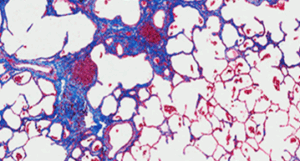
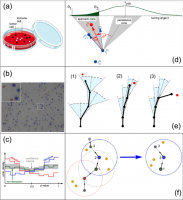
Durotaxis—cell migration along stiffness gradients—is implicated in development, repair, and disease, though its in vivo role remains unclear. We show that durotaxis actively drives disease progression in mouse models of lung fibrosis (IPF) and metastatic pancreatic cancer. In fibrosis, it guides fibroblasts to injury sites, triggering their activation into scar-forming...
Biofouling is a global issue that affects almost all water-based processes across various industries and significantly impacts our daily lives. Conventional biofouling treatments, such as toxic paints or antibiotics, have substantial limitations and challenges. These include the emergence of resistant microbial strains and negative impacts on surrounding ecosystems. Antibiotics often...
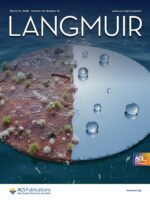
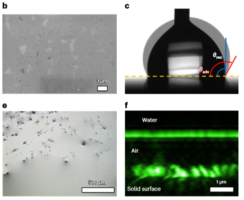
Aerophilic surfaces immersed underwater trap films of air known asplastron. Plastron has typically been considered impractical forunderwater engineering applications due to their metastable performance.Here, we describe aerophilic titanium alloy (Ti) surfaces with extendedplastron lifetimes that are conserved for months underwater. Long-termstability is achieved by the formation of highly rough h…
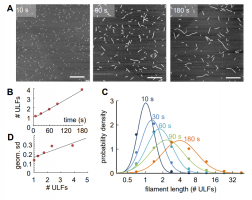
Vimentin is a highly charged intermediate filament protein that inherently forms extended dimeric coiled-coils, which serve as the basic building blocks of intermediate filaments. Under low ionic strength conditions, vimentin filaments dissociate into uniform tetrameric complexes of two anti-parallel oriented, halfstaggered coiled-coil dimers. By addition of salt, vimentin tetramers spontaneously…
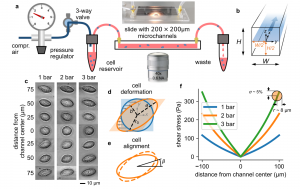
Numerous cell functions are accompanied by phenotypic changes in viscoelastic properties, and measuring them can help elucidate higher-level cellular functions in health and disease. We present a high-throughput, simple and low-cost microfluidic method for quantitatively measuring the elastic (storage) and viscous (loss) modulus of individual cells. Cells are suspended in...
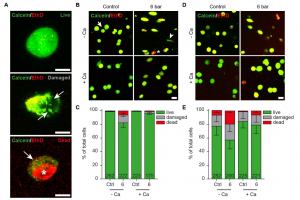
During bioprinting, cells are suspended in a viscous bioink and extruded under pressure through small diameter printing needles. The combination of high pressure and small needle diameter exposes cells to considerable shear stress, which can lead to cell damage and death. Approaches to monitor and control shear stress-induced cell damage...
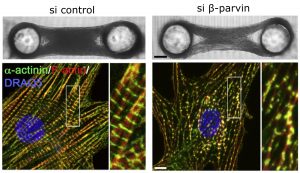
Physiological and pathological cardiac stress induced by exercise and hypertension, respectively, increase the hemodynamic load for the heart and trigger specific hypertrophic signals in cardiomyocytes leading to adaptive or maladaptive cardiac hypertrophy responses involving a mechanosensitive remodeling of the contractile cytoskeleton. Integrins sense load and have been implicated in cardiac...
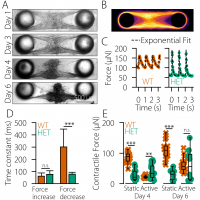
Desminopathies comprise hereditary myopathies and cardiomyopathies caused by mutations in the intermediate filament protein desmin that lead to severe and often lethal degeneration of striated muscle tissue. Animal and single cell studies hinted that this degeneration process is associated with massive ultrastructural defects correlating with increased susceptibility of the muscle...
Chemotaxis enables cells to systematically approach distant targets that emit a diffusible guiding substance. However, the visual observation of an encounter between a cell and a target does not necessarily indicate the presence of a chemotactic approach mechanism, as even a blindly migrating cell can come across a target by...
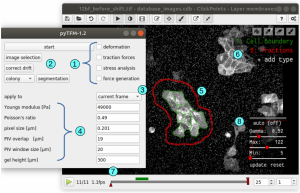
Cellular force generation and force transmission are of fundamental importance for numerous biological processes and can be studied with the methods of Traction Force Microscopy (TFM) and Monolayer Stress Microscopy. Traction Force Microscopy and Monolayer Stress Microscopy solve the inverse problem of reconstructing cell-matrix tractions and inter- and intra-cellular stresses...
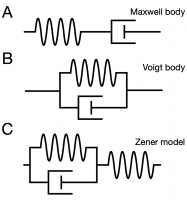
Rheologic models consisting of combinations of linear elements, such as and dashpots, are widely used in biophysics to describe the mechanical and, in particular, the viscoelastic behavior of proteins, cells, tissue, and soft matter. Even simple arrangements with few elements often suffice to recapitulate the experimental data and to provide...
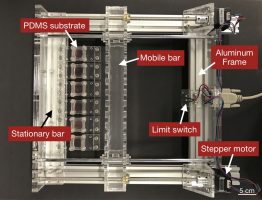
Cells in the lungs, the heart, and numerous other organs, are constantly exposed to dynamic forces and deformations. To mimic these dynamic mechanical loading conditions and to study the resulting cellular responses such as morphological changes or the activation of biochemical signaling pathways, cells are typically seeded on flexible 2D...
Heike Lappert, secretary of the Biophysics group, wins the 2020 Erlangen cycling contest in the category “individual ranking”. She cycled 1026 km in 3 weeks. Congratulations!