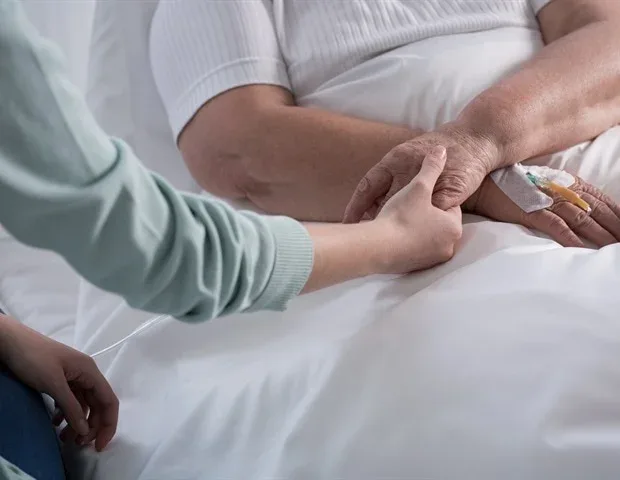
The best doctors understand something that is easy to lose in the machinery of a hospital: death does not turn a person into an administrative task “If you don’t mind, can we start with the patient who has died?” “But he has died,” I say to the resident, eyeing our long list of the living. Continue reading...
With their bassist in palliative care for colorectal cancer, the group have a new album and two live shows to play. They reflect on friendship, facing terminal illness and ‘taking each day as it comes’ For most bands, releasing a new album is cause for celebration. For Brisbane band Bugs, the moment is much more bittersweet. Last month, before the release of their fourth album, Head Noise, bass g…
When used thoughtfully, ketamine may be a powerful tool in veterinary hospice and palliative care, allowing clinicians to re-establish comfort, reassess patient baseline, and recalibrate daily pain management strategies with greater accuracy.
While overall survival has improved significantly for children with cancer over the past 75 years, cancer remains the leading cause of death from disease among children and adolescents. Further, despite the many advances in medical and nursing care, children with cancer still experience significant physical and emotional suffering over the course of their illness, especially at the end of life (E…
Context Pediatric palliative care (PPC) underutilization persists despite proven benefits. Some barriers stem from the misconception that PPC is exclusively for end-of-life, causing parental distress and reticence to engage. This study explores the origins of these misconceptions to enable smoother introduction of this helpful service line. Objectives This study examines how program naming and th…
People with a comprehensive understanding of palliative care are more likely to prefer end-of-life care at home or in a hospice. Among individuals with less understanding about palliative care, hospital care is preferred. These are some of the findings from a Swedish population-level study.
People with a comprehensive understanding of palliative care are more likely to prefer end-of-life care at home or in a hospice. Among individuals with less understanding about palliative care, hospital care is preferred.
J Pain Symptom Manage. 2026 Aug 19:S0885-3924(26)00954-1. doi: 10.1016/j.jpainsymman.2026.08.011. Online ahead of print. ABSTRACT CONTEXT: Hospice and palliative medicine (HPM) clinicians increasingly care for patients with serious illness and prolonged opioid exposure, yet often report limited training managing consequences like opioid misuse or opioid use disorder (OUD). Little is known about c…
Some seriously ill patients improve on hospice. About 1 in 16 patients enrolled in hospice care lose eligibility as a result. Here’s how to get appropriate care after receiving a terminal diagnosis.
Hospice patients experiencing uncontrolled pain, dyspnea, agitation, anxiety, delirium, or other severe symptoms may require General Inpatient (GIP) hospice care for intensive symptom management. However, inconsistent recognition of symptom crises can delay escalation to the appropriate level of care, contributing to unnecessary patient suffering, caregiver distress, and avoidable emergency depar…
(TIME) – “How do you sum up a lifetime of loving somebody into a sentence or two?” she says. The answer, according to people who spend their careers alongside the dying, is that you don’t have to. There are words … Read More
BackgroundPalliative care offers solace, mitigates pain, and enhances quality of life. However, individuals with mental diseases have inadequate access to palliative care and encounter various barriers during the process. As the need for palliative care is expected to rise significantly in the future, palliative care must be considered a global health priority for healthcare professionals to upgr…
Personalized health care that incorporates advance care planning and aligns treatment with patient-centered goals can improve the quality of life of dying individuals and reduce stress, anxiety, and depression in surviving relatives.1, 2 Although several prognostication indices that address all-cause mortality have been developed for use in elderly inpatients, none have been integrated into the e…
For over three decades, Jean Kutner , MD, MSPH, distinguished professor of medicine at CU Anschutz School of Medicine , has provided and studied palliative care – specialized medical care that focuses on improving quality of life and reducing suffering for people with serious illness and their caregivers.
An ACS study published in JAMA Network Open finds palliative care remains underused among young adults with advanced cancer. Despite increased use over time, only 18.3% received palliative care in 2023, underscoring the need to expand access to supportive care services.
Objective To assess how patient and caregiver factors influence caregiver readiness for hospital discharge in palliative care patients. Study Setting and Design This transitional care study uses cross-sectional data from a randomized controlled trial conducted from 2018 to 2023 testing an intervention for caregivers of hospitalized adult patients with a serious or life-limiting illness who receiv…









 research.io