
neuroengineering
(New Scientist) – Monkeys with around 300 electrodes implanted in their brain were able to steer avatars around different virtual environments Monkeys fitted with a brain-computer interface (BCI) successfully navigated a variety of virtual worlds using only their thoughts. Researchers … Read More
Professor Michael Yartsev has been named to the John Simon Guggenheim Memorial Foundation’s 101st Class of Fellows for his trailblazing work in neuroscience and neuroengineering. One of the country's most prestigious awards, fellowships are given to innovators in a wide range of disciplines with a monetary stipend allowing them to pursue independent work at the highest level under “the freest pos…
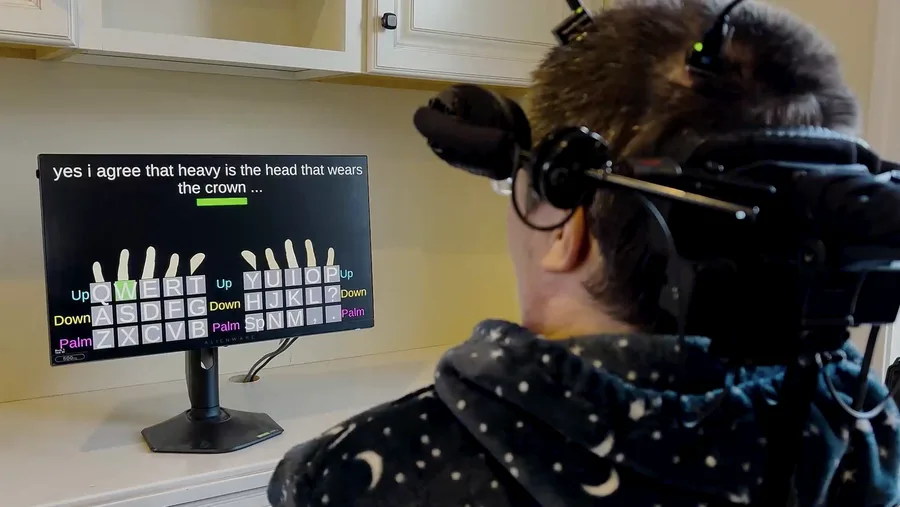
People with paralysis affecting their speech and hands can struggle to communicate, and the loss is often cited as one of the most devastating symptoms of their condition. Existing devices to aid them, like technology that tracks eye movements to spell out words, can be slow and frustrating to use. Over the last several years, however, a different type of technology called implantable brain-compu…
Key Takeaways - New research introduces a brain-computer interface typing system for people with paralysis, decoding intended movements from the motor cortex. - Participants typed using a QWERTY layout without physical finger movements, achieving speeds of up to 110 characters per minute. - The system demonstrated high accuracy and usability, allowing participants to operate it from home without …
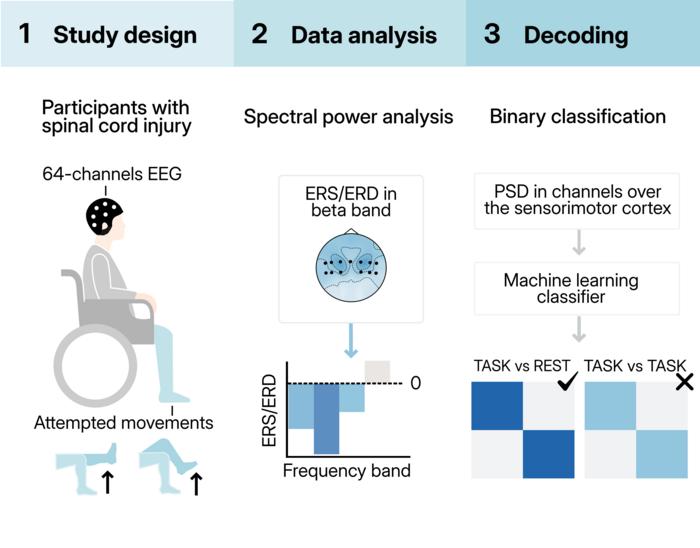
Picture a cap studded with electrodes, bristling like some strange technological creature. It looks intimidating, sure, but what researchers in Italy and Switzerland have discovered is rather beautiful. It might just restore movement to limbs that should be frozen forever. When a spinal cord is severely damaged, the wiring goes down. But here’s the thing: the limbs still work perfectly well. The …
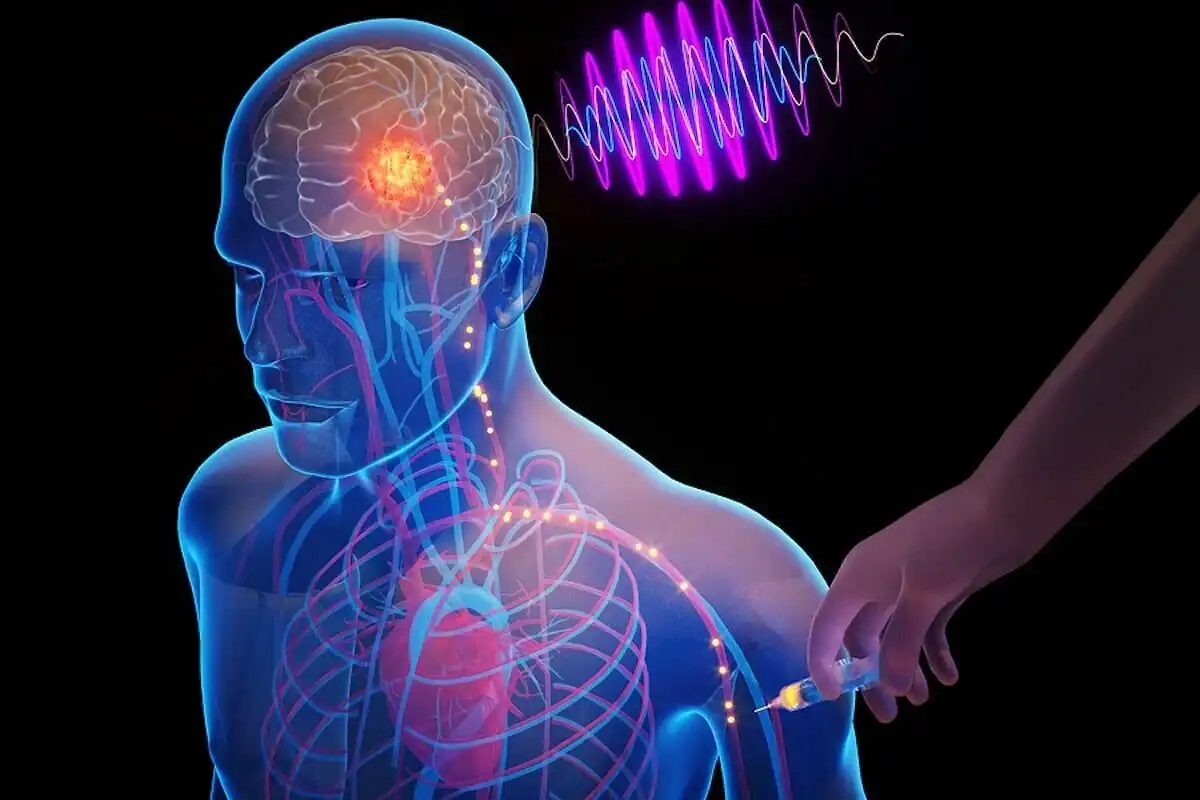
An arm injection may soon replace brain surgery thanks to self-implanting chips.
Assistant Professor in Bioengineering and Electrical & Computer Engineering Amy Orsborn has been awarded a prestigious Sloan Research Fellowship for her groundbreaking work in brain-machine interfaces. The fellowship, which provides $75,000 over two years, recognizes exceptional early-career scientists poised to become the next generation of scientific leaders. The Sloan Research Fellowships, awa…
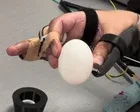
Alessandro Del Vecchio develops neuro-orthoses aimed at allowing paralyzed people to grasp objects. Sensors are used to detect the person’s intention for movement and act on it using a wearable exoskeleton. Alessandro Del Vecchio remembers well the day he was meant to travel to Rome for the training camp of the Italian elite school for […]
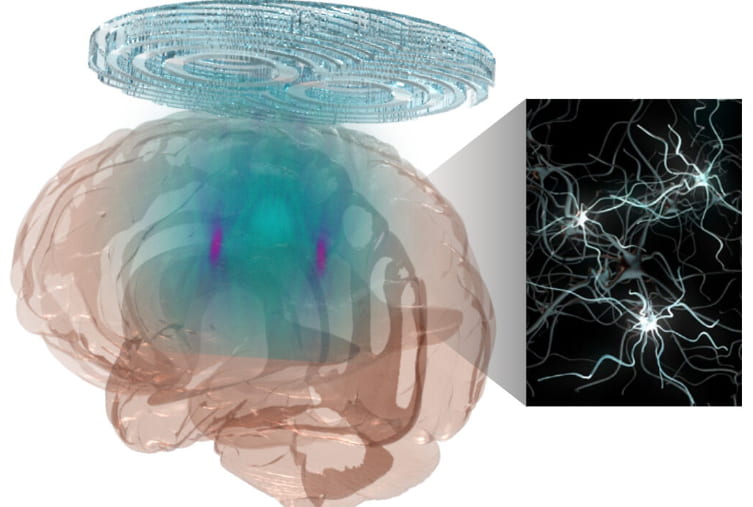
Human brain diseases, such as Parkinson’s disease, involve damage in more than one region of the brain, requiring technology that could precisely and flexibly address all affected regions simultaneously. Researchers at Washington University in St. Louis have developed a noninvasive technology combining a holographic acoustic device with genetic engineering that allows them to precisely target [&#…
This story also appears in the Spring 2024 issue of BrainScan. ___ Like many people, graduate student Guillermo Herrera-Arcos found himself working from home in the spring of 2020. Surrounded by equipment he’d hastily borrowed from the lab, he began testing electrical components he would need to control muscles in a new way. If it […] The post Beyond the brain appeared first on MIT McGovern Insti…
Duke Scientists Create Brain Implant That May Enable Communication From Thoughts Alone Prosthetic decodes signals from brain’s speech center to predict what sound someone is trying to say. To improve on past limitations, Cogan teamed up with fellow Duke Institute for Brain Sciences faculty member Jonathan Viventi, Ph.D., whose biomedical engineering lab specializes in making high-density, ultra-t…
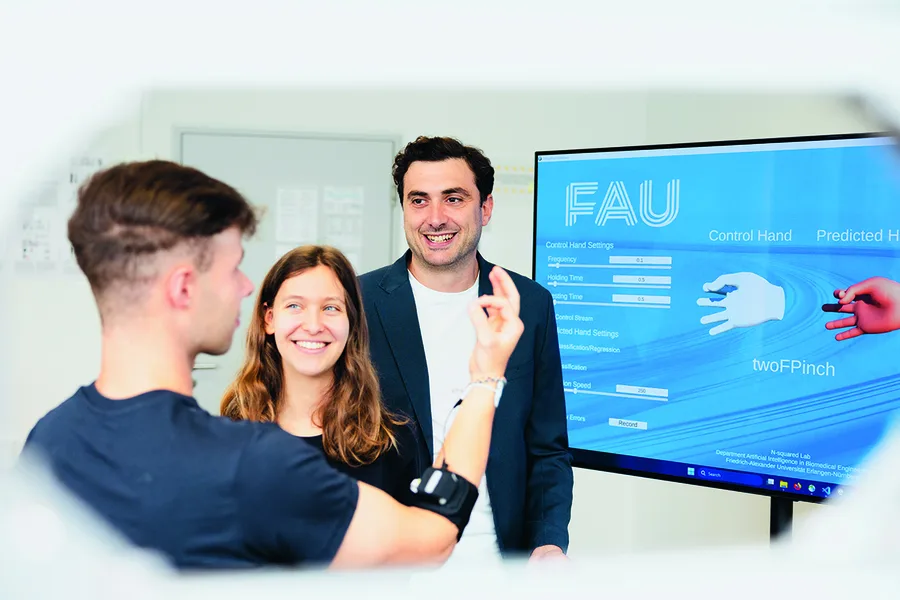
Patients with limited hand function are soon set to benefit from an intelligent neuro-orthosis that will enable them to lead independent lives again. Prof. Dr. Alessandro Del Vecchio, a neuroscientist at FAU, is working on this aim in two new projects and has received over 1.3 million euros of funding from the Free State of […]
Engineers and neuroscientists developed a circuit that in lab mice connects implanted lab-grown brain tissue to the brain's cognitive center and responds to visual stimuli.
The Influence of Neuroengineering of Music on Society Jan 29, 2022 5 min read Updated: Apr 18, 2022 The Presynaptic Project department at Simply Neuroscience ran a one week, virtual summer camp for high school students interested in neuroscience from August 8th to August 14th. Students were split into groups and created outcome projects, writing pieces, graphic designs and presentations that answ…
Slender probes equipped with electrodes, optical channels, and other tools are widely used by neuroscientists to monitor and manipulate brain activity in animal studies. Now, scientists at MIT have devised a way to make these usually rigid devices become as soft and pliable as their surroundings when they are implanted in the brain. Their new […] The post Squishy, stealthy neural probes appeared …
A man paralyzed from the shoulders down has been able to walk using a pioneering four-limb robotic system, or exoskeleton, that is commanded and controlled by signals from his brain. With a ceiling-mounted harness for balance, the 28-year-old tetraplegic patient used a system of sensors implanted near his brain to send messages to move all… The post Paralyzed Man Walks with Brain-Controlled Exosk…
The 2019 Neural Computation and Engineering Connection (NCEC) will be held on the afternoon of Thursday, January 24, 2019 and all day Friday, January 25, 2019. NCEC brings together the University of Washington neuroengineering and computational neuroscience communities in an exciting and stimulating event! It is sponsored by the UW Institute for Neuroengineering (UWIN), the UW Computational Neur…
A dramatic leap into a new dimension of human learning capability appears to be within reach through the promise of advances in neuroengineering. Arizona State University researchers are poised to play a meaningful role in making that progress. “We’re excited because we anticipate developing noninvasive methods of enhancing cognitive performance, motor performance and sensory performance that wou…
The University of Washington has a rich, active and highly collaborative community of researchers in the field of computational neuroscience and neural engineering. The University of Washington is a vibrant research university with a beautiful campus in a spectacular urban setting, with an ERC Center for Sensorimotor Neural Engineering, the UW Institute for Neuroengineering, close [...]
research.ioSign up to keep scrolling
Create your feed subscriptions, save articles, keep scrolling.