[Nature] Investigators showed that restoring plasticity in parvalbumin neurons can improve cognition and suppress seizures in a neurodevelopmental disorder model, suggesting that some developmental circuit deficits may be reversible in adulthood.
Tourette syndrome is a neurodevelopmental disorder traditionally attributed to dopamine system hyperactivity within the cortico-striato-thalamo-cortical circuitry. However, classical neurotransmitter hypotheses fail to fully explain the spatiotemporal and developmental specificities of the disorder. Consequently, research focus has shifted toward the neuroimmune microenvironment, specifically the…
BackgroundPropofol is widely used in pediatric anesthesia, but it has been implicated in adverse effects on brain development following repeated early-life exposure. Bag3, a co-chaperone protein involved in proteostasis and the neuronal stress response, may play a critical role in regulating synaptic function during early brain maturation.MethodsNeonatal mice were treated with propofol on postnat…
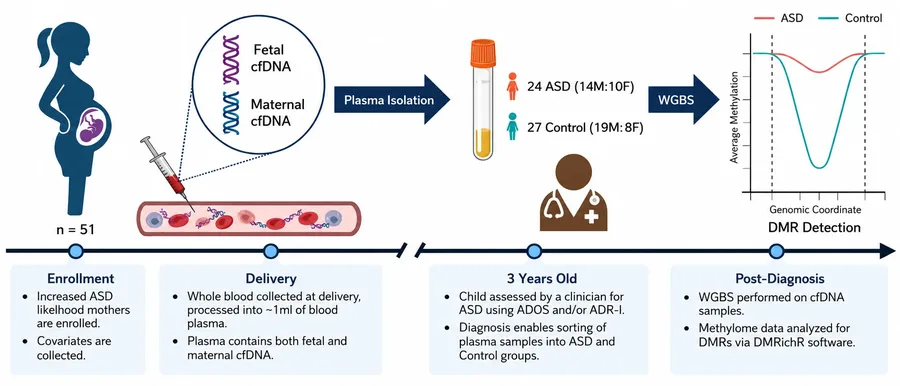
Researchers found that maternal plasma cell-free DNA methylation patterns in late pregnancy were associated with later autism diagnosis and maternal obesity in a high-likelihood ASD cohort.
The findings suggest cfDNA may offer a minimally invasive way to study prenatal epigenetic changes linked to neurodevelopmental risk, but larger validation studies are needed.
Adults with undiagnosed autistic traits experience sexual victimization at rates similar to those with formal diagnoses. Researchers suggest that tailored support services should be expanded to protect anyone exhibiting these neurodevelopmental traits.
A team led by Penn State scientists has developed methods to evaluate how genetic variants elsewhere in an individual’s genome work with a deletion on chromosome 16 — associated with varying neurodevelopmental outcomes including autism, developmental delay and congenital abnormalities — to help determine the features that the individual will manifest.
Two studies led by the Chahrour Lab at UT Southwestern Medical Center shed new light on genes associated with autism spectrum disorder (ASD), the neurodevelopmental disease characterized by impaired communication, abnormal social interactions, and restricted, repetitive behaviors.
Children with epilepsy frequently experience a range of significant comorbidities beyond seizures, such as motor dysfunction, cognitive impairment, and neurodevelopmental delays. In some cases, these comorbidities contribute more significantly to overall disease burden than the seizures themselves. To improve quality-of-life (QOL) for these children, treatment options should be selected that cont…