News – The Transmitter

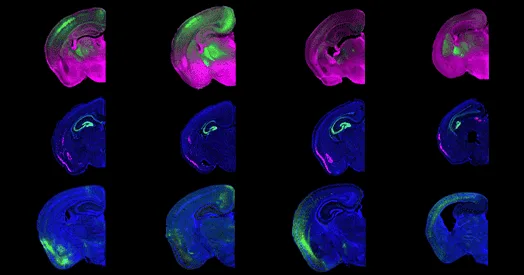
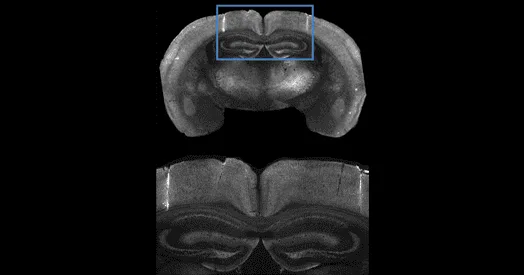
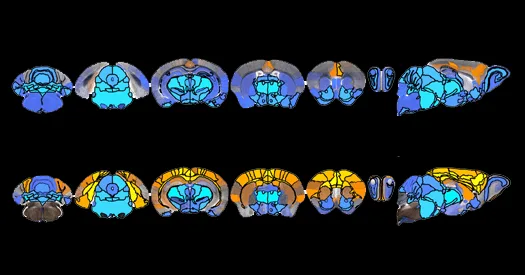
Opposite day: Neurodevelopmental conditions may arise from disruptions in the systems-level maturation of neuronal circuits, according to a new preprint. The investigators compared the effects of SYNGAP1 haploinsufficiency in mice with the effects of SYNGAP1 disruption in cortical excitatory neurons. The former induced two altered and opposing patterns of neuronal activity in the cortex, whereas …

neurodevelopmentneurosciencesynaptic-biology

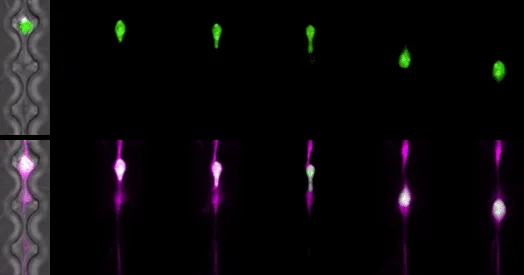
A previously unrecognized population of fibroblasts seals off the base of the choroid plexus—the network of blood vessels and cerebrospinal-fluid-producing epithelial cells that line the ventricles—from the cerebrospinal fluid (CSF) and the rest of the brain, a new study in mice shows. The newly identified barrier provides an added layer of protection that is distinct from the well-known blood-br…

biologycell-biologystructural-biology

A neural network based on a nematode worm’s connectome can puppeteer a digital fruit fly’s body, a new preprint shows. The work comes just two weeks after Eon Systems, a neurotechnology company based in San Francisco, announced that it had “uploaded” a fly brain and released a video of that brain controlling a biomechanical fly model in a virtual world. “We need to be really careful in interpreti…

aimachine-learningneurogeneticsneuroscience

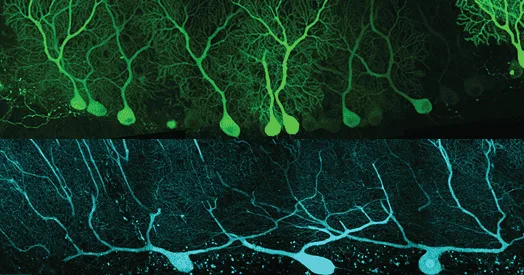
Astrocytes are the most abundant non-neuronal cell in the brain and a fresh focus in autism research. As with other glial cells, they were long considered “support cells” for neurons—but recent research makes it clear they play critical roles as neuromodulators. Studies are showing their role in guiding neural pathway development and regulating social behaviors, oxytocin and anxiety in ways that …

autismbiologyneurobiology

The authors of a Nature paper outlining a mechanism for multisensory memories in Drosophila melongaster have retracted the work after they were unable to replicate a set of imaging experiments. The paper’s overall conclusions remain unaffected, says study investigator Scott Waddell, professor of neurobiology at the University of Oxford. The team plans to resubmit the work without the imaging expe…

neurobiologyneuroscience

Brain evolution: Molecular and cellular regulatory components that support neuronal communication across the layers of the cerebral cortex distinguish mammalian brains from non-mammalian ones, a new study details. The investigators focused on the many types of excitatory projection neurons and their genes—and specifically zeroed in on the transcription factor ZBTB18, which is implicated in autism…

cognitive-neuroscienceneurogeneticsneuroscience

Supporters of U.S. neuroscience research sent a letter to Congress last week asking for increased funding for the National Institutes of Health’s BRAIN Initiative in the face of one of the program’s funding streams coming to end. In the letter, 150 organizations asked Congress to appropriate $468 million for the BRAIN Initiative for the coming fiscal year. That amount, the same that BRAIN receive…

clinical-neuroscienceneuroscience

Organizers of a leading neuroscience conference are trying to allay concerns after a policy that bars submissions from researchers based at institutions sanctioned by the United States government attracted intense scrutiny online. Representatives of the 40th Annual Conference on Neural Information Processing Systems (NeurIPS), due to take place in Sydney, Australia, in December 2026, took to X (f…

Across the United States and Europe, funding is flowing to develop and advance non-animal-based research methods. Last week, the U.S. National Institutes of Health announced $150 million—its first round of funding under the Complement Animal Research in Experimentation program—dedicated to the study and testing of novel alternative methods (NAMs), such as organoids and computational modeling tech…

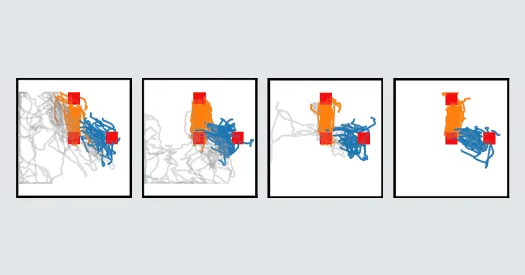
The idea that some neural representations can “drift,” or change over time, even in the seeming absence of learning, is broadly accepted. But characterizing the phenomenon across the brain has proved challenging. “The interesting part is what exactly seems to be stable and what exactly seems to be drifting. That’s not an easy question,” says Tobias Rose, a group leader at the University of Bonn M…

neurogeneticsneuroimagingneuroscience