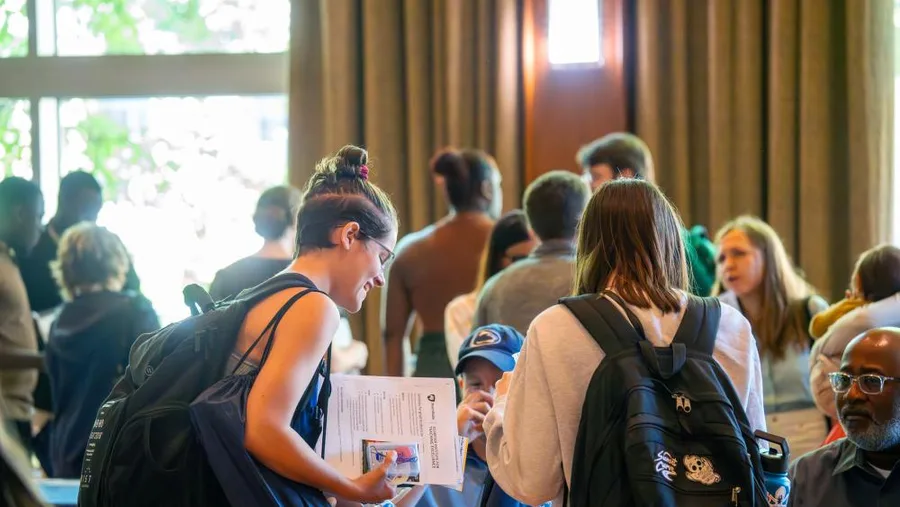
All Penn State graduate students are invited to the 2026 Welcome Engagement Fair for Graduate Students, hosted by the J. Jeffrey and Ann Marie Fox Graduate School and the Paul Robeson Cultural Center. The 2026-27 academic year kickoff event will take place 11 a.m.- 2:30 p.m. on Thursday, Aug. 27, in Alumni Hall, in the HUB-Robeson Center at University Park.
Seismic waves produced by thunderstorms, called thunderquakes, can be used as a novel source for seismic imaging, according to a new study led by researchers at Penn State.
QPHORIA is an annual meeting that brings researchers from the greater Pennsylvania and Ohio regions who focus on condensed matter physics, quantum information science and AMO physics. The meeting is designed for researchers to showcase their work. The event will take place Thursday, Oct. 1, and Friday, Oct. 2, in the Eric J. Barron Innovation Hub, Room 603, on Penn State's University Park campus.…
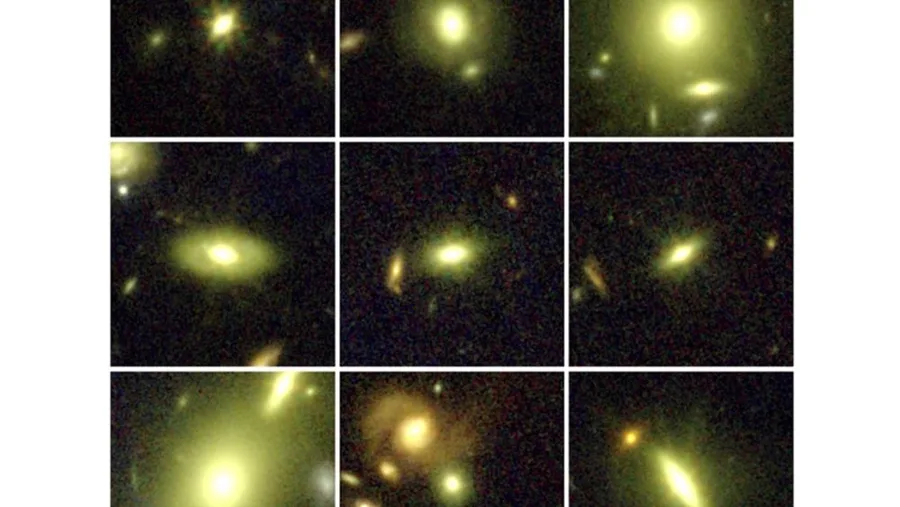
Astronomers have discovered that the most massive galaxies in the early universe contain far more small stars than expected. As a result, these early galaxies were likely much more massive than initial measurements suggested. This discovery, which involved Penn State scientists, challenges current understanding about how the first galaxies formed. The results were recently published in Nature Ast…
The Office of the Vice President for Commonwealth Campuses has awarded nearly $200,000 in seed funding to support 51 faculty-led research projects across 13 Penn State Commonwealth Campuses for the 2026-27 fiscal year.
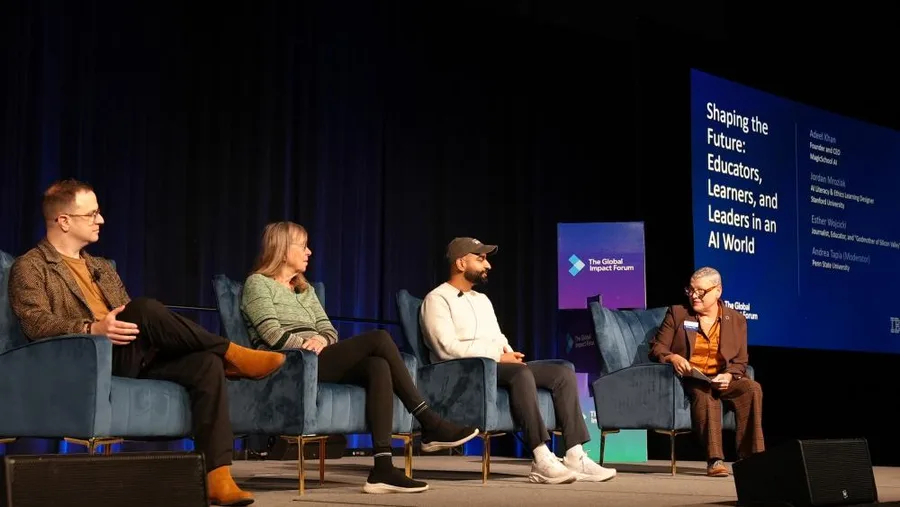
Christopher Dancy, associate professor in the Colleges of IST, the College of Engineering and the College of the Liberal Arts, will discuss how AI intersects with Blackness, human identity and memory, with a focus on digital archives and disaster recovery.
New Penn State research identifies how educators can build trust with students, particularly in low-trust environments, to support meaningful student voice. The findings highlight care, respect and genuine dialogue as key elements in helping students become active partners in their education.
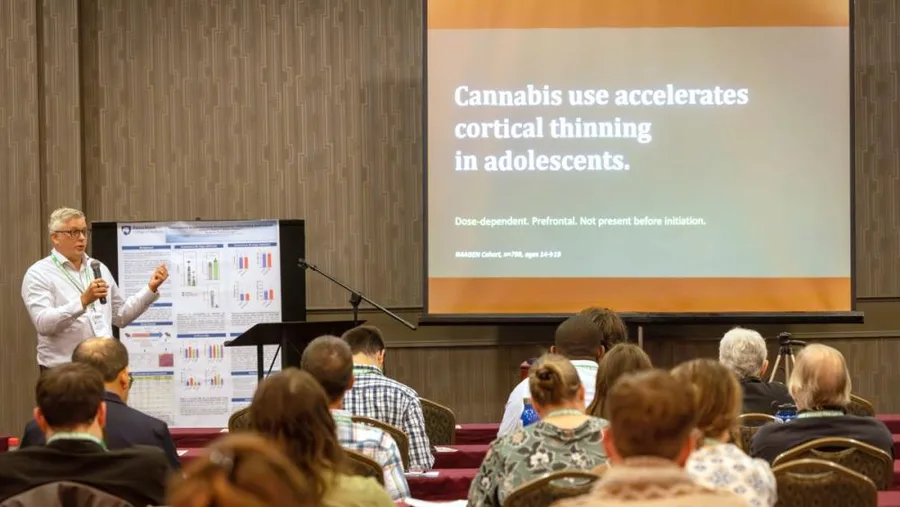
Researchers, clinicians, students and industry professionals from across the country and around the world came to Hershey this summer for the 14th annual conference of the American Council for Medicinally Active Plants, hosted by Penn State College of Medicine.
Feeling too warm or too cold indoors may depend on more than the thermostat. The spectrum of indoor lighting plays a role in how people perceive temperature, according to research led by scientists at Penn State.
While they are on opposite sides of the country, Shinnecock Hills Golf Club in New York and California’s Pebble Beach Golf Club have at least two things in common. They are both hosting the U.S. Open Golf tournament and they both now seed their greens with a weed that most of the nation’s golf clubs spent decades eradicating.
Penn State researchers will keep free open-access publishing options in Wiley journals under a renewed Big Ten Academic Alliance (BTAA) agreement that runs through Dec. 31, 2027. The agreement’s new terms are meant to preserve access for researchers while giving universities a more predictable way to manage rising publishing costs.
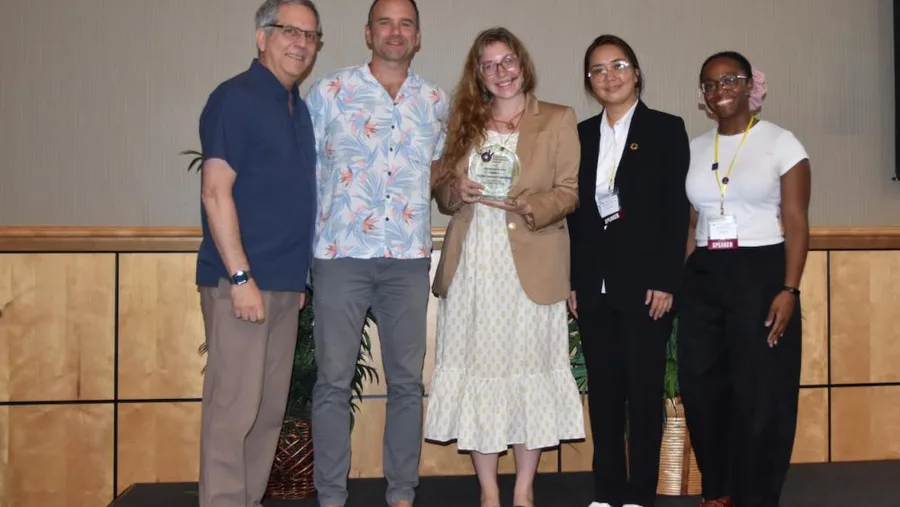
For its efforts connecting with and serving Pennsylvania communities through the power of Penn State, Keystone Community Partnerships — a Penn State Outreach program — was recently honored by the Community Development Society.
Many people in the U.S. believe that their statistical knowledge is limited, but they would rely on statistics for decision-making more if they understood statistics better, according to a new study led by a Penn State researcher.
Three Penn State alumni now working at the Institute of Energy and the Environment are using the hands-on experiences, mentorship and technical training they gained as students to advance environmental research.
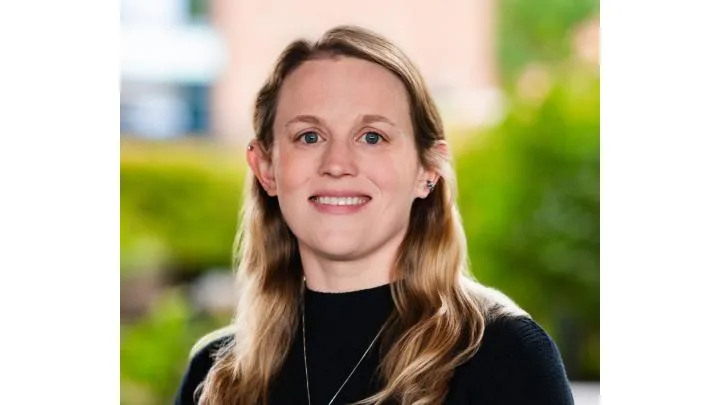
Ashley Shay, director of the Metabolomics Core Facility at Penn State’s Huck Institutes of the Life Sciences, has been named the recipient of the Excellence in Metabolomics Support Award from the Early Career Members group of the Metabolomics Association of North America.
Timothy Simin, professor of finance in Penn State's Smeal College of Business, discussed the value of newer economic sentiment measures and what they reveal about both hedge funds and the risks — and potential rewards — involved in betting against public perception.
John Eicher, associate professor of history, won the triennial Charles R. Bailey Memorial Prize from the New York State Association of European Historians for his article “A Provincial Pandemic: European Ignorance of the 1918 ‘Spanish’ Influenza as a Shared Event,” published in Contemporary European History.
Penn State faculty and staff are invited to join colleagues, researchers and leaders from across sectors at the 2026 Penn State Impact Forum, a two-day event focused on building partnerships that advance innovation, workforce development and community impact, to be held Sept. 10 and 11 in Philadelphia.
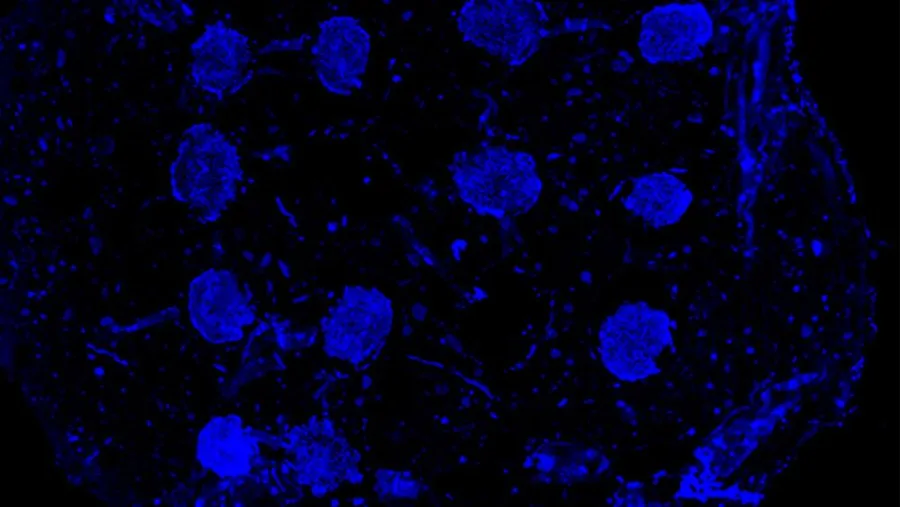
An interdisciplinary team of engineers and chemists at Penn State has laid the groundwork to 3D print spheroids — tiny clusters of living cells — capable of regenerating bone tissue in response to severe trauma or infections. The process layers the fundamental building blocks of an organ tissue, known as bioprinting, and can create cell clusters optimized to support bone tissue regeneration.
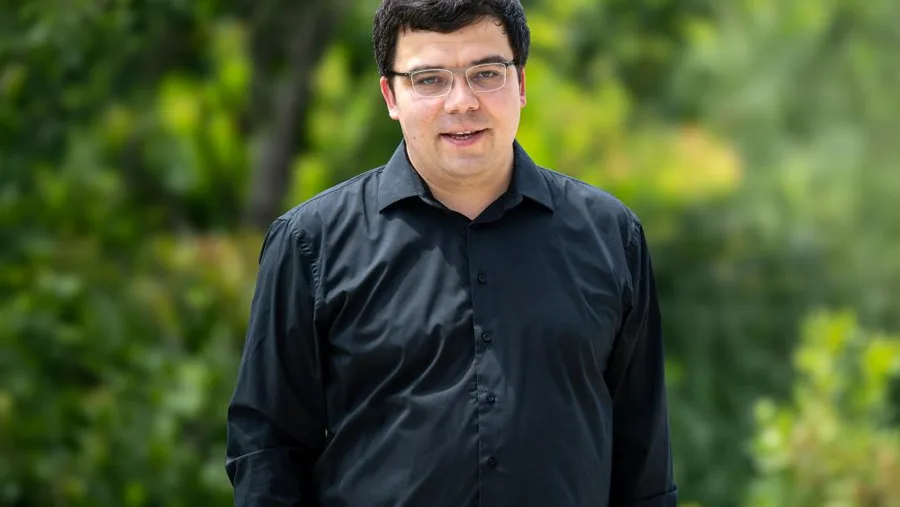
Ruslan Nikolaev, assistant professor of computer science and engineering, has been awarded a U.S. National Science Foundation Faculty Early Career Development Award to design a new operating system that combines performance, security and simultaneous work execution, while also optimizing operating systems to support the next generation of computing.









 research.io