Researchers engineered a living Citrobacter sp. MICI21 biofilm on copper that outcompeted the corrosive sulfate-reducing bacterium Oleidesulfovibrio alaskensis G20 and formed a dense, mechanically cohesive barrier. The MICI21-dominated biofilm limited sulfide ingress and pitting and produced substantially greater corrosion resistance, supporting microbiome engineering as a potential strategy for …
Magnesium–aluminum (Mg–Al) alloys are promising candidates for biodegradable implants, offering a favorable balance of mechanical strength and corrosion resistance. However, the release and systemic fate of aluminum (Al) during alloy degradation remain poorly understood, especially in relation to their microstructure. In this study, we investigate the role of β–Mg 17 Al 12 precipitates in governi…
In this study, the corrosion behavior of a commercial Al-Mg-Si alloy was systematically investigated in sodium hydroxide (NaOH) and potassium hydroxide (KOH) electrolytes over a concentration range of 1–10 M using combined electrochemical experiments and data-driven modeling. Open-circuit voltage, potentiodynamic polarization, and electrochemical impedance spectroscopy were used to quantify corro…
Scientific Reports, Published online: 17 May 2026; doi:10.1038/s41598-026-51125-6 Experimental and computational study of corrosion protection of carbon steel by Lavandula angustifolia extract–Zn(II) hybrid system in saline solution
A team at the University of Hong Kong has developed a new “super steel” that can survive the harsh conditions needed to make green hydrogen from seawater. The material uses an unexpected double-protection mechanism that resists corrosion far better than conventional stainless steel. Even more impressive, it could replace costly titanium parts used in today’s hydrogen systems.
Metal corrosion is far more than merely a persistent nuisance in a modern world held together largely by the strength of its most basic and widely used materials. The decay process is commonly triggered by chemical reactions to which metals are exposed under various environmental conditions. The damage it does to metal alloys can result in serious threats to industrial facilities, transportation,…
Almost all metals and alloys eventually corrode. For common things such as cars and metal gates, corrosion is just part of normal wear and tear. But on the other end of the spectrum, corroding metallic parts in aircraft, biomedical implants or nuclear power plant components could have serious consequences. Karl Sieradzki , a professor of materials science and engineering in the Ira A. Fulton Scho…
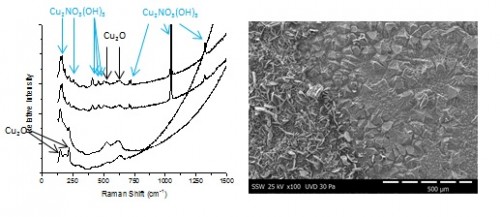
Recent research is looking to determine the effects of radiolytically produced HNO3 droplets on the corrosion of copper coatings on high level nuclear waste containers. The extent and distribution of corrosion damage has been analyzed to help determine a penetration rate and the reaction rate constants required to model the corrosion process. A micro-electrochemical cell […] The post Corrosion of…
The study investigates the rate of corrosion and its impact on mild steel. The test was carried out in different selected environments, to understand their environmental influence and the rate of corrosion in that environment namely: 0.1M of Hydrochloric acid, Underground (soil), Atmosphere, Salt water and Fresh water. A mild steel of diameter 1.2cm and […] The post Corrosion Rates and its Impact…
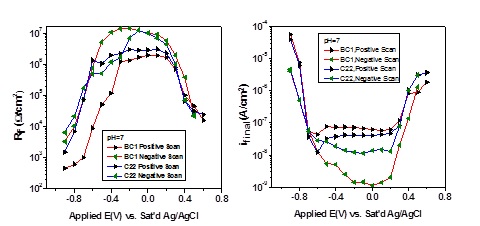
The primary goal of this research was to elucidate the key influences of the alloying elements in Ni-Cr-Mo alloys on their electrochemical behaviour. Two alloys, varying in Cr and Mo content, were studied in deaerated 5 M NaCl solutions. As indicated in Figure 1, potentiostatic polarization followed by electrochemical impedance spectroscopy (EIS) (to measure the […] The post Assessment of the Rol…
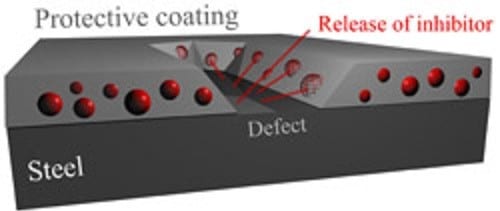
Research in corrosion protection has been increasing since the 18th century, especially with respect to steel. In the steel industry, corrosion protection is usually achieved by galvanizing with zinc, which dissolves instead of the iron when it comes into contact with corrosive media. However, during the production process, initial corrosive spots are formed right at the cut edge. An idea has bee…