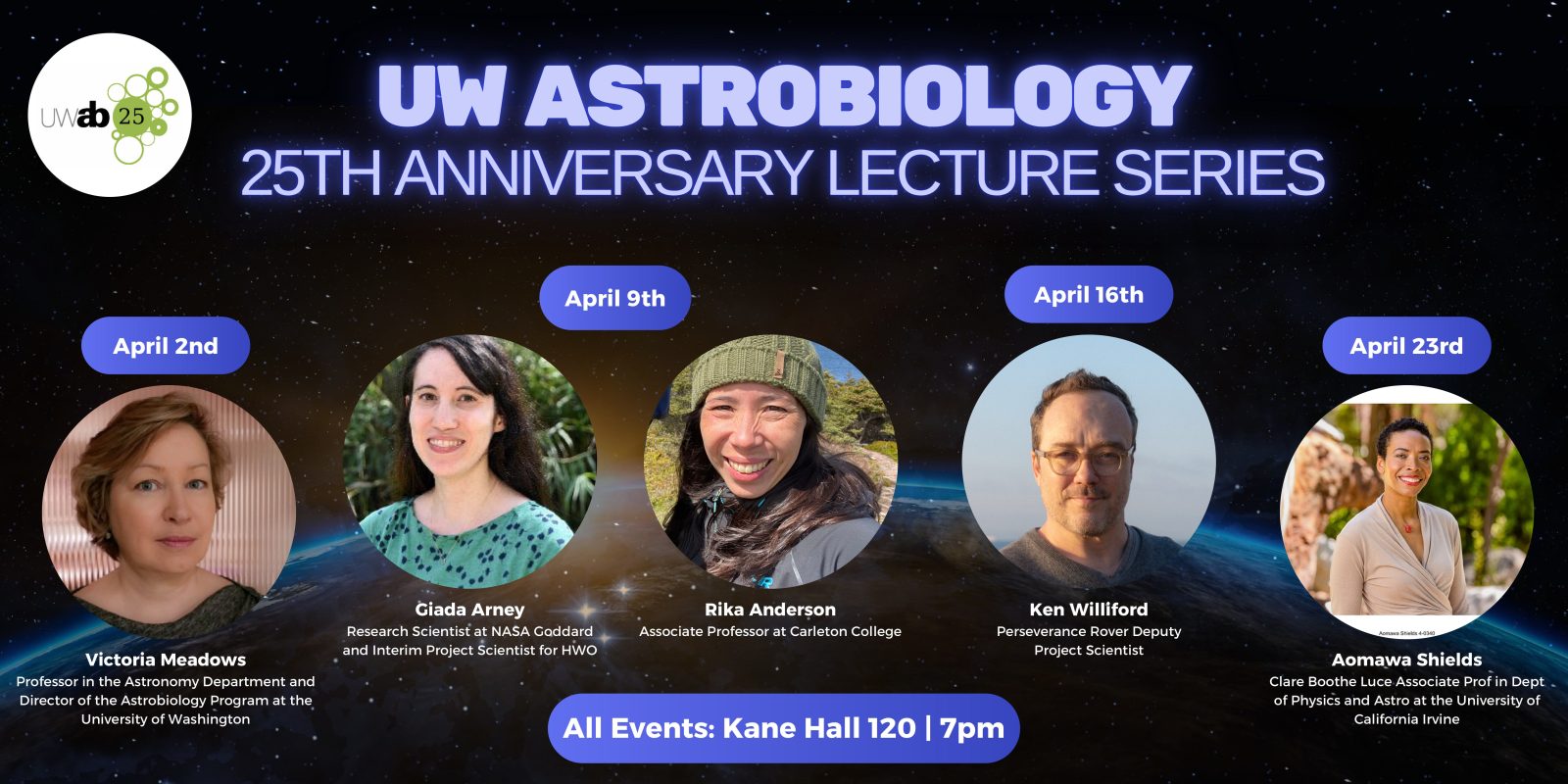
Recordings are now available for the UWAB 25th Anniversary Lecture Series! You can watch them at this playlist below (it will automatically begin playing a video, click the playlist button in the top right to navigate to the others):
View the original announcement and talk descriptions below ~~~~
UWAB is excited to announce that we are hosting a public lecture series to celebrate the 25th anniver…
UWAB would like to recognize UW Environment & Forest Sciences and Astrobiology professor, Dr. Sharon Doty, who has been selected as a AAAS fellow by the American Association for the Advancement of Science.
Read about Prof. Doty’s achievement on the UW College of the Environment news story:
The UW Astrobiology program remembers our founding Director, Jim Staley. Jim came to the University of Washington in 1971 as a professor of microbiology. He was devoted to seeking scientific truth and promoting interdisciplinary collaboration, leading him to become the founding Director of the UW Astrobiology program from 1998-2005. Jim supported the program through research, mentorship, and lead…
Dr. Jonathan W. Arenberg
Northrop Grumman Space
Astronomy is a science driven by observation. Since 1609, those observations have required ever more sensitive and exquisite hardware. In the 20th century, advances in technology and creativity allowed for the creation of space observatories. These space observatories have opened entirely new areas of science and play a vital role in the advancement…
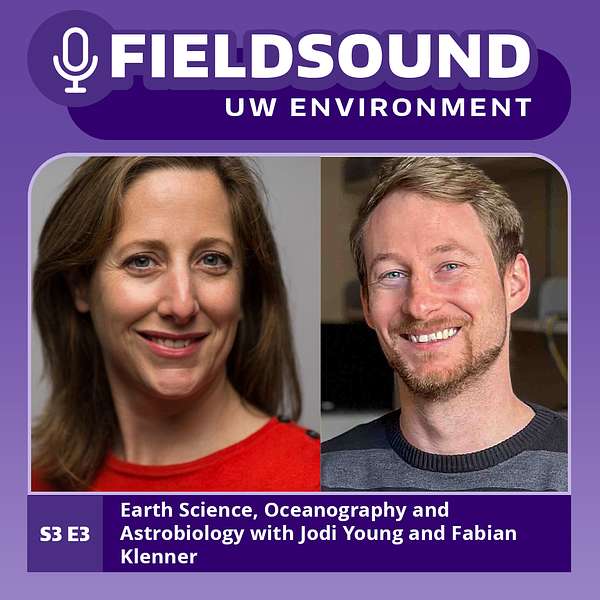
This week UWAB faculty member, Jodi Young, and postdoctoral researcher, Fabian Klenner, joined the UW College of Environment’s Extreme Environments podcast, FieldSound, to teach the community about how extreme environments on Earth can inform us about the search for life on distant exoplanets and icy moons, such as Europa and Enceladus!
Jodi Young studies how marine microalgae shape our ecosystem…
Alberto Malinverno
Lamont-Doherty Earth Observatory of Columbia University
Astronomical cycles have been widely recognized to drive climatic changes that are recorded by cyclic sediment deposition. The developing discipline of astrochronology uses these cycles to progressively refine the geological time scale. Astronomy therefore informs geology. Conversely, can the geological record provide astr…
Abstract: The search for life beyond Earth occupies exploration efforts of space agencies and researchers, and captures the imagination of the public. Mars is a top Solar System candidate in this quest because of its multiple, once habitable environments of surface liquid water that may have harboured microbial life at a time when Earth’s own biosphere was getting underway billions of years ago. …
by Ardith Bravenec
Carlsbad Caverns
The workshop begins at Carlsbad Caverns, a natural wonder known for its extensive underground limestone caves. From the entrance gate in White City, the road to the Visitor Center stretches 11.3 km, climbing an elevation of approximately 230 meters, from 1117 meters to 1347 meters above sea level. Many visitors are unaware that this scenic drive takes them up a…
Environmental Analogs for the Origin of Life
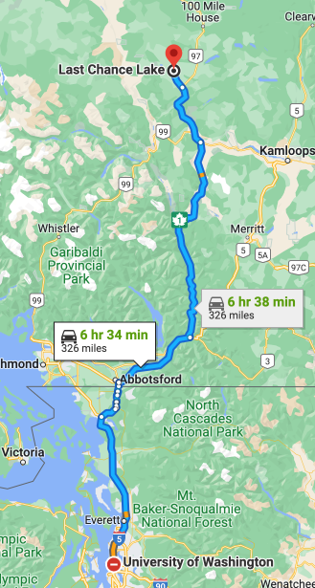
Why the lakes:
Prebiotic phosphorylation uses ~0.1-1 M phosphate but natural waters are ~1 𝝻M. Lakes concentrate by evaporation or freezing solving this prebiotic “concentration problem”. Last Chance Lake is the most phosphate-rich in the world. Goodenough is also relatively phosphate-rich. Why?
What was done:
Sinking through crème brulee crust
Syringe…
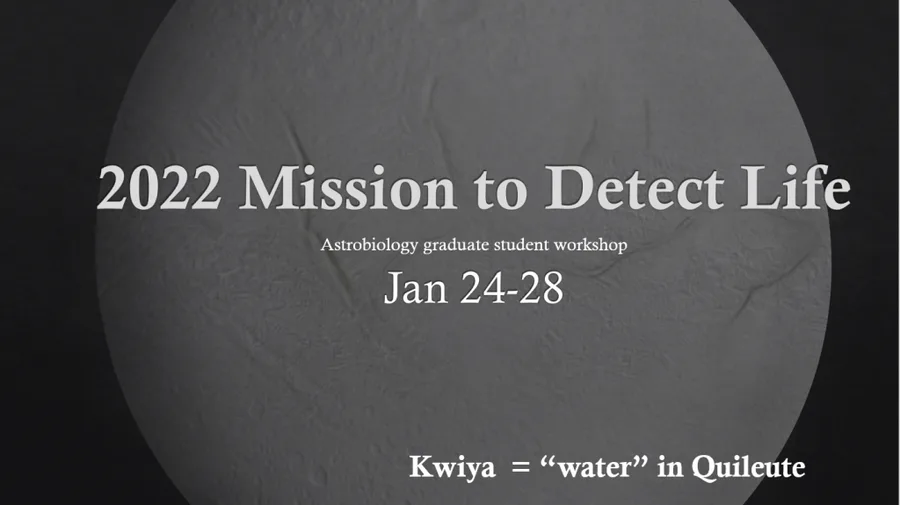
GOALS: 1.LEARN 1.Instrument capabilities/limitations 2.Experimental design- 3.Sample management on site 4.Data types and structure 5.Data analysis/interpretation 6.Importance of replication 7.How environmental context shapes interpretation 8.Critically think about Life Detection Ladder 9.How to communicate findings to press/public ● 2.NETWORK 1.With your peers 2.With experts in the Astrobio field…
Hilairy Hartnett Biogeochemistry integrates theory from geology, chemistry, biology and physics to address questions across spatial and temporal scales including…
Stephane Mazevet Observatoire de la Côte d’Azur, University Côte d’Azur, Nice (France) With thousands of exoplanets now identified, the characterization…





 research.io