Matthew Williams (https://www.universetoday.com/authors/houseofwilliams)
7h ago
The most comprehensive catalogue of exploding white dwarf stars ever assembled has revealed new clues about dark energy, the mysterious force driving the universe’s accelerating expansion.
When the JWST’s first science results started rolling in, it was a triumph for scientific vision and persistence. For years, the fate of the powerful space telescope was uncertain. It went way over budget, and for 25 years, troubling conversations accompanied its ongoing development. Several times, it seemed like it would be cancelled, and in […] The post Dense Galaxies Are Carving Out a Bubble i…
Lauren Biron·Lawrence Berkeley National Laboratory
12h ago
A mysterious signal deep underground may offer LUX-ZEPLIN its most intriguing clue to dark matter yet. For nearly a century, scientists have been trying to identify dark matter, the mysterious material believed to account for about 85% of all matter in the universe. Despite its enormous influence on galaxies and cosmic structure, dark matter has [...]
_Zenodo_. 2026Euler Cosmos series [S16]. This working paper completes the entropic-gravity framework of [S15] by adding one axiom — that the universe began at low coarse-grained entropy and climbs monotonically toward the de Sitter horizon maximum — and reading the dark sector as the mechanical response of a cosmological "glass": a medium held out of its own equilibrium by the arrow of time. The …
Recent work on holistic top-down confirmation has made precise why support for a model package need not transfer to its parts. A distinct downstream question remains: at what claim-resolution does a published inferential pipeline license attribution? We develop a contrast-indexed account of support provenance that identifies the highest claim-resolution carried by a documented analysis, tracking …
I recently saw a video on gravitational waves that says that expansion of space can only be measured due to changes in speed of light as everything else that could have been used to measure the expansion has expanded too and hence the relative expansion has become zero. I feel that had space been the one to expand, we should have observed an increased speed of light. To illustrate further, say t…
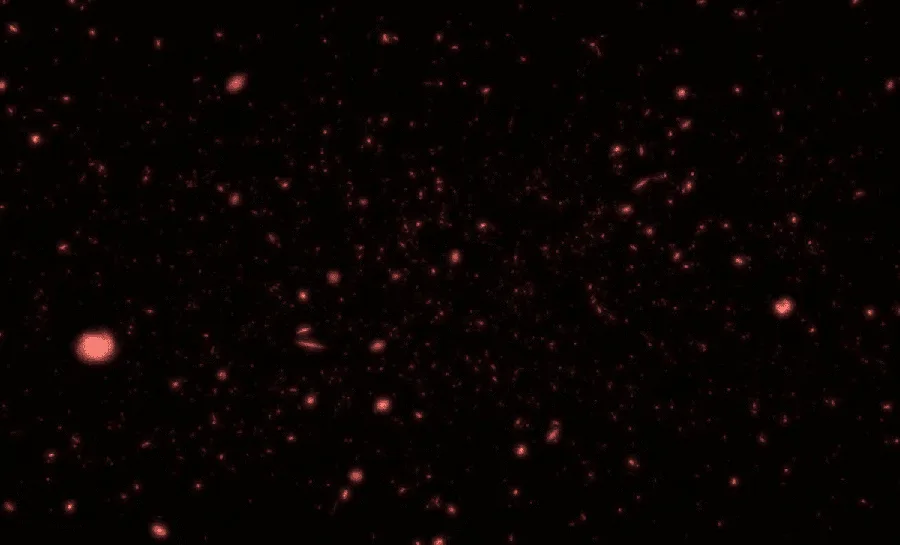
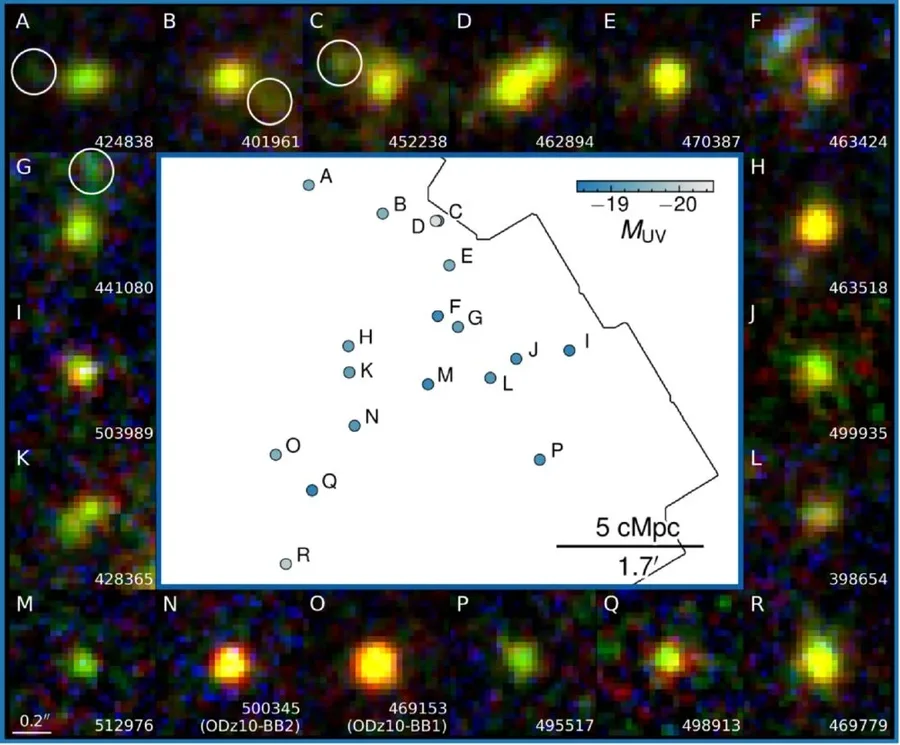
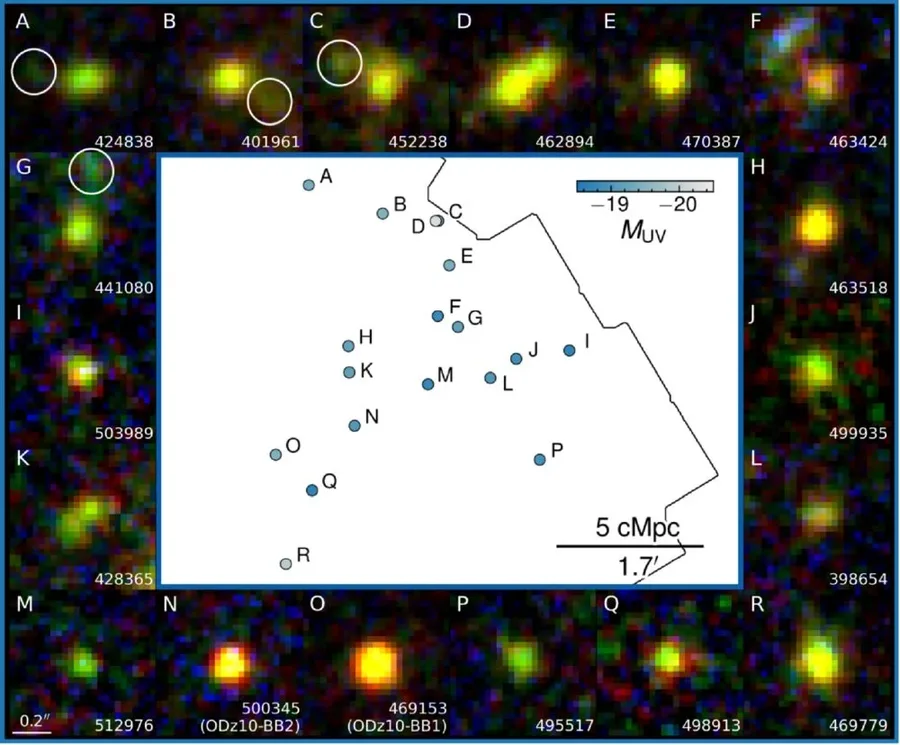
Light could only travel freely in the Universe after cosmic reionization. Before that, neutral hydrogen stopped photons from travelling. The JWST has found evidence of an overdensity of galaxies carving out a bubble of reionization. Is this how it all started?
This paper develops ICDP Network Cosmology, a theoretical framework in which the multiverse is modeled as a structured communication network governed by the Invariant Causal Decomposition Principles. In this approach, every spacetime manifold carries an ICDP invariant tensor whose conservation law and associated gradient field determine the causal structure and physical constants of each universe…
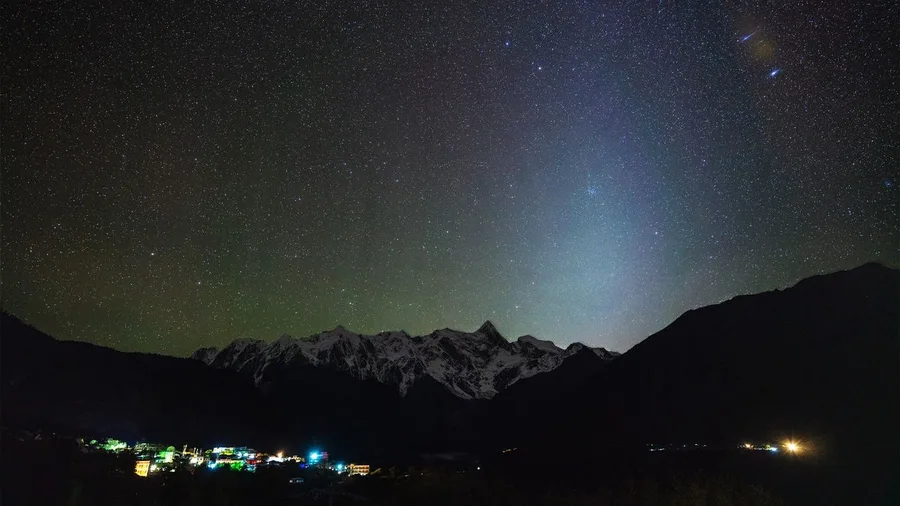
September's new moon opens a dark window for seeing zodiacal light, the ghostly cone of interplanetary dust that rises above the eastern horizon before dawn.
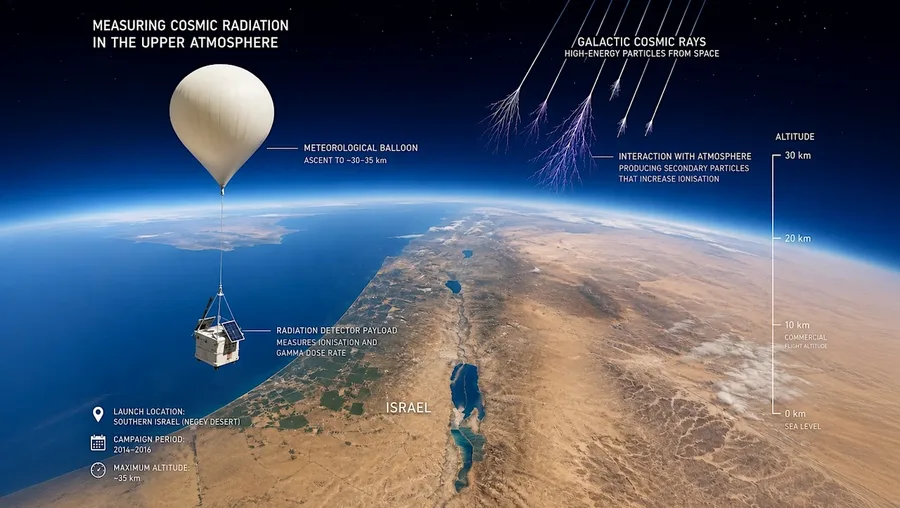
[Hebrew University of Jerusalem]. Radiation from space is constantly entering Earth’s atmosphere, but how much of it reaches the altitudes used by commercial aircraft depends not only on height and […] The post Cosmic Radiation at Flight Altitudes Rises When the Sun Is Less Active appeared first on Astrobiology .
Nature Astronomy, Published online: 11 September 2026; doi:10.1038/s41550-026-02930-6 Is the Universe infinite in all directions? The only way to know is to look. This Review presents the status of investigations into the topology of the Universe, and looks ahead to upcoming opportunities.
The Universe still has plenty of hydrogen, but its ability to turn that fuel into new stars appears to be fading. The Universe is producing far fewer new stars than it did billions of years ago. Over the past 4.5 billion years, the cosmic star formation rate has fallen to less than half its former [...]
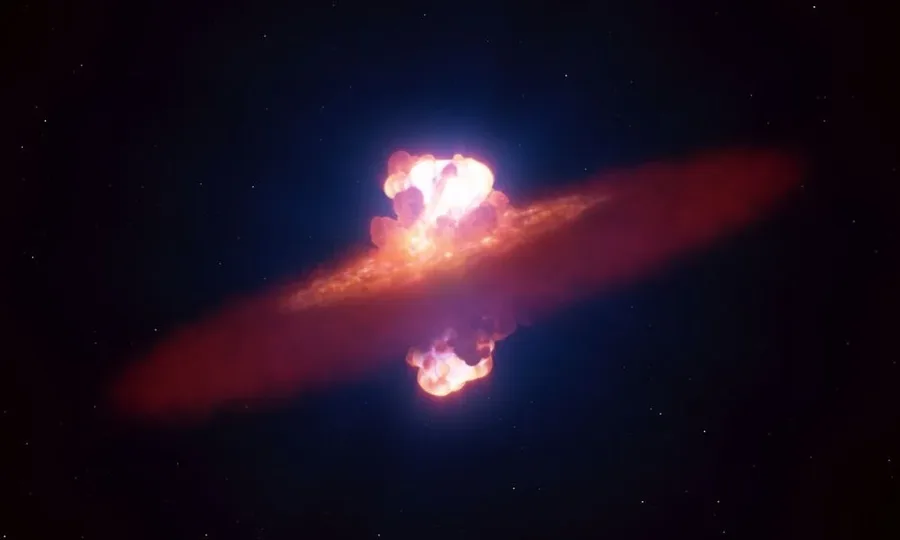
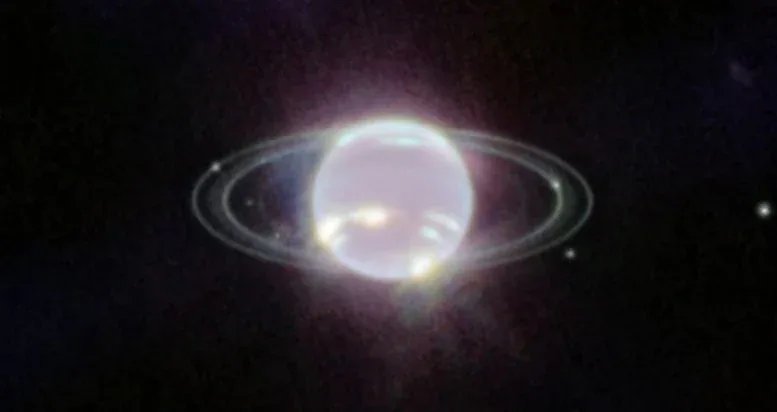
Neptune’s tiny moons may be ancient wreckage, preserving material exposed when a catastrophic event shattered much larger icy worlds. In 1989, Voyager 2 discovered six previously unknown moons around Neptune. Five of them are tiny satellites that travel just beyond the planet’s main rings. Their small size and great distance from Earth have made them [...]
Andy Tomaswick (https://www.universetoday.com/authors/andy-tomaswick)
1d ago
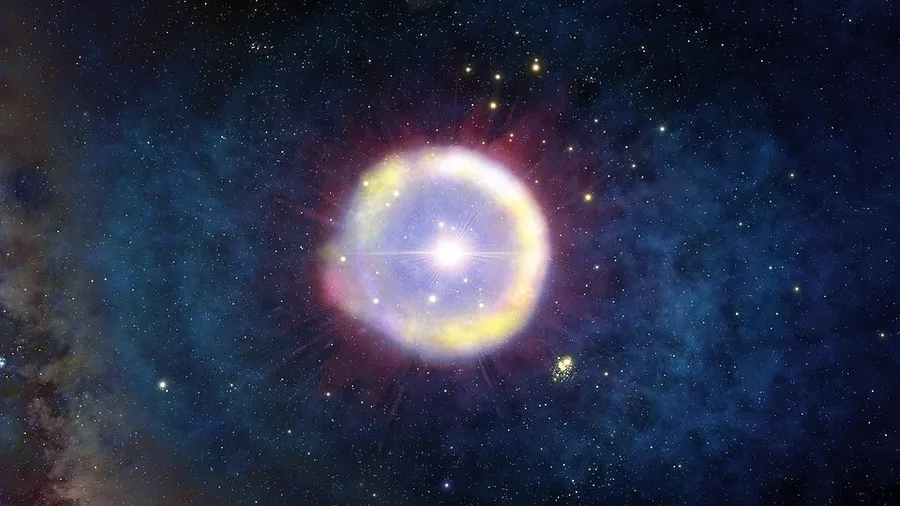
As our telescopes have improved and we’ve been able to peer farther back in time, we’ve begun finding more fascinating features of the universe. But one thing we definitely haven’t found yet is Population III (Pop III) stars. These were the earliest stars in the universe, formed completely from pristine hydrogen and helium, with no “metals” (i.e. elements heavier than those two) polluting their p…
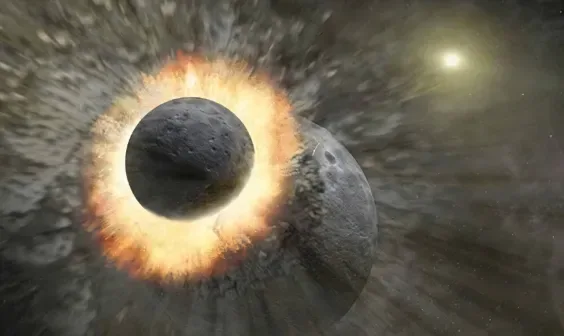
Researchers played out the impact between Earth and the hypothetical ancient planet Theia The post The Moon May Have Been Created in Just Five Hours appeared first on Nautilus .


 research.io