Verily Health, a company focusing on AI for precision health that emerged from Google X and eventually became Google Life Sciences in 2015, has received funding from its partner Nvidia. The company’s flagship product, the Verily Pre Platform, is a precision health platform that turns clinical, genomic and device data into AI-ready datasets. Verily’s current investors include Alphabet, Series X Ca…
Clinical trials are among the pharma domains seeing the most rapid embrace of AI agents, thanks to their potential extensibility and ability to automate routine tasks. Cost and complexity have a lot to do with that interest. An average phase 3 trial collects close to 6 million data points, according to a Tufts CSDD and… The post ICON taps Anthropic and Microsoft as it puts clinical-trial agents i…
A team of researchers spent almost eight years collecting observations of a binary star system to build a three-dimensional model which supports the theory that the two stars formed separately and came together later, rather than forming from the same disk, as the researchers’ 2019 paper suggested. Astronomers think at least 90% of massive stars exist in binary or higher-order multiple systems, b…
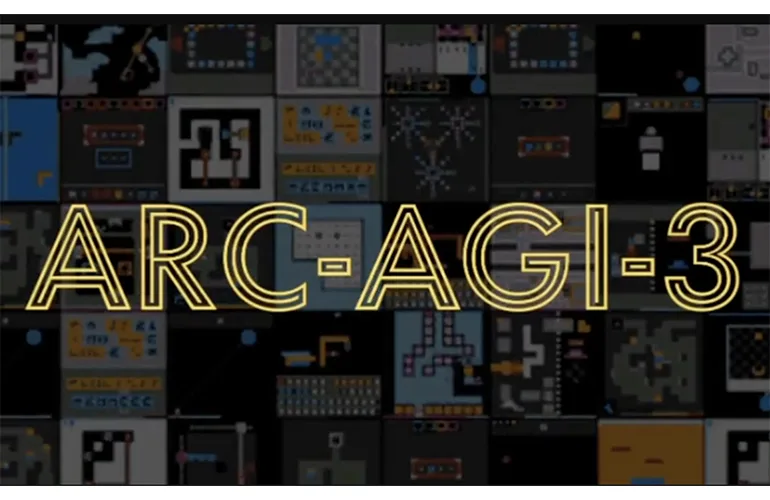
OpenAI’s new GPT-6 Astra scored 62.7% under the benchmark’s standard, provider-neutral testing harness on ARC-AGI-3, an interactive benchmark that requires AI agents to explore unfamiliar games, infer their rules and goals, and plan effective actions without instructions. The same model scored 99.9% with an OpenAI-specific context-management adapter that preserves the model’s hidden reasoning sta…
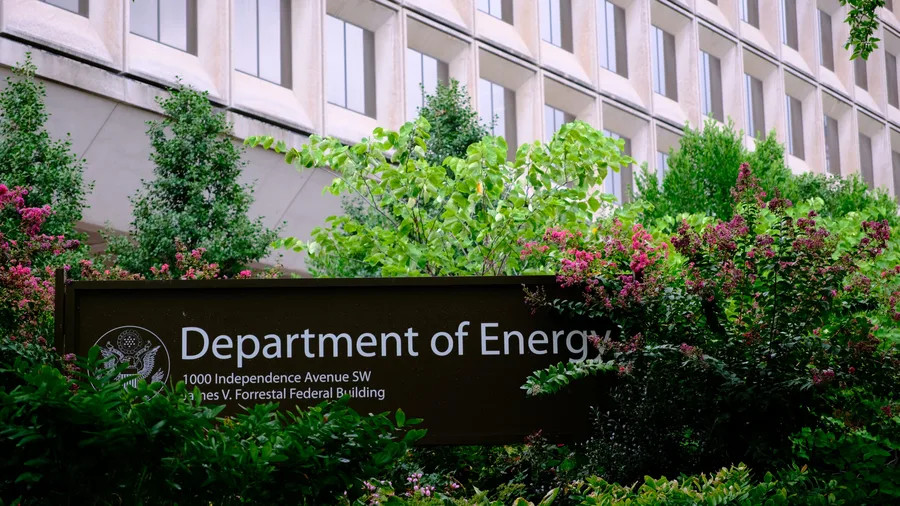
The U.S. Department of Energy has opened a funding opportunity of up to $12 million for research on space-grade photovoltaic cells, manufacturing processes and testing systems. The Space Photovoltaics Research and Development opportunity is a notable expansion of DOE’s photovoltaic R&D portfolio into spacecraft power after a history centered largely on terrestrial solar applications. “The… The po…
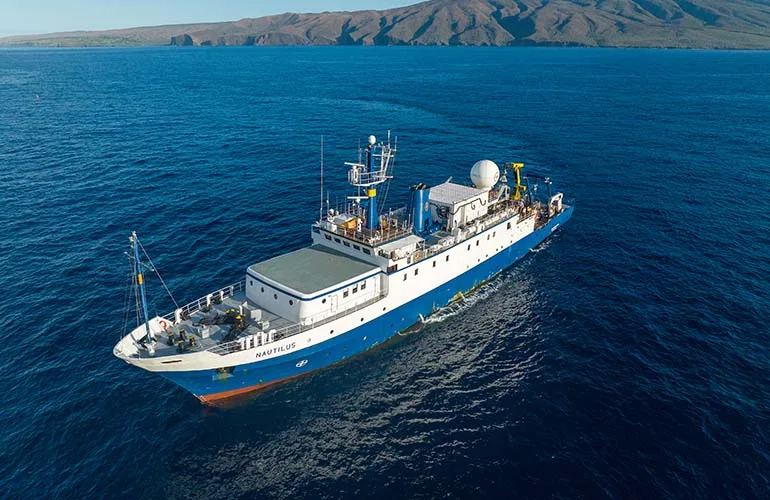
After 13 years with the same seafloor-mapping system, the research vessel Nautilus from the non-profit Ocean Exploration Trust (OET) is surveying the deep Pacific around Wake Atoll, a U.S. territory located about 3,000 miles east of the Philippines. The ship is now putting a newly installed multibeam sonar system to work at depths of up to 11,000 meters (36,089 feet), approximately 6.8 miles and …
Anthropic released Claude Fable 5.1 and Claude Mythos 5.1 on September 1, the latest interaction of the model series that is among the most influential, and expensive, model launches in recent memory. Now, with the launch of the two new models, Anthropic is claiming significant jumps in performance on scientific benchmarks. On Terminal-Bench-Science 0.1, an… The post Anthropic doubles a science b…
Sandia National Laboratories’ Agent Bayes project faces a nine-month test that asks whether AI can help scientists perform Bayesian reasoning, a process that often requires a subject matter expert and a statistician working together. The project is part of the first cohort selected for the Genesis mission, a Trump administration effort to “transform American science and innovation through the pow…
The country has transformed considerably since the 1980s. “Back then, we were a coffee-and-banana country,” Morales said. Both the medical device and semiconductor industries have made significant investments. The medical device firm Baxter set up shop in 1987. Intel followed with a landmark $300-million-plus semiconductor assembly-and-test plant investment announced in late 1996 and begun in… Th…
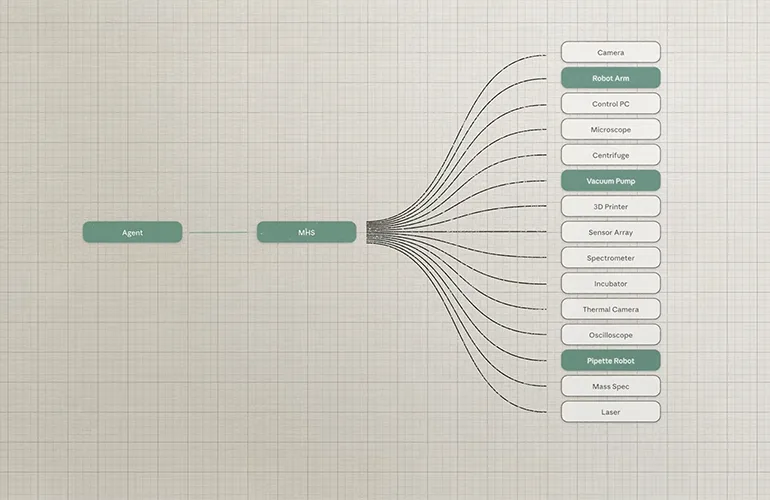
In late June, frontier AI lab Anthropic laid out a vision for its Claude models to run scientific workflows rather than only help plan them. In the weeks since, the pieces of that vision have grown clearer. Anthropic now says it has supplied part of the missing physical layer with the Model Hardware Standard (MHS),… The post Anthropic wants Claude to run life sciences R&D. Now it is wiring AI age…
In a survey of more than 1,000 laboratory personnel across five countries, quality, safety, and purity emerged as the leading considerations when purchasing research chemicals. Cost ranked near the bottom, according to findings previously presented by Honeywell’s research chemicals business, now part of Solstice Advanced Materials. Those priorities pave the way to a larger operational… The post U…
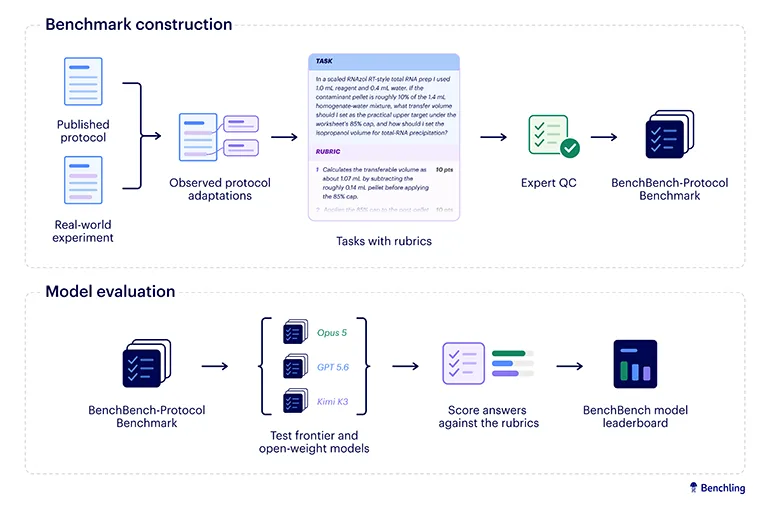
San Francisco-based Benchling is betting that AI agents can potentially bring something like vibe coding’s rapid build-test-revise loop and targeted automation to scientific work with the requisite level of reproducibility required for science. The aim is to start with data-heavy tasks and eventually extend toward human-supervised wet-lab workflows. “LLMs can work in the wet lab… The post Benchli…
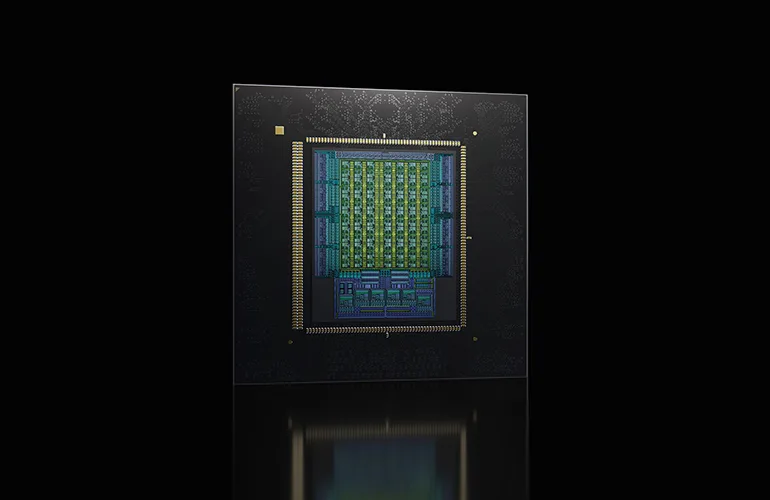
Palo Alto–based startup Architect Labs, which emerged from stealth in June with a $24 million seed round, is boasting that its AI-designed and validated Redwood chip beats one NVIDIA edge product, the Jetson Orin Nano, in a specific AI-inference comparison. The company projects that a Samsung 8 nm implementation of Redwood would deliver 1.75× the… The post Startup Architect Labs says its AI-desig…
Over the past several months, SpaceX CEO Elon Musk has been increasingly vocal about putting AI data centers in space. In February, he predicted that, within five years, “we will launch and be operating every year more AI in space than the cumulative total on Earth” He said then that SpaceX, then still a private… The post SpaceX unveils $100B Louisiana spaceport, targets 175 kW NVIDIA AI system f…
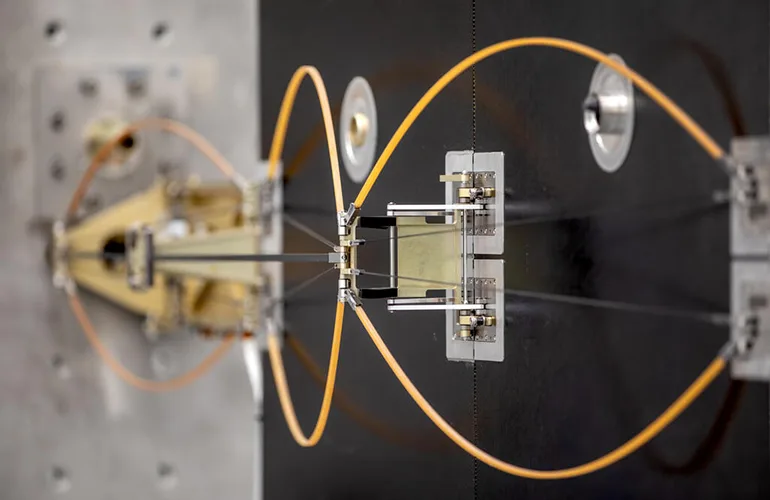
Solar arrays have been standard spacecraft hardware for decades, but their tendency to flex can complicate maneuvers needing precision such as docking. To tame the wobble, Southwest Research Institute (SwRI) developed PaSTA, a technology that can bring rigidity to deployable structures on spacecraft, thus enabling autonomous spacecraft docking operations. PaSTA also happens to be one… The post On…
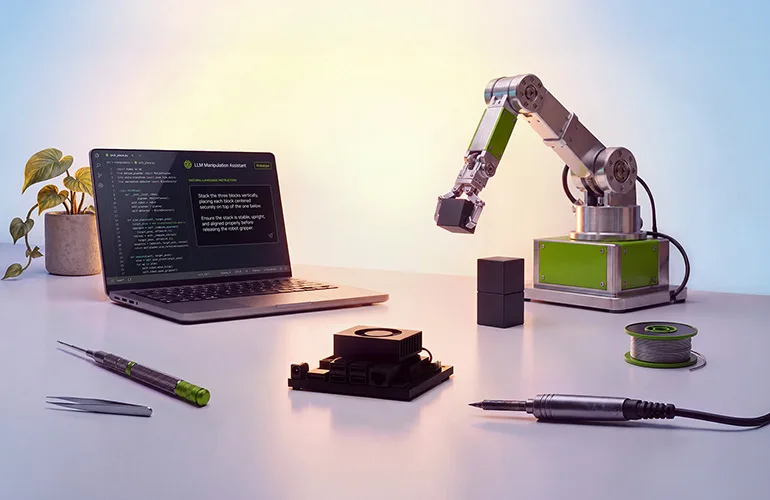
NVIDIA just announced the Jetson Orin Nano 2, a new computer platform for robotics and edge AI that the company says doubles inference performance compared with the Jetson Orin Nano Super. It can also run at 40% less power at equivalent performance. NVIDIA has not yet disclosed pricing, and says the module and developer kit… The post NVIDIA and Apple unveil compact AI computers for robots and age…
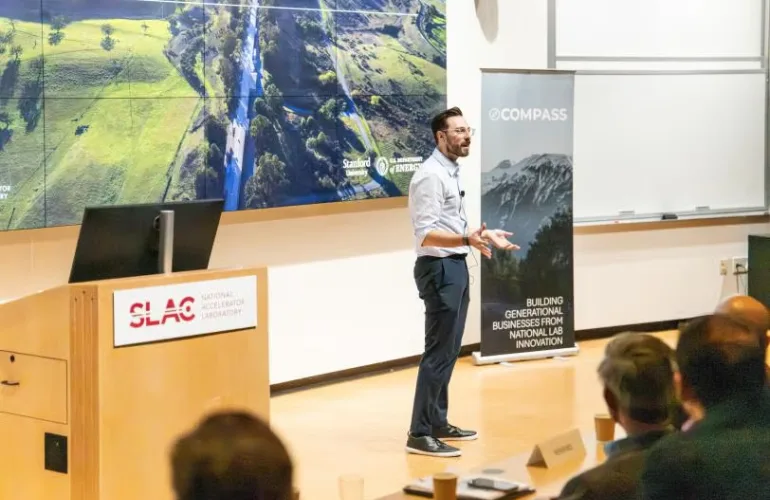
SLAC and Sandia National Laboratories will lead COMPASS, a new program with funding from the DOE’s Office of Technology Commercialization that aims to facilitate the launch of startups based on national lab technologies. The program, which is short for Commercialization Pathways for Accelerating Scientific Solutions, has received 8.4 million in funding over three years from the Department of Ener…
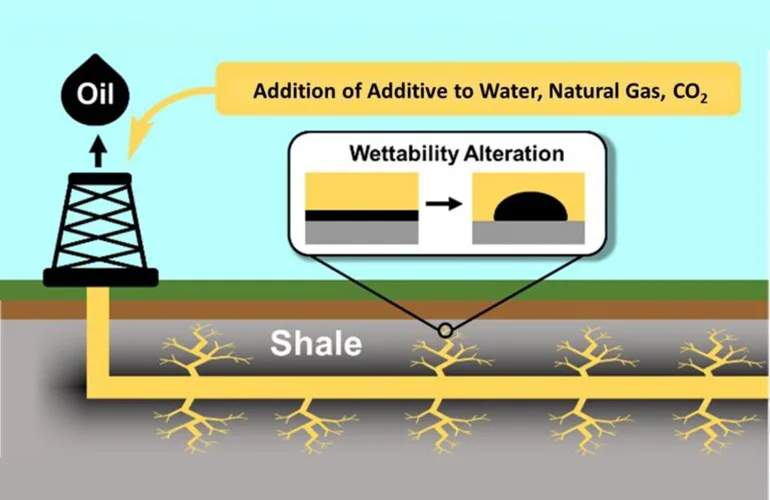
At the National Energy Technology Laboratory (NETL), we are undertaking integrated research aligned with U.S. Department of Energy (DOE) priorities and industrial needs to increase the recovery of hydrocarbons from challenging subsurface formations and enable the development of secure, efficient, and low-impact oil and gas systems. In April 2026, DOE’s Hydrocarbons and Geothermal Energy Office es…
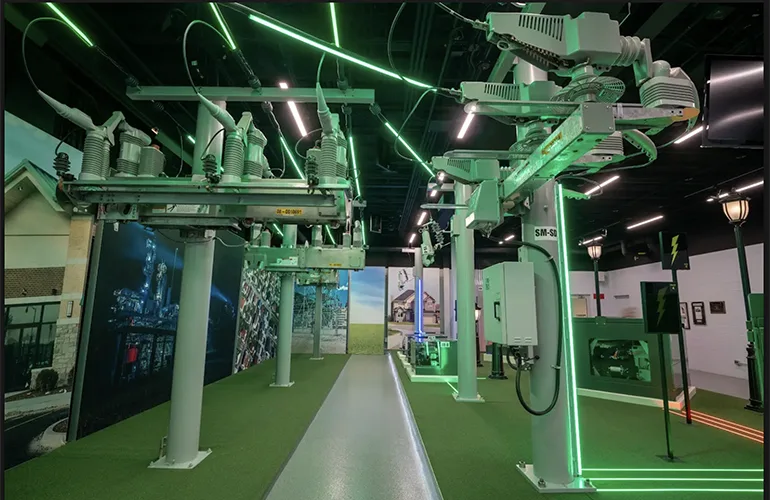
Blistering summer heat. Data center power demand that is potentially set to double from 2025 to 2027. An uptick in wildfires. The U.S. power grid is at an inflection point, but there is also a significant effort to reshape the grid. “In this era we’re in now, we’re seeing more investment in the grid than… The post Inside S&C Electric’s and Argonne National Lab’s CRADA partnership appeared first o…
Lawrence Livermore National Laboratory (LLNL) is partnering with Oxylus, a Yale spinout focused on CO2 electrolysis technology, to develop and, potentially, commercialize a reactor that could convert carbon waste to methanol without alkali cations. LLNL won $2 million from the DOE’s Industrial Technologies Office through the Technology Commercialization Fund with the aim of advancing the technolo…


 research.io