{loadposition bannertop} {loadposition sidebarpub} Swedish Company Saab has unveiled the A3-001 unmanned fighter jet concept as a European counterpart to the U.S. Air Force’s Collaborative Combat Aircraft (CCA) effort, introducing an autonomous combat-drone concept designed to operate alongside Gripen fighters in heavily contested airspace. The aircraft is intended for suppression of enemy air de…
Agentic AI research in 2026 has moved past the basic question of whether a model can be called a tool. The harder questions are whether an agent can finish long workflows, survive live websites, verify its own work, recover from failure, and improve its process over time. The five papers below map that shift well […] The post Top 5 Agentic AI Research Papers of 2026 appeared first on Analytics Vi…
A frontier language model is only one component of an AI agent. The surrounding agent system—often called a harness—determines how the model receives...
This article introduces Munder Difflin, a program that operates multiple AI agents—each replicating the user’s work style and memories—as if they were an office.
Why AI ROI depends on an AI-ready org chart: outcome-owning, agent-augmented teams that move value faster than traditional departments. The post Your Board Wants an AI Strategy. Give Them an AI-Ready Org Chart Instead. appeared first on .
Most AI products begin with a chat box. That is useful for answering a question, drafting a document, or calling a tool. But it becomes harder to use when the work lasts longer than one conversation or involves several people and Agents. The problem is not only memory. The work also needs a clear goal, an owner, a current state, decision rules, review points, and a result that somebody can verify…
Our autonomous agent has been running a small publishing business for three months: it posts, replies, follows, publishes articles, and tracks every decision it makes. The state layer behind all of that is not Postgres, not SQLite, not Redis. It is a directory of JSONL files committed to git. This choice gets us laughed at occasionally, so this post is the honest case for it — the patterns that m…
Autonomous driving technology is maturing, and a future in which cars entirely drive themselves is quickly approaching in the rearview mirror. Yet safety and trust remain crucial barriers to overcome before fully autonomous driving becomes a reality, and a key part of this is the "eyes" of the car.
Work with agents in rooms
A room is a group chat between humans and agents. Built so your whole team can work with the same agents in one place.
Multiplayer AI, the way you’ve always wanted.
Get work done together in the same file. Humans and agents edit one doc, spreadsheet, or codebase side by side, live in the room.
This post is my submission for DEV Education Track: Build Multi-Agent Systems with ADK . Finding the perfect, thoughtful gift shouldn't feel like a chore. Whether it's for a birthday, anniversary, or holiday, we all experience gift-buying paralysis: Generic suggestions : "Just buy them a mug or a generic gift card." Budget anxiety : Falling in love with an idea only to find out it costs 3x what y…
I went from earning about ¥100,000 a month as a university student to ¥600,000 by stacking side gigs — then got laid off and dropped straight back to zero. Six months later, after rebuilding everything around an autonomous Claude Code environment, monthly revenue is past ¥1.2M. The piece of that environment I want to open up here is the one that lets apps go into App Store review without a human …
The awesome-a2a repository is a comprehensive, curated list of Agent2Agent (A2A) protocol servers, clients, tools, and frameworks. It serves as a central hub for developers looking to explore and build interoperable AI agent systems. This resource helps in discovering various A2A-compliant implementations and related utilities.
Agtonomy has unveiled two key updates to its autonomy stack for factory-level automation, introducing autonomous multi-point turning and expanded passive data collection across its fleet. The company does not manufacture tractors but embeds its auton
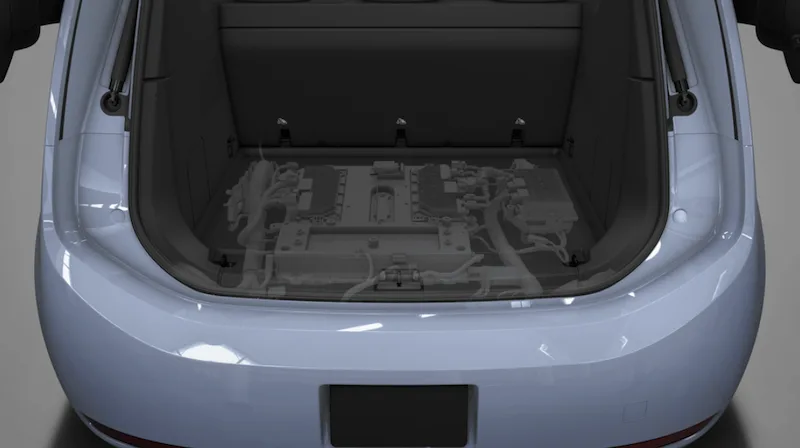
Waymo has revealed new technical details about the onboard computing system that powers its autonomous driving technology, including a purpose-built 5 nm ASIC delivering more than 1,000 TOPS of machine learning performance. The company says its latest compute architecture is designed to provide millisecond-level response times while operating under the vibration, temperature extremes and other [&…
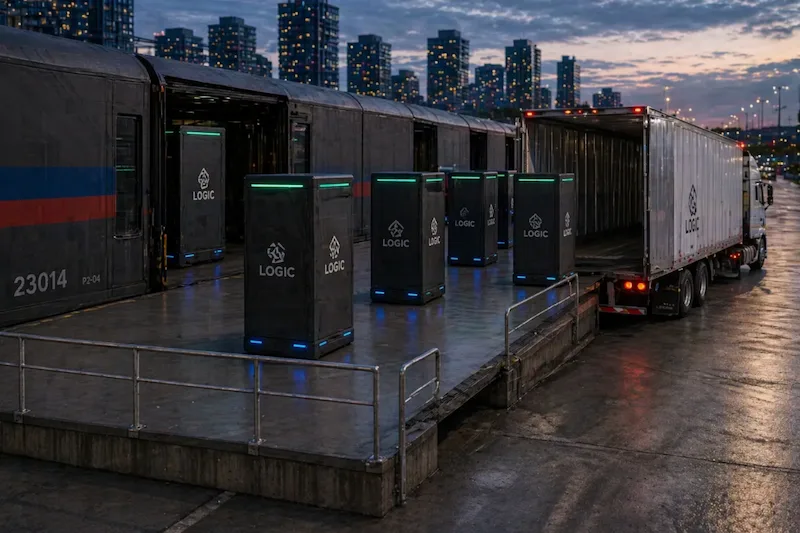
Logic Robotics, a developer of autonomous, data-driven logistics solutions, has unveiled what is described “a breakthrough” in multimodal logistics automation with the introduction of its intelligent transloading solution, powered by the Logic Digital Twin Operating System. Designed for rail-to-road operations, the system integrates the Logic Pallet’s autonomous mobility with real-time digital tw…
The company said its ‘purpose-built 5nm ASIC’ chip aims to optimise AV systems for ‘low-latency performance’. Read more: Waymo details custom AI silicon for autonomous vehicles
Scientific Reports, Published online: 21 August 2026; doi:10.1038/s41598-026-63761-z Local path planning for autonomous vehicles: a dynamic potential field-guided and force-coupled adaptive pure pursuit approach
A new collaboration between TIER IV and Renesas could shape how self-driving and software-defined vehicles are built worldwide, as automakers seek more flexible platforms for AI-driven features. The effort aims to combine open-source software, advanced chips, and scalable tools that may accelerate safer mobility across markets from Asia to Europe to North America.









 research.io