
astrophysics

Phobos is speeding toward its inevitable destruction, but scientists have uncovered a surprising twist in its timeline. Could it break apart even sooner than expected?
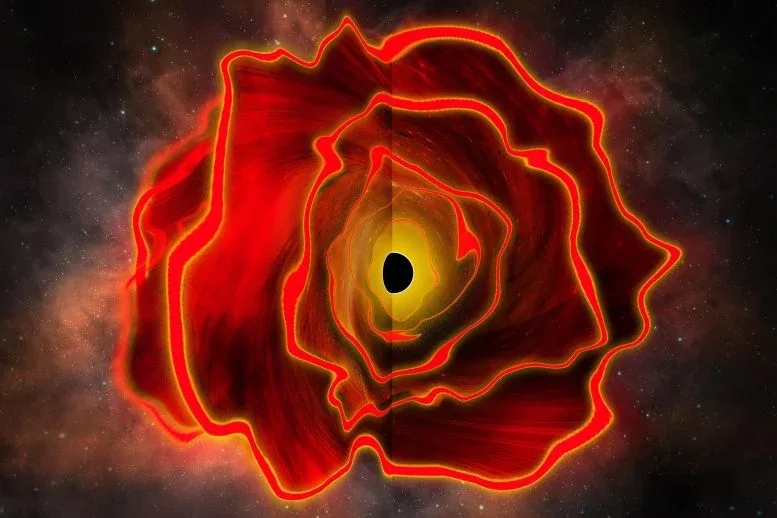
Gravitational anomalies exist near black hole mergers, but they are generally understood as extreme manifestations of gravity predicted by General Relativity (GR), rather than violations of physics. These mergers are the most energetic events in the universe, generating massive ripples in spacetime called gravitational waves. Explore whether gravitational anomalies occur during black hole mergers…

Far beyond Neptune, in one of the coldest and darkest regions of our solar system, astronomers have discovered something unexpected: a small icy object with an atmosphere that shouldn’t really be there. This object, known as 2002 XV93, belongs to a group of distant bodies called trans-Neptunian objects (TNOs). These objects orbit the Sun at […] The post How can this tiny world have an atmosphere?…
One of the best-performing models in cosmology is also one with the least physical rationale behind it. Columnist Leah Crane says this leaves us with a puzzle that could make or break physics as we know it

This story is part of a series highlighting the university’s outstanding graduates crossing the stage on May 16. For Lizette Rodriguez, a first-generation college student and San Antonio native, the journey to earning her bachelor’s degree in physics at The University of Texas at San Antonio has been defined by curiosity, resilience and a passion […] The post Aiming for the stars: Physics major c…
Astronomers have finally identified where the Milky Way’s star-making activity fades, uncovering a long-sought boundary in our galaxy. Determining how far the Milky Way extends has always been tricky because its disk does not end abruptly — it gradually fades into space. Now, researchers have identified a clear boundary for where new stars are actively [...]
The primary goal of the FLAG SAG is to develop a coherent framework for comparing and assessing gamma-ray mission architectures. Within this framework, the SAG will:
Nature Astronomy, Published online: 04 May 2026; doi:10.1038/s41550-026-02860-3 The JWST thermal emission spectrum of the rocky exoplanet LHS 3844 b points to a dark, basalt-like surface shaped by space weathering. The data provide tight limits on CO2 and SO2, ruling out a substantial atmosphere and recent widespread volcanism.
Nature Astronomy, Published online: 04 May 2026; doi:10.1038/s41550-026-02846-1 A stellar occultation campaign reveals a thin atmosphere around the plutino 2002 XV93, showing that even a modest-sized trans-Neptunian object can host an atmosphere, perhaps through cryovolcanism or a recent impact.
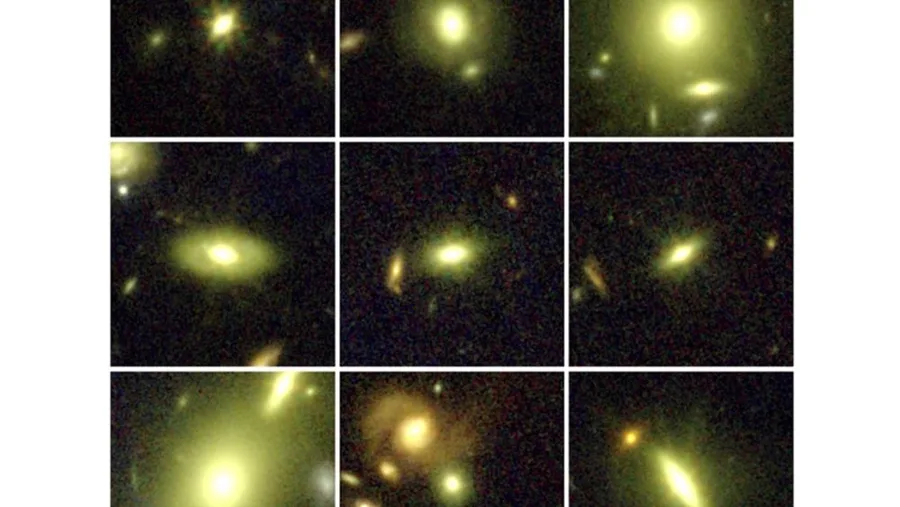
Nature Astronomy, Published online: 04 May 2026; doi:10.1038/s41550-026-02855-0 JWST has produced some of the first spatially resolved spectroscopic observations of massive quiescent galaxies less than 2 Gyr after the Big Bang, revealing a kinematically unique galaxy that shows little-to-no rotational support.
The next meeting of the AAAC will take place online on 1 June 2026 from 1p-5p Eastern (10a-2p Pacific). This online meeting will take place over Zoom, and requires advance registration. The post Astronomy and Astrophysics Advisory Committee Meeting appeared first on NASA Science .

Astronomers using the James Webb Space Telescope have directly analyzed the surface of a distant super-Earth, revealing a dark, airless, Mercury-like world.
The National Academies of Sciences, Engineering, and Medicine are seeking experts to serve on the Committee on Astronomy and Astrophysics (CAA). The post Committee on Astronomy and Astrophysics Call for Experts appeared first on NASA Science .
A novel technique applied to the TESS data has revealed 27 new circumbinary candidates, hinting that such exotic systems may be more common than once believed. The post Astronomers Spot Dozens of Potential ‘Tatooine’ Worlds appeared first on Sci.News: Breaking Science News .
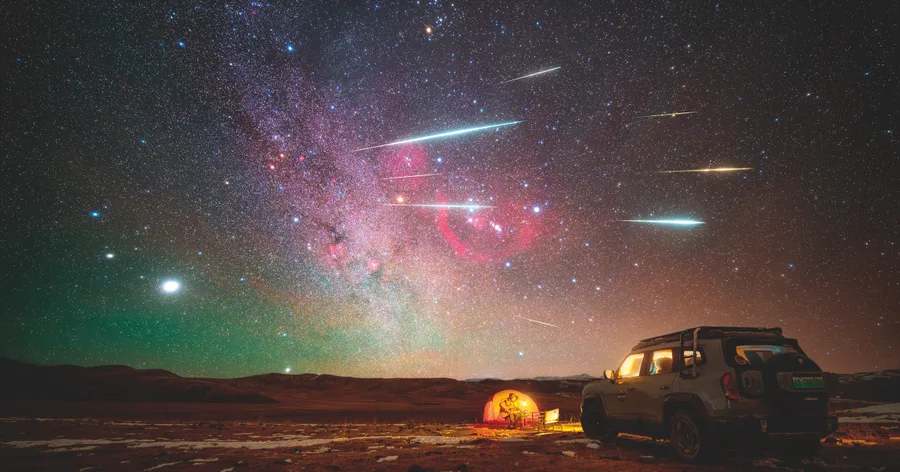
Watch Eta Aquarid meteors streak across the sky live from observatories and sky cams around the world.
A newly identified bubble of reduced galactic cosmic ray (GCR) flux appears to align with the Sun’s magnetic field, indicating an unexpected interaction between the Sun and Earth that the Moon passes through as it orbits. Credit: Shang et al., 2026 , https://doi.org/10.1126/sciadv.adv1908
In this new picture from NASA’s Hubble Space Telescope, a spiral galaxy glittering with star clusters is the center of attention. NGC 3137 is located 53 million light-years away in the constellation Antlia (the Air Pump). As a nearby spiral galaxy, this target offers astronomers an excellent opportunity to study the cycle of stellar birth and death, as […] The post Hubble Spots a Starry Spiral ap…
In the wild unknown, out beyond the orbit of Neptune, astronomers have found a tiny...
research.ioSign up to keep scrolling
Create your feed subscriptions, save articles, keep scrolling.