aerospace

Japan’s H3 rocket successfully returned to flight, deploying six satellites and restoring confidence in the nation’s next-generation launch system.
NASA’s X-59 research aircraft reached its target speed and altitude for the first time on Friday
A combined Amphibious Ready Group and Marine Expeditionary Unit bring a tremendous capability, but only if there are enough ships available. The post The United States needs more amphibious ships at the ready appeared first on Atlantic Council .
NASA’s X-59 experimental aircraft reached a major milestone Friday, June 12, flying Mach 1.4 (about 924 mph) and an altitude of 55,000 feet, the conditions required for the aircraft to make future flights critical to its mission. The X-59 still has months of performance testing ahead, but after those are complete, NASA’s Quesst mission will fly the aircraft over several U.S. communities to coll…
Enabling landers to autonomously identify the safest sites to touch down Moon craters and their surrounding areas are high-value destinations for lunar missions since they may contain important resources and valuable science targets. However, these sites are also home to dangers such as steep slopes that are difficult to see in the challenging lighting conditions. […] The post Hazard Detection Li…
Axiom Space and Prada unveiled the Liquid Cooling and Ventilation Garment (LCVG), the inner layer of the Axiom Extravehicular Mobility Unit (AxEMU), this week. The garment was designed for NASA’s Artemis IV, which is scheduled to land on the moon in 2028. “By bringing together the best in both aerospace engineering as well as luxury… The post The science behind the Prada-designed spacesuit for A…
Published on June 12, 2026 4:38 PM GMT Losing GPS isn’t an X-risk, but would create a huge disaster on the scale of Covid-19 or bigger. Hi! From 2020 - 2023 I was one of the early employees at Xona Space Systems , a company working on essentially a next-generation version of GPS. I ended up learning a lot about how GPS works and what it’s used for, and (due to my personal interest in effective …
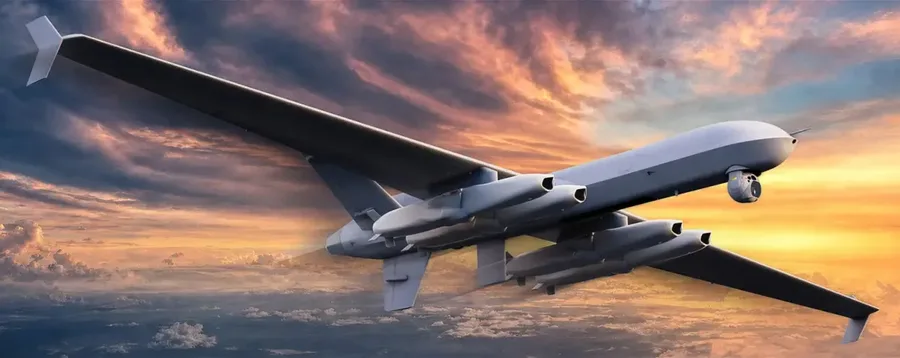
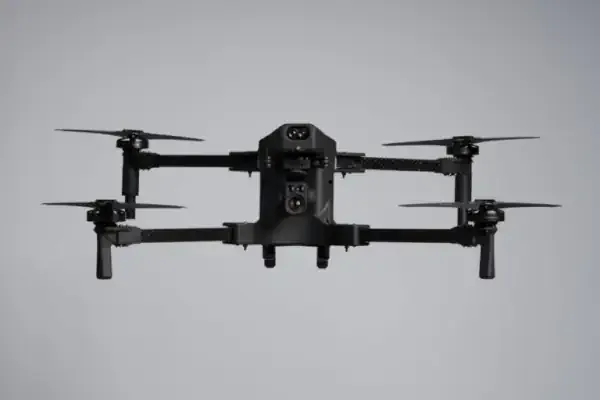
Falling overboard from a ship is one of the most dangerous emergencies at sea. Every minute matters, and the chances of survival can quickly decrease as people become exhausted, suffer from cold water exposure, or drift far away from the vessel. Researchers at the Technical University of Denmark (DTU) are developing a new autonomous rescue […] The post Smart rescue drone could save people who fal…
Simcenter Flightstream 26.1 is now available for aerospace and marine CFD engineers seeking faster workflows and deeper aerodynamic and hydrodynamic…
A new turboelectric airliner concept, capable of delivering 17% better efficiency over 2050 projections for standard airliners, was unveiled Monday at the AIAA AVIATION Forum, and a University of Michigan Engineering team played a central role in its development. Yesterday's technical talk on the project, including work from the U-M team, was delivered to a standing-room-only crowd.

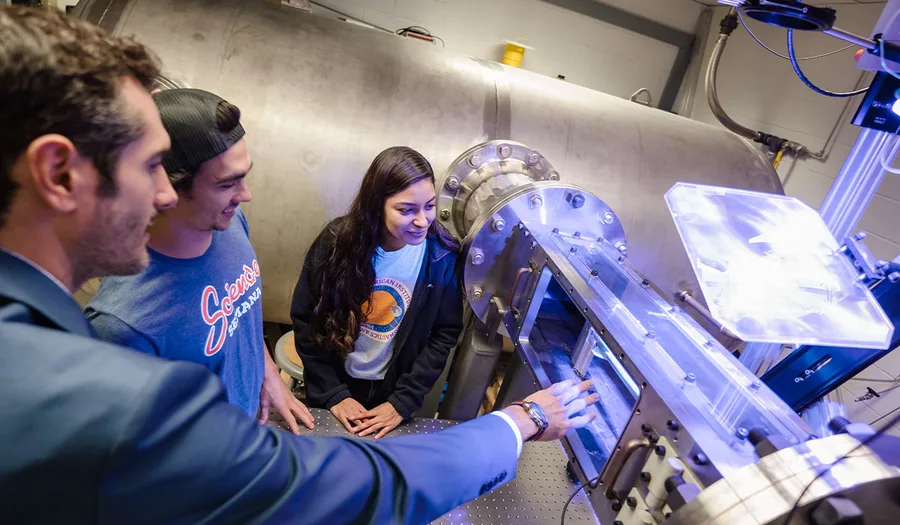
University of Florida researchers are exploring how lasers could help astronauts build structures on the moon using materials already available there, including lunar soil transformed into glass. The work, led by Victoria M. Miller, Ph.D., an associate professor in the Herbert Wertheim College of Engineering and researcher with the UF Astraeus Space Institute, recently completed a research phase …
Engineers completed installation of Katalyst's LINK into a Northrop Grumman Pegasus XL rocket on June 9 at NASA’s Wallops Flight Facility. The post Rocket Integration Complete for Katalyst-NASA Swift Boost appeared first on NASA Science .
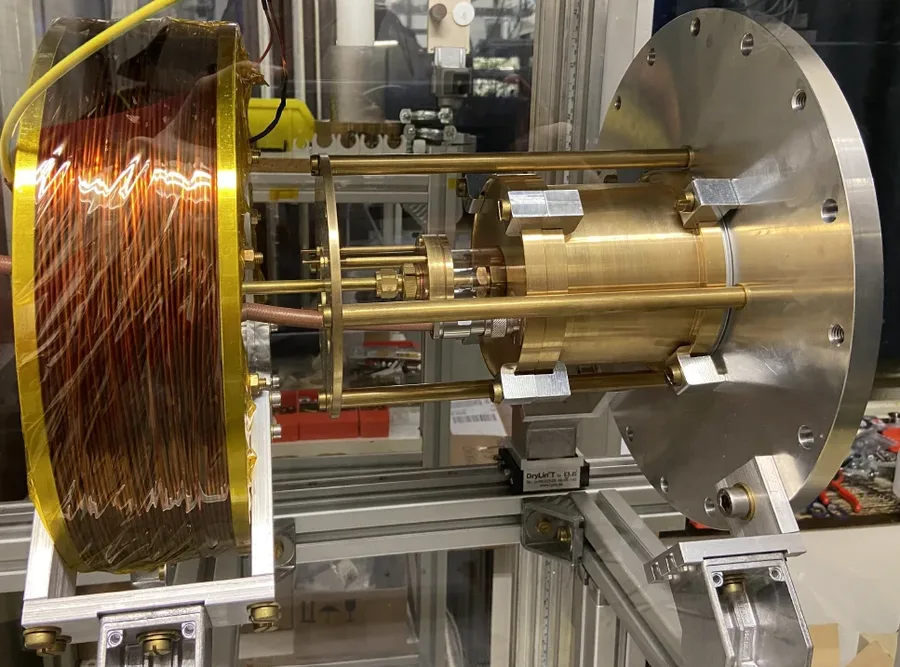
MIT researchers have shown that one fuel can power both chemical and electric spacecraft thrusters, potentially transforming what small satellites can do. The approach combines quick bursts of speed with highly efficient long-range propulsion in a single compact system. A NASA-supported CubeSat mission will soon test the technology in orbit.
The largest specialist event of its kind, AMA: Aerospace, Space and Defense, returns on July 9th. Additive manufacturing in aerospace and defense has entered a more demanding phase. The question is no longer whether metal AM, wire arc additive manufacturing, electron beam powder bed fusion, or advanced materials can produce impressive parts. The harder question…

HomeCharacteristics The Flight Dynamics Research Facility (FDRF) is a large, subsonic wind tunnel with a vertical test section for conducting flight dynamics research for stability, controllability, free-fall and aircraft spin, and spin recovery testing of atmospheric vehicles. Characteristics Flight Dynamics Flight Research Aerosciences Evaluation and Test Capabilities

A new propulsion system feeds the same "monopropellant" fuel into electrical and chemical thrusters, potentially saving on mass and complications for future missions to Mars.

A team of engineering students from The University of Alabama in Huntsville (UAH), a part of The University of Alabama System, captured the overall championship at the NASA 2026 Student Launch Initiative (NSLI) after a nine-month engineering challenge that culminated in a final launch event, with the awards announced by NASA on June 3.
NASA’s X-59 experimental aircraft reached a major milestone Friday, June 5, when it flew faster than the speed of sound for the first time. The 81-minute flight achieved a speed of Mach 1.1 (approximately 713 mph) at an altitude of 43,400 feet, with the X-59 performing as expected. For NASA test pilot Jim “Clue” Less, the plane’s instruments were the only indication of flying supersonic — exact…
Researchers are developing a laser-based manufacturing technique that could enable astronauts to build tools, structures and infrastructure on the moon using materials already available there.
research.ioSign up to keep scrolling
Create your feed subscriptions, save articles, keep scrolling.