
wearables

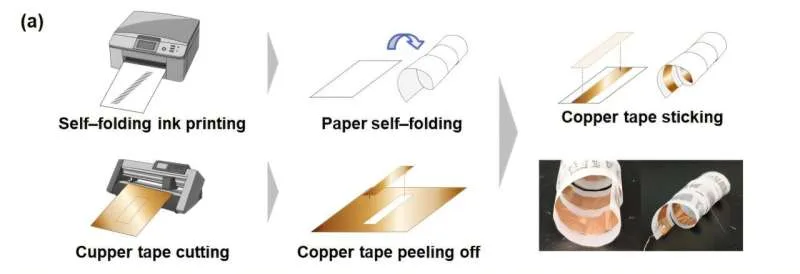
A new paper-based design tool creates self-folding wearable sensors that conform to body shapes, offering a simple route towards flexible biosignal monitoring for personalised sensing. Researchers at Shibaura Institute of Technology in Japan have developed a parametric design tool that transforms flat sheets of paper into self-folding helical wearable sensors. The approach integrates copper tape …

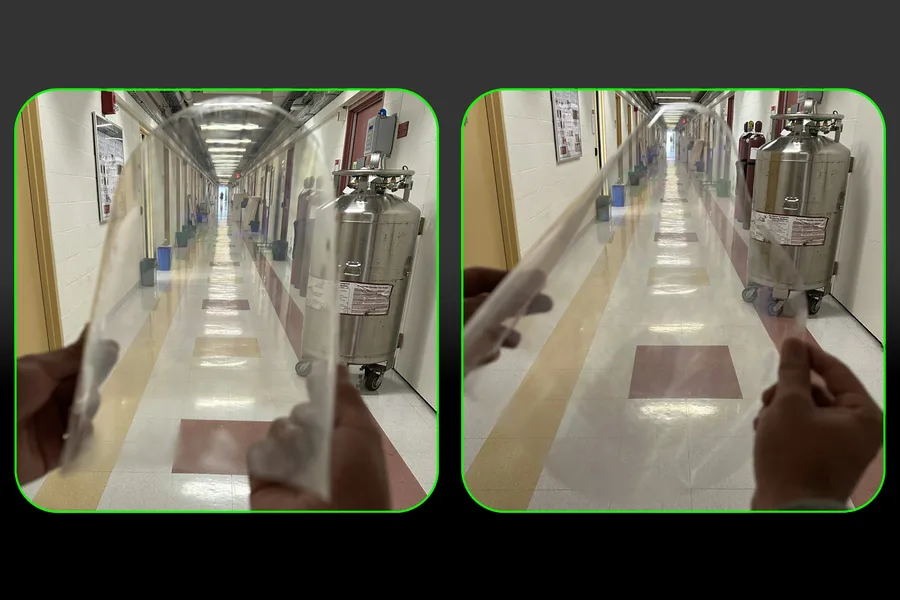
A scalable fabrication platform creates transparent, flexible silicon-photonics chips on 300-mm wafers, potentially enabling conformable sensors, wearable electronics, and curved augmented-reality optical systems. MIT researchers have developed a wafer-scale fabrication platform that could significantly expand the design possibilities of silicon-photonics chips by making them both mechanically fl…

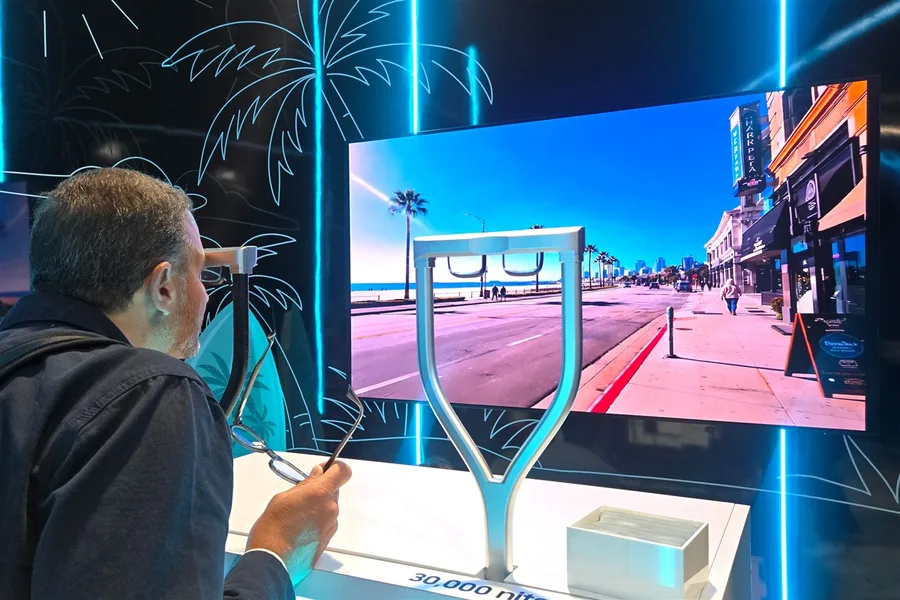
Today, RayNeo has just launched RayNeo iO Smart Glasses, its new model of camera-free smart glasses. I had the opportunity to go hands-on with them, and in this article, I’ll share my first impressions. In the next days, I’ll keep using these smart glasses, and then I will write an exhaustive review about them, going […] The post RayNeo iO Smart Glasses hands-on impressions appeared first on The …

The problem I'm a heavy sleeper. Not "hit snooze once" heavy. I would turn off three stacked alarms in my sleep and wake up an hour late with zero memory of doing it. The problem was never hearing the alarm. It was that turning it off had become a reflex I could do half-asleep, from bed, without ever really waking up. So I built Mornio. The idea Mornio moves the off switch away from the bed. You …

A touch interface uses ordinary laser printing to detect finger movement, offering wiring-free controls for wearables, IoT devices, keyboards, and security applications without complex hardware. Shibaura Institute of Technology has developed a laser-printed PVC touch interface that can detect finger direction and speed without conventional wiring, batteries, or external electrodes. The low-cost t…

Once mocked as "computers on the nose bridge," AI smart glasses have long suffered from a trade-off between advanced AI capabilities and lightweight comfort. However, this race is set for a major turning point in 2027. Future models promise to combine powerful AI, superior thermal management, and accessible price points, offering a wearing experience so seamless that users will barely notice they…

Imagine electronic devices that stretch, bend, and conform to the human body like a second skin--yet still deliver high-performance optical sensing and display capabilities. This vision is driving intense research into intrinsically stretchable organic optoelectronic devices, which combine the mechanical compliance of elastomers with the optoelectronic functionality of semiconducting polymers.

National Research Council of Science and Technology
10d ago

A research team led by Principal Researcher Jung-Dae Kwon, Yonghun Kim, and Jongwon Yoon of the Energy & Environment Materials Research Division at the Korea Institute of Materials Science (KIMS), headed by President Chul-jin Choi, has developed a flexible near-infrared (NIR) photodetector that delivers more than five times higher photoresponsivity while maintaining its performance under repeated…

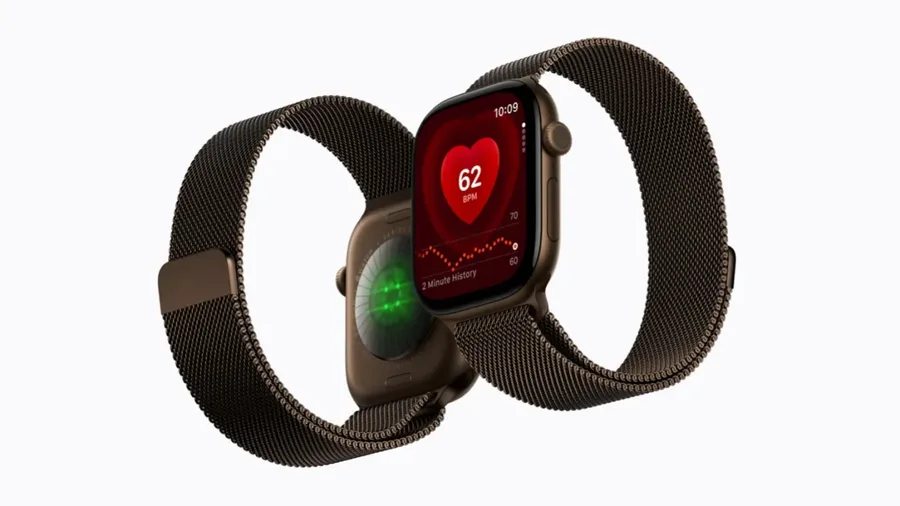
However, the trajectory of wearables is evident. Oura is contributing to the widespread use of continuous health and recovery monitoring. Apple is showcasing how wearable technology can integrate safety, communication, and wellness. Hume is a part of the growing trend for health span and longevity. Garmin specializes in navigation and performance tracking. Fitbit provides data […]

research.ioresearch.io

Sign up to keep scrolling

Create your feed subscriptions, save articles, keep scrolling.

Already have an account?