Andy Tomaswick (https://www.universetoday.com/authors/andy-tomaswick)
1d ago
Choosing what orbit to put a satellite in always comes with trade-offs. When it comes to Very Low Earth Orbit (VLEO), between 100-450 km, there are distinct advantages. Remote sensing cameras can take better pictures, comms and radar require less power, and atmospheric drag will automatically clean up dead satellites. But there’s also a cost - air friction requires any satellite in this orbit to …
Assume a transverse electromagnetic wave entering ionosphere such that its electric field is perpendicular to Earth's magnetic field. Now, I read that as it will enter plasma, the wave will tend to be elliptically polarized. In other words: if Earth's magnetic field $B$ is in $z$-direction, electric field $E$ of the wave is in $y$-direction and propagation vector $k$ lies in $x$-direction, then i…
Nature Communications, Published online: 10 September 2026; doi:10.1038/s41467-026-77527-8 Strong plasmon-photon coupling enables applications in plasmonics quantum technologies, yet dissipation is still a strong limitation. Here, the authors demonstrate a hybrid electron-on-Helium system where plasmons are strongly coupled to photons within an LC resonating circuit. This provides practical advan…
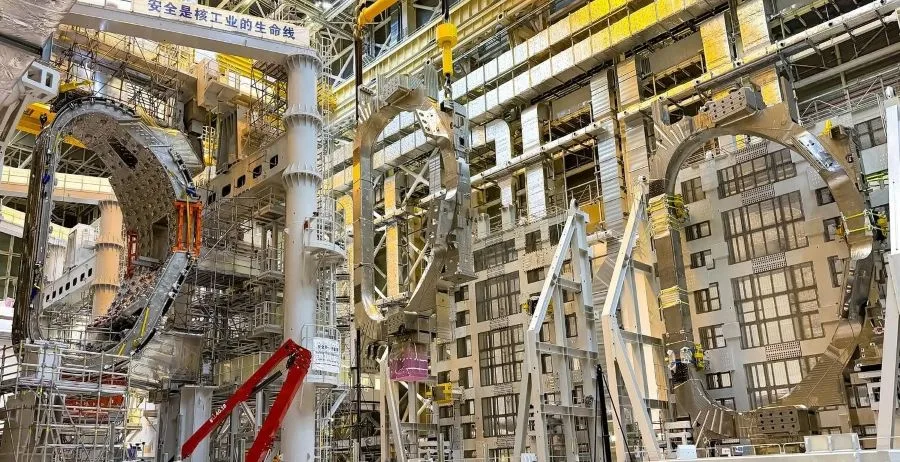
In an update earlier this week, the ITER Organization described a “summer of substantial progress” as its teams work to advance multiple major assembly and installation activities for the lengthy and complex international fusion project.
Nature Communications, Published online: 09 September 2026; doi:10.1038/s41467-026-77581-2 Spin–orbit interactions of light can couple polarization to spatial beam structure. Here, authors show that quarter-wave plate nonuniformity produces a real-space spin–orbit effect that can dominate angular contributions in confocal geometry.
Princeton’s PACMAN AI can control fusion plasma in milliseconds and predict dangerous instabilities before they start. In some fusion energy systems, particles can reach temperatures hotter than the center of the Sun. The challenge is keeping that extreme plasma under control, because disturbances can develop within just a few thousandths of a second, much faster [...]
I am trying to understand how the magnetic moment is invariant in slowly changing magnetic fields. There is a proof in the textbook I am using, but I'm stuck on how $-e\int\frac{\partial B}{\partial t}dS$ becomes $\pi r_{L}|e|\dot{B}$ and how the final $\delta(W_{\perp}/B) = 0$ is obtained. I was thinking of doing some sort of Taylor expansion on the rate of change of B and ignore higher-order te…
In the process of exploring plasmonic systems I have quite often come across the description of cavities as Plasmonic cavities. What is the exact difference between a normal cavity and a plasmonic cavity? Are they both the same? Or is the physics of these two systems quite different?
Scientific Reports, Published online: 06 September 2026; doi:10.1038/s41598-026-69623-y CFD-based recurrent neural network modeling of plasma-assisted flow control over a stepped NACA4412 airfoil using LSTM and GRU
Plasmons are quantized oscillations of the charge density in solids, and are found in basically all conducting materials in nature. For light in vacuum, the dispersion relation is required for propagation at $c$ , and you have $\omega=ck$ as a strict relation. For acoustic phonons, you similarly have a linear dispersion relation via Goldstones theorem (with the usual subtleties ). The plasmon how…
Fusion energy, often referred to as an artificial sun, has become a central focus of global sustainable energy development in recent years. However, despite nearly 70 years of worldwide R&D, commercial fusion power remains unrealized. This is primarily due to several critical technical hurdles, including heating plasma to over 100 million°C and maintaining stable long-term operation, deve…
Andy Tomaswick (https://www.universetoday.com/authors/andy-tomaswick)
11d ago
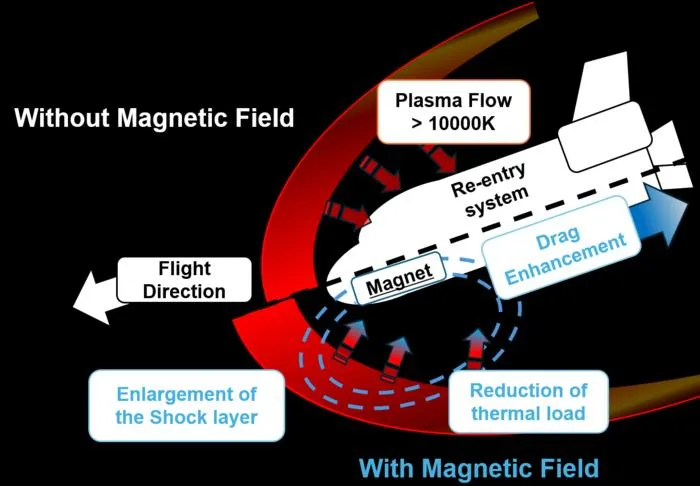
Spacecraft famously have small bits of them disintegrate on reentry. That’s by design, as it is one of the easiest solutions to absorbing the incredible amounts of energy they experience. However, it also results in long turn around times while these heat shields are repaired, and the shields themselves act as “dead weight” limiting payload capacity. With the increased focus on reusable rockets, …
Wafer-edge uniformity in semiconductor etching is a key quality metric directly linked to device yield and is strongly governed by the local sheath structure near the wafer edge-focus ring boundary. However, the relative effects of focus ring geometry, dielectric material, and applied voltage waveform on edge ion transport have not been systematically compared. In this study, a two-dimensional pa…
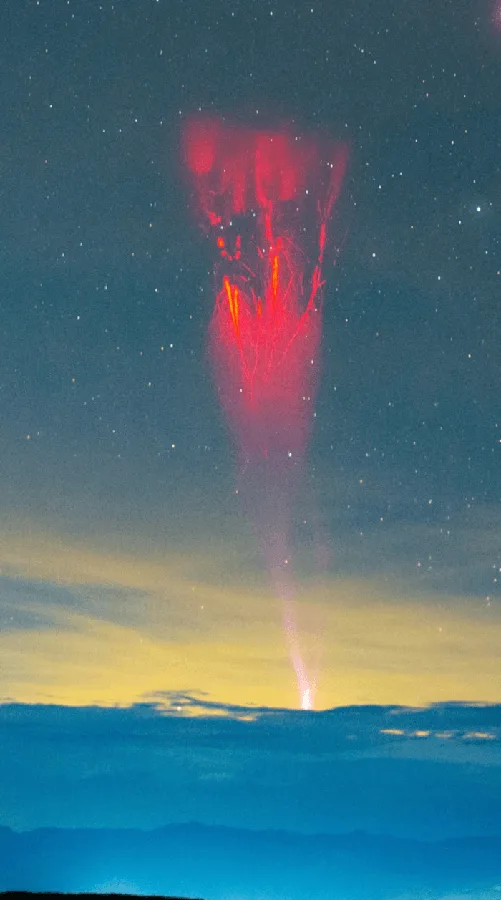
We’re most familiar with the bright, forking lightning bolts that stretch from thunderstorms toward the ground, but there are even more types of lightning. Pictured here is a gigantic jet, a relatively recently-identified atmospheric phenomenon. Gigantic jets occur when a thunderstorm’s electrical charge escapes upward into the ionosphere in less than a second. The red […]
To elucidate the relationship between electric field and electron-density variations in the high-latitude ionosphere associated with Pc5 ultralow-frequency (ULF) waves from subauroral to high latitudes, we analyzed the global navigation satellite system (GNSS)-total electron content (TEC), ionospheric plasma flow observed by the Super Dual Auroral Radar Network (SuperDARN), and electron density i…
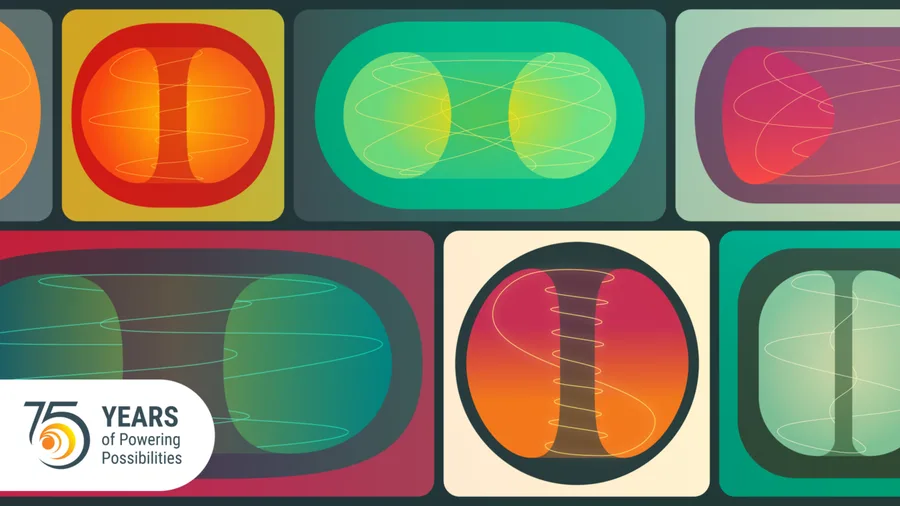
In the world of fusion energy, scientists and engineers study the fourth state of matter known as plasma in an effort to design and build a new type of power plant. Relying on the heat produ
Nature Communications, Published online: 29 August 2026; doi:10.1038/s41467-026-76701-2 Lanthanide nanotransducers can convert mid-infrared light into nearinfrared signals but suffer from weak emission. Here, authors couple Nd3 + /Yb3 + -doped nanoparticles with gold nanospheres to achieve silicon-readable detection with seven-fold improvement in specific detectivity relative to the pristine nano…
When I look at the graph, I can find maximum temperature of plasma (roughly 1eV at 10kPa). But you can get a lot hotter with plasma. Please, where is the mistake? See: or See: https://www.researchgate.net/figure/Schematic-of-the-electron-and-gas-temperature-as-a-function-of-pressure-in-a-plasma_fig1_3164388 or https://www.researchgate.net/figure/Plot-of-electron-temperature-T-e-and-gas-temperatu…
A simulation from the study shows density (top) and temperature (bottom) just before the time when fusion reactions peak in an asymmetric implosion. The hottest point coincides with the densest point of fuel, illustrating the direct ignition of a dense jet of fuel driven by asymmetry. The image was recently selected for the cover of Physics of Plasmas. (Image: LLNL) Researchers at Lawrence Liverm…



 research.io