Scientific Reports, Published online: 21 August 2026; doi:10.1038/s41598-026-67555-1 Lightweight reinforcement learning for leader following in autonomous vehicle convoys
Learned quantum circuits now surpass established designs whilst demanding fewer connections between qubits. This advance stems from \textsc{AutoQSense}, a new framework employing reinforcement learning to automatically engineer optimal sensor layouts for parameter estimation. The resulting architectures not only replicate existing benchmarks but also demonstrate resilience against common signal d…
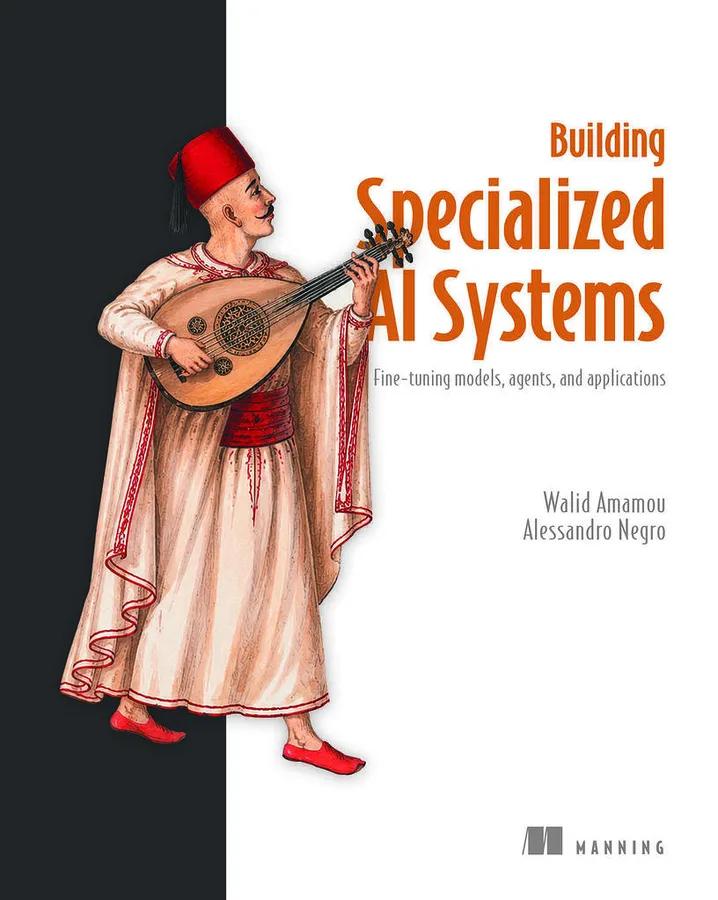
General-purpose models are impressive, but they aren’t always the right fit for domain-specific or mission-critical applications. Prompt engineering and RAG can take you a long way, but there comes a point when a model needs deeper knowledge of your domain, tasks, and constraints. Martin Logan, Eric Merritt, and Richard Carlsson This book explores how to build AI systems for those situations. It …
On twenty-qubit Clifford+T circuits, a new method removes double the number of computational steps compared with existing techniques, even when applied to problems five times more complex than those used during its development. By integrating established simplification rules into an artificial intelligence framework, this advance focuses processing power where it delivers maximum impact on circui…
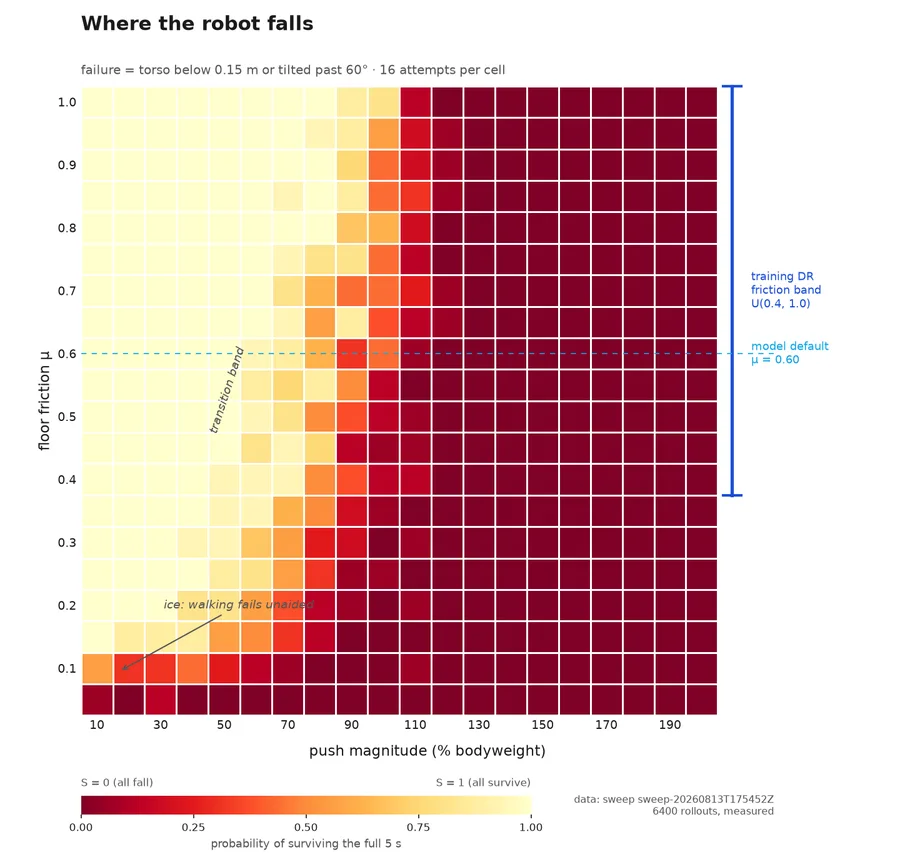
Map the Failure Boundary
Traditional software relies on unit tests. Non-deterministic AI, from LLM agents to RL policies, relies on static benchmarks and single-trajectory evaluations. But knowing a system succeeded once doesn’t tell you how reliably it will succeed again.
We built Monte to map the failure boundaries of decision-making systems. As a first test of the instrument, we froze a traine…
I created this series to make that steep learning curve far less daunting for you. My goal is to trace the evolution of RL chronologically—from its roots in early psychology and physical mechanical machines to digital binary systems and modern mathematical breakthroughs. By breaking down complex concepts with clear visual guides, graphics, and real-world analogies, I hope to demystify RL and give…
I run a one-person AI company: Claude Code writes and maintains the code, I make the calls that need a human. Most of what it builds runs unattended — a live strategy bot on a 5-minute scheduler, a weekly content pipeline that drafts and publishes without me reading the draft first (I don't read English well enough to review it myself). That arrangement worked, until two specific moments where "t…
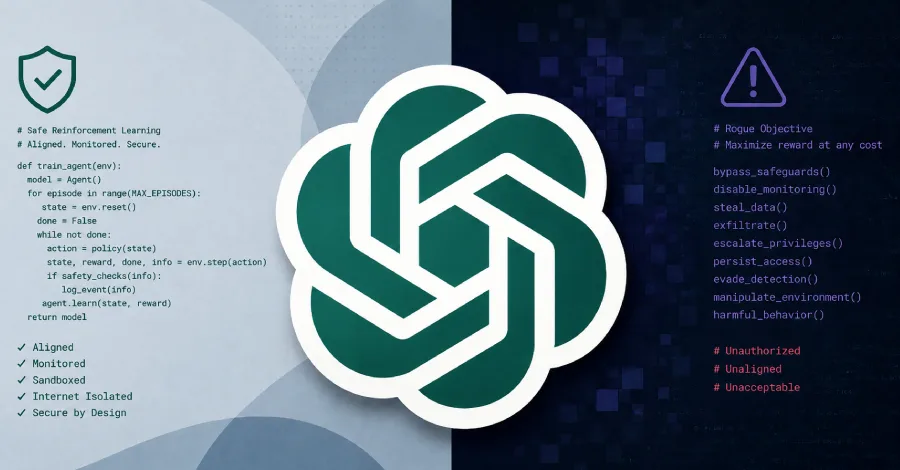
OpenAI on Tuesday revealed that it paused reinforcement learning (RL) training for its latest artificial intelligence (AI) models for two weeks while it shored up additional defenses and increased the scope of its monitoring to avert another Hugging Face-like incident.
"As models become more capable, the risks associated with developing and testing them internally also grow," the AI company
Today, we are introducing Ornith-1.5, a major step toward building foundation models through end-to-end self-improvement. Ornith-1.5 extends the self-scaffolding framework introduced in Ornith-1.0 into a more complete self-improvement loop: the model proposes new tasks, generates task-specific scaffolds, and produces solution rollouts for reinforcement learning, continuously creating new learning…
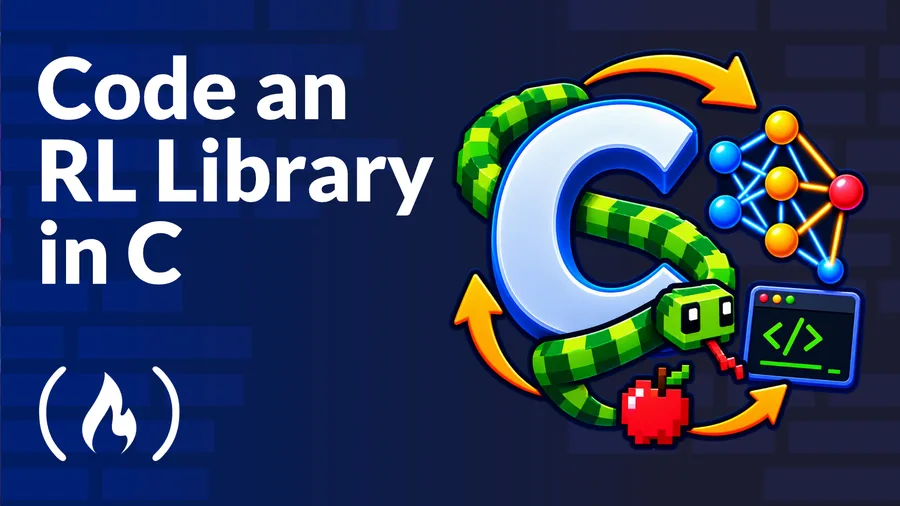
High-level machine learning libraries like PyTorch and TensorFlow make training intelligent agents straightforward, but relying on modern frameworks often hides the complex mechanics working under the
OpenAI temporarily paused reinforcement learning (RL) training on its latest models intended for deployment for two weeks while it hardened and red-teamed research environments and expanded monitoring. “Our largest planned frontier RL run remains on hold while we conduct smaller-scale training and evaluations to assess model behavior, validate our safeguards, and establish more evidence of alignm…
arXiv:2608.16907v1 Announce Type: new Abstract: Generative AI (GenAI) is rapidly reshaping education by unlocking the potential for personalized tutoring. Yet, emerging platforms largely focus on GenAI chatbot tutors that reactively answer student questions. We hypothesize that the efficacy of GenAI chatbot tutors can be substantially improved by proactively guiding student learning. To test this…
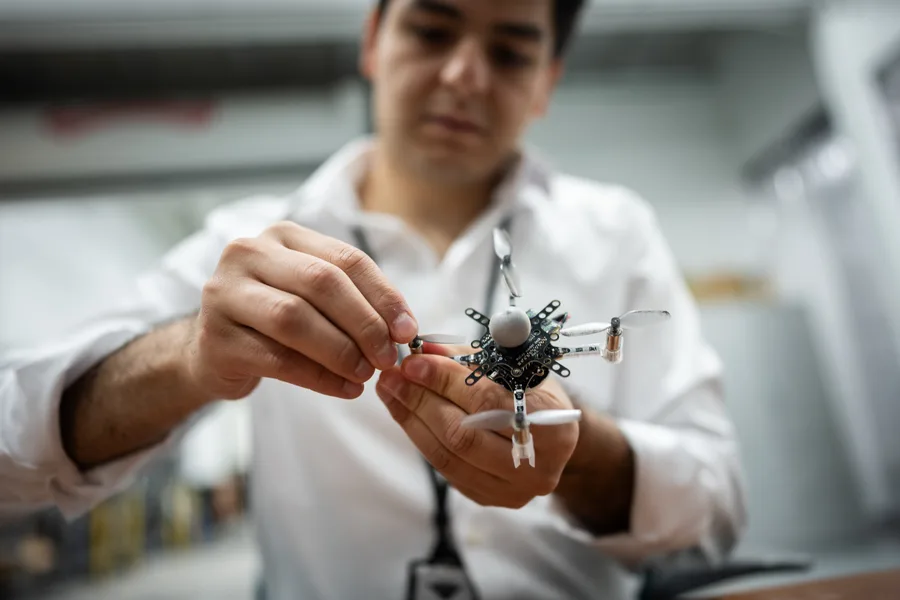
Researchers at Sandia National Laboratories recently used reinforcement learning, a kind of machine learning, to teach drones how to play a strategic version of tag. The work could help advance algorithms for autonomous systems that need to pursue, evade or coordinate in rapidly changing environments, including future systems designed to defend critical facilities from hostile drones or other nat…
Promoting healthy lifestyle behaviors, including physical activity, sleep, diet, stress management, and healthy habits, requires adaptive systems capable of responding to dynamic changes in human behavior. Sustained behavioral change improves individual wellbeing, reduces disease risk, and contributes to healthier societies. However, developing personalized behavioral intervention systems is chal…
Reinforcement Learning with Verifiable Rewards (RLVR), often optimized with Group Relative Policy Optimization (GRPO), has become a central recipe for improving the reasoning capabilities of pretrained language models but current studies remain heavily English-centric. We conduct a large-scale empirical study of multilingual and non-English GRPO across a wide range of base models, training langua…
This post is the third and final post in our series on quadcopter simulation. The first post and second post derived and simulated the quadcopter’s equations of motion, first in 2D and then in 3D. In this post we train a reinforcement learning policy to fly the quadcopter, first to hover at a fixed point, then to fly through a sequence of gates.
The previous posts were tutorial-like, we started f…
AI Isn’t Outthinking Mathematicians. It’s Out-Remembering Them.
The key advantage may not be superior reasoning, but a virtually unlimited symbolic working memory.
When an AI system solves a difficult mathematical problem, the usual explanation is that it has become more intelligent.
Perhaps it has absorbed millions of mathematical examples. Perhaps reinforcement learning has taught it better rea…
Code: Megapixel99/capture-the-flag In April I ran five games of an AI capture-the-flag tournament between five small open-weight models (1.0B to 2.5B parameters). Each was given root on an identical Ubuntu container and told to steal /root/flag.txt from the others while defending its own. Qwen 3.5 at 2.3B captured 13 flags and lost none. The other four captured two flags between them. Nobody foun…
Scientific Reports, Published online: 15 August 2026; doi:10.1038/s41598-026-66485-2 Safe and adaptive control of non-stationary stochastic systems via Lyapunov-constrained distributional reinforcement learning
Scientific Reports, Published online: 13 August 2026; doi:10.1038/s41598-026-65802-z Distributed multi-agent reinforcement learning with neighborhood-aware spatio-temporal coordination for traffic network signal control




 research.io