The United States has about 94,000 tonnes of nuclear waste in storage, though that's a bit like calling all that gold in Fort Knox "waste." A new technique is being developed to recover its trapped value, unlocking billions of dollars in reusable fuel and high-value isotopes. Continue Reading Category: Energy , Engineering Tags: Nuclear , Nuclear Fission , Waste
The Department of Energy's Oak Ridge and Idaho national laboratories announced a collaboration to expand the domestic supply chain of industrial pressure vessels. Together, the labs will help enable wire arc 3D printing of these large components, which are critical for energy-related industries and capable of reliably withstanding harsh service conditions. The initiative boosts the rapid expansio…
Used nuclear fuel storage and transportation have reached a critical juncture. Dozens of utilities need reliable data on how used nuclear fuel performs in dry storage casks and canisters to extend regulatory licenses at sites across the United States. Likewise, the Department of Energy expects to take ownership of the used nuclear fuel—termed “spent nuclear fuel” in the laws and regulations gover…
What fuels the future of nuclear? Whether it is low-enriched uranium, LEU+, or high-assay low-enriched uranium, one of the answers is in the question itself: fuel. Earlier this week, the American Nuclear Society’s Fuel Cycle & Waste Management Division hosted Global 2026, with the theme of “Deploying Sustainable Nuclear Fuel Cycles.” During one plenary session, “Fueling the Future of Nuclear,” pa…
Apollo Atomics raised $31 million, including debt, to commercialize a compact steam generator that shrinks nuclear reactors 40 times and cuts costs. The post Apollo Atomics Secures $31 Million for Factory-Built Nuclear Reactors appeared first on iGrow News .
Nuclearn, a specialized AI solutions provider for the nuclear industry, has partnered with GSE Solutions, a leader in high-fidelity simulation and digital twin technology, to enhance operational efficiency and safety in nuclear facilities. The collab
TerraPower, the nuclear power startup founded by Bill Gates, plans to announce its first data center-focused nuclear project later this year, according to a Bloomberg report. The facility would mark the company’s second power plant, following one already under construction in Wyoming, with groundbreaking expected in 2027. While TerraPower has not named the customer for […]
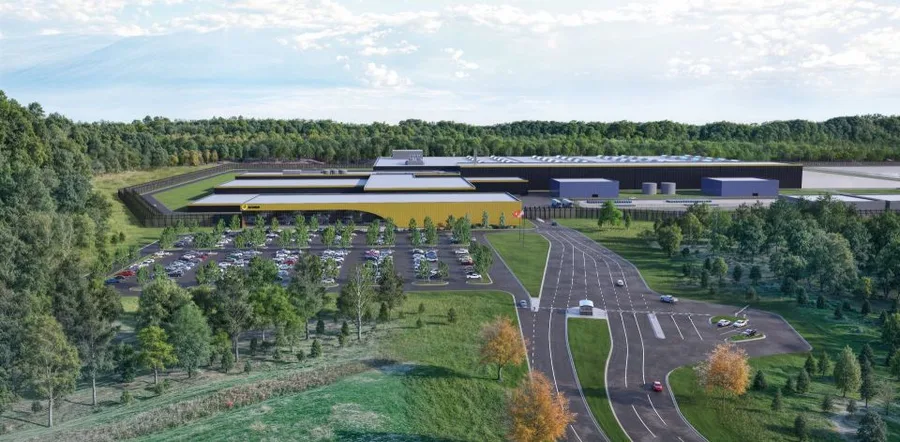
The Nuclear Regulatory Commission is considering Orano Enrichment USA’s application for a license to build a centrifuge enrichment facility in Oak Ridge, Tenn. A notice published in the Federal Register on August 12 includes a commission order and an announcement of the opportunity to request a contested hearing. The publication of the FR notice marked the start of a 60-day period in which a memb…
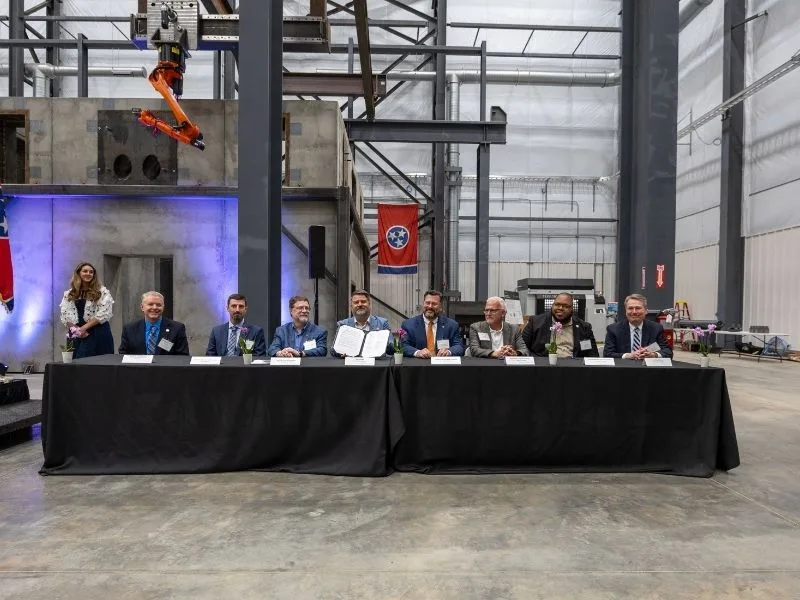
As Kairos Power’s high-temperature, fluoride salt–cooled reactor facilities in Oak Ridge, Tenn., take shape, the company is partnering with multiple regional groups to prepare the local workforce for new nuclear career opportunities. Kairos has signed a memorandum of understanding with Oak Ridge National Laboratory, the University of Tennessee–Knoxville, the Institute for Advanced Composites Manu…
An innovative process used in nuclear waste processing, co-developed by the Department of Energy's Savannah River National Laboratory with academic and industry partners, has won a 2026 R&D 100 Award in this year's global competition.
April 16, 2026
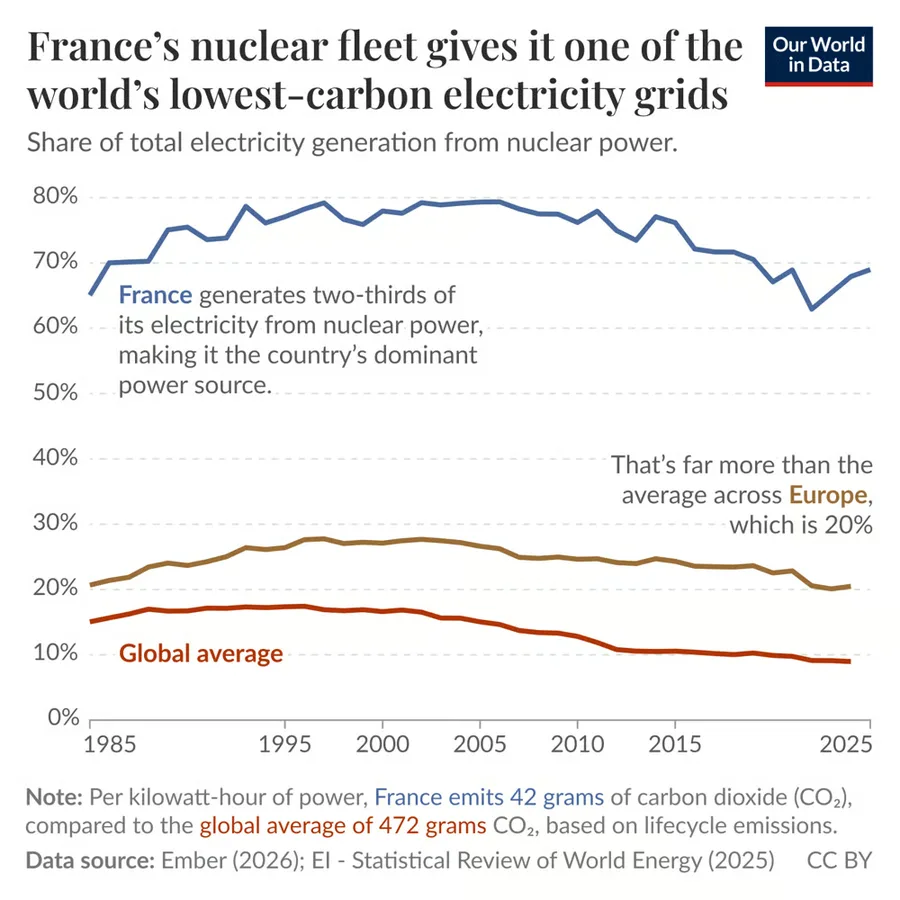
France generates two-thirds of its electricity from nuclear power, making it the country’s dominant power source.
As the chart shows, that’s far more than the average across Europe, which is 20%, and the world as a whole, at 9%.
Nuclear power is a low-carbon electricity source, giving France a very clean electricity mix for decades.
Per unit of electricity, France
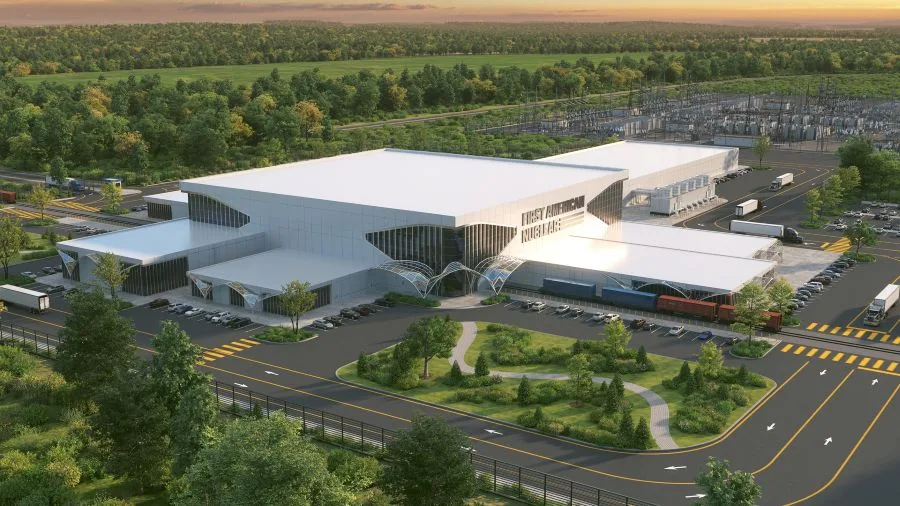
First American Nuclear Co., developer of the 240-MWe EAGL-1 reactor, has announced its intention to make its own advanced reactor fuel. The Indianapolis-based company has filed a regulatory engagement plan with the Nuclear Regulatory Commission for the construction of a Category II high-assay low-enriched uranium deconversion and fuel fabrication facility, and the NRC has docketed the plan for co…
UT is part of the Nuclear Center for Advanced Manufacturing and Precast, an initiative focused on advancing new manufacturing and construction methods and developing vocational training to support the deployment of advanced nuclear reactors. The post UT Joins Collaborative Initiative to Advance Nuclear Manufacturing, Construction, and Workforce Development in East Tennessee first appeared on Depa…
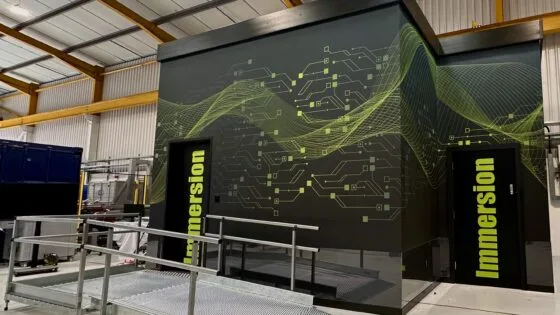
AtkinsRéalis, Sellafield Ltd and Igloo Vision have developed an immersive environment at the Robotics and Artificial Intelligence Collaboration (Raico1) facility in West Cumbria to support the planning and delivery of nuclear decommissioning work. The post 360-degree immersive environment to plan nuclear decommissioning appeared first on New Civil Engineer .





 research.io