As AI systems began acing traditional tests, researchers realized those benchmarks were no longer tough enough. In response, nearly 1,000 experts created Humanity’s Last Exam, a massive 2,500-question challenge covering highly specialized topics across many fields. The exam was engineered so that any question solvable by current AI models was removed. Early results show even the most advanced sys…
A century after Erwin Schrödinger sketched out a bold vision for how we perceive color, scientists have finally filled in the missing pieces. A Los Alamos team used advanced geometry to show that hue, saturation, and lightness aren’t shaped by culture or experience — they’re built directly into the mathematical structure of how we see color. By defining a crucial missing element known as the “neu…
Neuromorphic computers modeled after the human brain can now solve the complex equations behind physics simulations — something once thought possible only with energy-hungry supercomputers. The breakthrough could lead to powerful, low-energy supercomputers while revealing new secrets about how our brains process information.
A generative AI system can now analyze blood cells with greater accuracy and confidence than human experts, detecting subtle signs of diseases like leukemia. It not only spots rare abnormalities but also recognizes its own uncertainty, making it a powerful support tool for clinicians.
Tessellations aren’t just eye-catching patterns—they can be used to crack complex mathematical problems. By repeatedly reflecting shapes to tile a surface, researchers uncovered a method that links geometry, symmetry, and problem-solving. The technique works in both ordinary flat space and curved hyperbolic worlds used in theoretical physics. Its blend of beauty and precision could influence ever…
A new AI developed at Duke University can uncover simple, readable rules behind extremely complex systems. It studies how systems evolve over time and reduces thousands of variables into compact equations that still capture real behavior. The method works across physics, engineering, climate science, and biology. Researchers say it could help scientists understand systems where traditional equati…
Ramanujan’s elegant formulas for calculating pi, developed more than a century ago, have unexpectedly resurfaced at the heart of modern physics. Researchers at IISc discovered that the same mathematical structures behind these formulas also describe real-world phenomena like turbulence, percolation, and even black holes. What once seemed like pure mathematics now appears deeply intertwined with t…
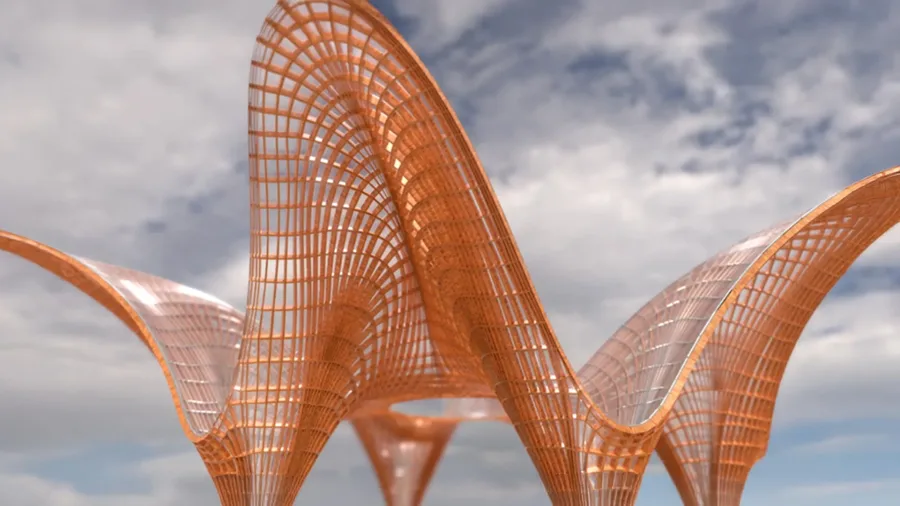
A researcher from the University of Tokyo and a U.S.-based structural engineer developed a new computational form-finding method that could change how architects and engineers design lightweight and free-form structures covering large spaces. The technique specifically helps create gridshells, thin, curved surfaces whose members form a networked grid. The method makes use of NURBS surfaces, a wid…
Researchers have created a prediction method that comes startlingly close to real-world results. It works by aiming for strong alignment with actual values rather than simply reducing mistakes. Tests on medical and health data showed it often outperforms classic approaches. The discovery could reshape how scientists make reliable forecasts.
A team at the University at Buffalo has made it possible to simulate complex quantum systems without needing a supercomputer. By expanding the truncated Wigner approximation, they’ve created an accessible, efficient way to model real-world quantum behavior. Their method translates dense equations into a ready-to-use format that runs on ordinary computers. It could transform how physicists explore…
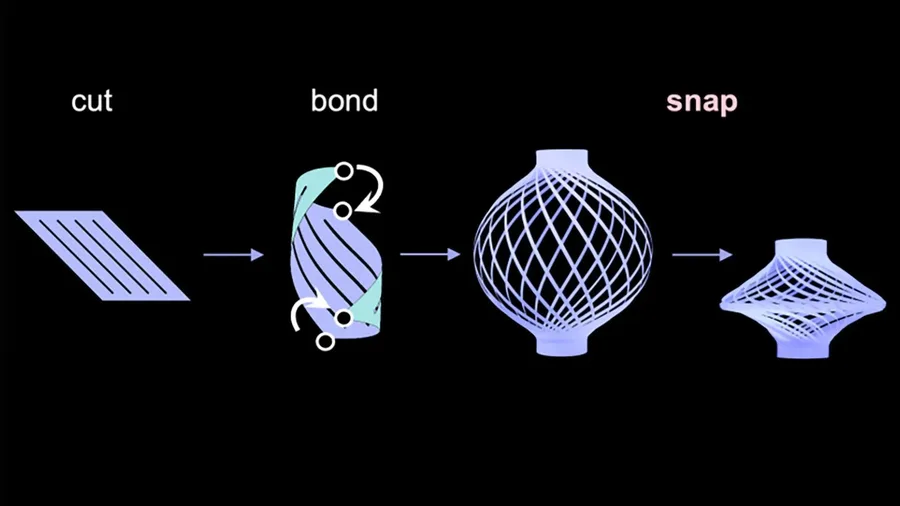
A team of engineers at North Carolina State University has designed a polymer “Chinese lantern” that can rapidly snap into multiple stable 3D shapes—including a lantern, a spinning top, and more—by compression or twisting. By adding a magnetic layer, they achieved remote control of the shape-shifting process, allowing the lanterns to act as grippers, filters, or expandable mechanisms.
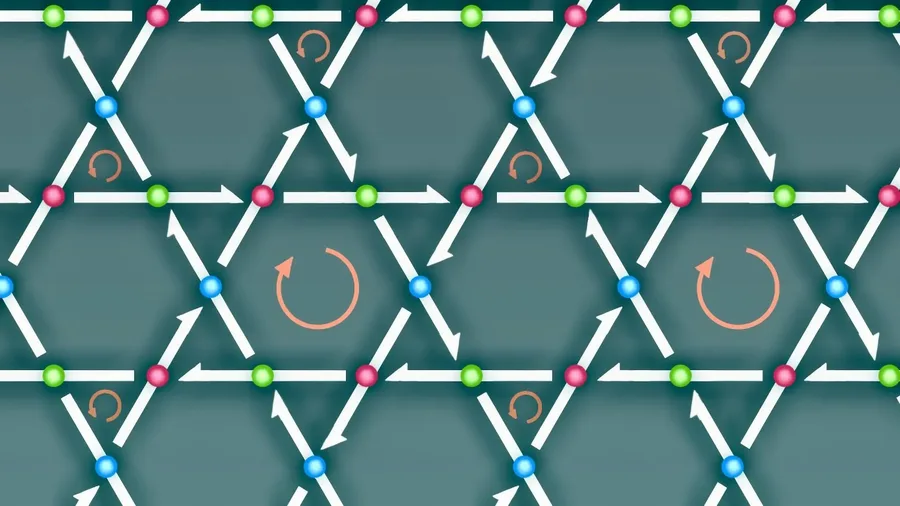
In a remarkable leap for quantum physics, researchers in Japan have uncovered how weak magnetic fields can reverse tiny electrical currents in kagome metals—quantum materials with a woven atomic structure that frustrates electrons into forming complex patterns. These reversals amplify the metal’s electrical asymmetry, creating a diode-like effect up to 100 times stronger than expected. The team’s…
A new wearable device, a-Heal, combines AI, imaging, and bioelectronics to speed up wound recovery. It continuously monitors wounds, diagnoses healing stages, and applies personalized treatments like medicine or electric fields. Preclinical tests showed healing about 25% faster than standard care, highlighting potential for chronic wound therapy.
A sweeping investigation has revealed widespread fraud in mathematics publishing, where commercial metrics and rankings have incentivized the mass production of meaningless or flawed papers. The study highlights shocking distortions—such as a university without a math department ranked as having the most top mathematicians—and the explosion of megajournals willing to publish anything for a fee.
A hidden quantum geometry that distorts electron paths has finally been observed in real materials. This “quantum metric,” once thought purely theoretical, may revolutionize electronics, superconductivity, and ultrafast devices.
Rice University physicists confirmed that flat electronic bands in kagome superconductors aren’t just theoretical, they actively shape superconductivity and magnetism. This breakthrough could guide the design of next-generation quantum materials and technologies.
Scientists may have uncovered the missing piece of quantum computing by reviving a particle once dismissed as useless. This particle, called the neglecton, could give fragile quantum systems the full power they need by working alongside Ising anyons. What was once considered mathematical waste may now hold the key to building universal quantum computers, turning discarded theory into a pathway to…
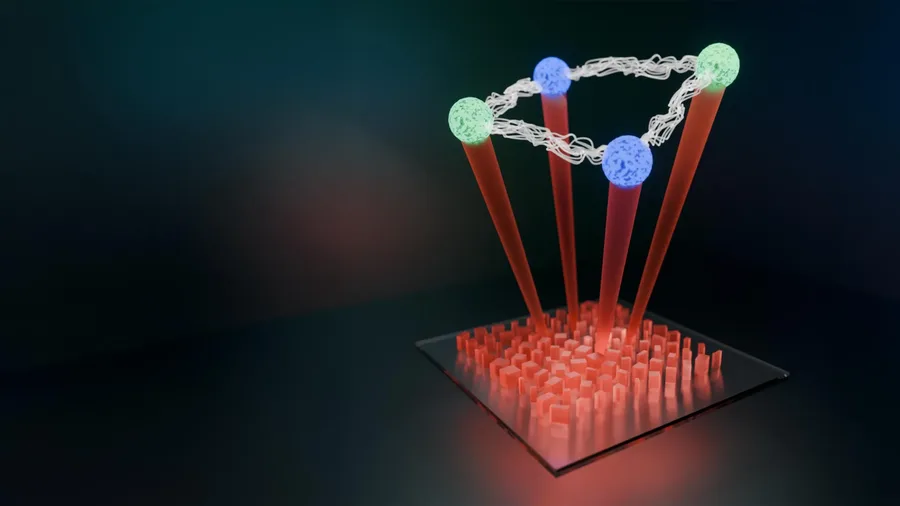
Researchers at Harvard have created a groundbreaking metasurface that can replace bulky and complex optical components used in quantum computing with a single, ultra-thin, nanostructured layer. This innovation could make quantum networks far more scalable, stable, and compact. By harnessing the power of graph theory, the team simplified the design of these quantum metasurfaces, enabling them to g…
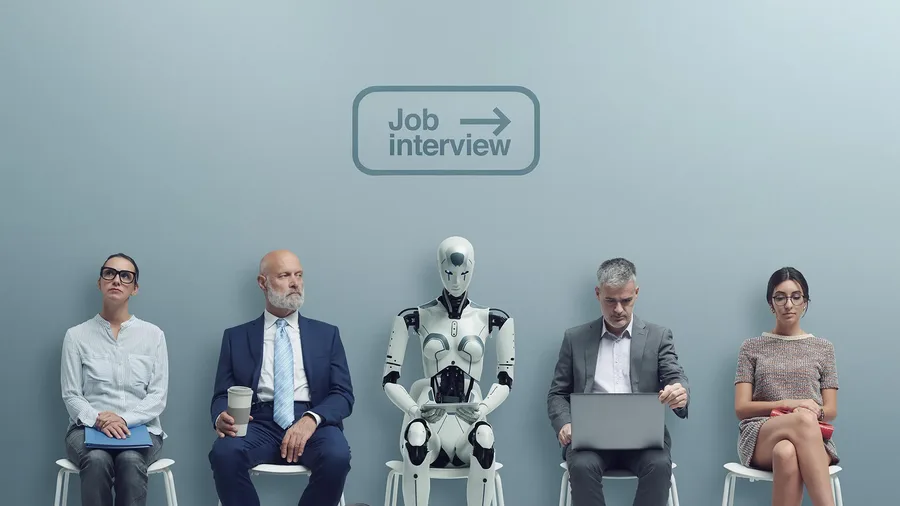
AI is revolutionizing the job landscape, prompting nations worldwide to prepare their workforces for dramatic changes. A University of Georgia study evaluated 50 countries’ national AI strategies and found significant differences in how governments prioritize education and workforce training. While many jobs could disappear in the coming decades, new careers requiring advanced AI skills are emerg…
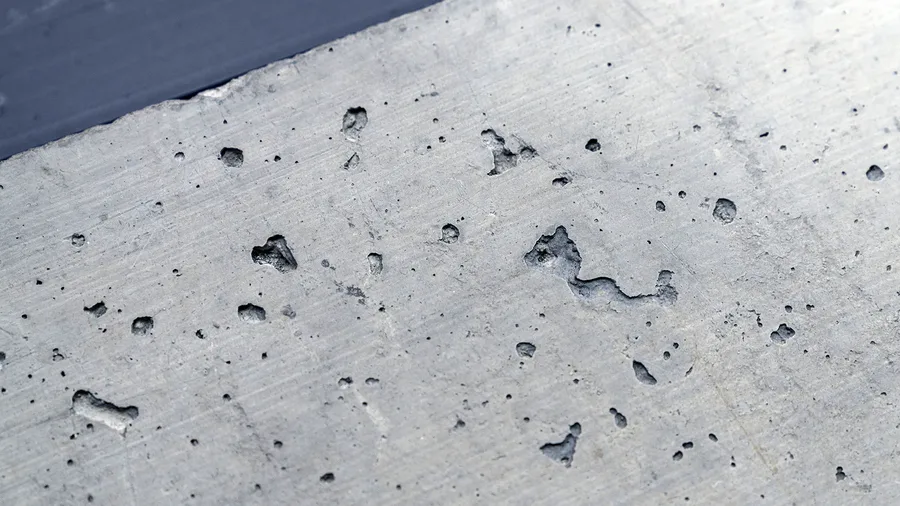
AI researchers in Switzerland have found a way to dramatically cut cement s carbon footprint by redesigning its recipe. Their system simulates thousands of ingredient combinations, pinpointing those that keep cement strong while emitting far less CO2 all in seconds.










 research.io