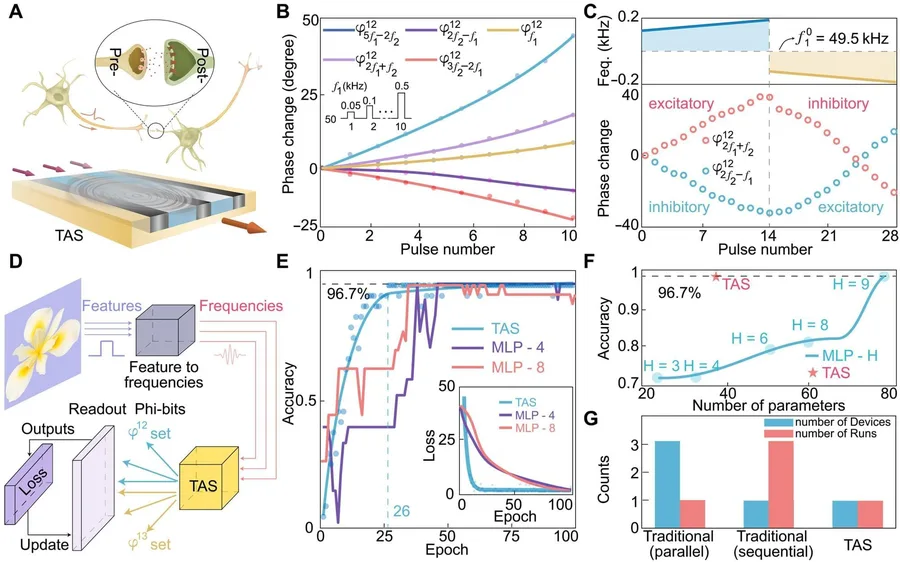
Nature Communications, Published online: 14 July 2026; doi:10.1038/s41467-026-75570-z The prospects of fluidic memristors in neuromorphic computing fuel demand for new memristive devices. Here, Fan et al. show a self-heating-induced blocking memristor achieving multiple neuromorphic functions.
Neuromorphic computing has the potential to overcome limitations of traditional silicon technology in machine learning tasks. Recent advancements in large crossbar arrays and silicon-based asynchronous spiking neural networks have led to promising neuromorphic systems. However, developing compact parallel computing technology for integrating artificial neural networks into traditional hardware re…
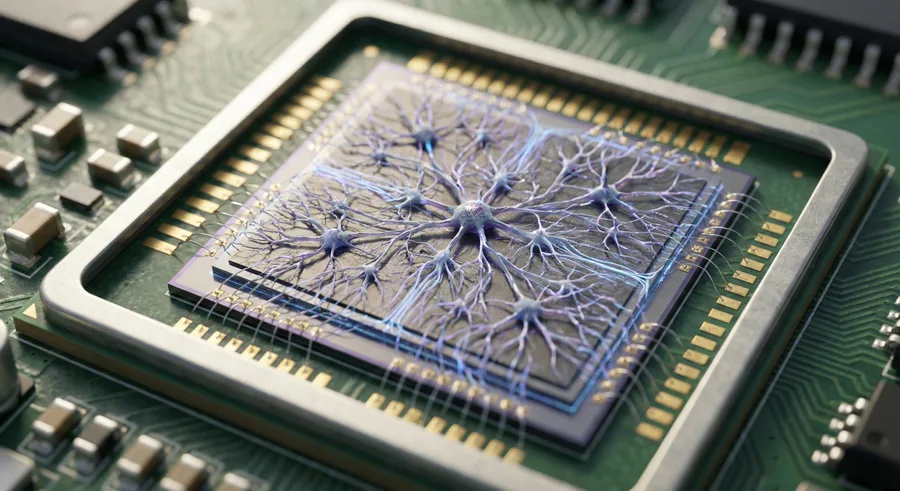
Neuromorphic computing is a computing approach that mimics how the human brain works. Our gray matter is a marvel of nature, capable of handling huge volumes of data with incredible energy efficiency. While modern AI hardware is becoming better at processing complex tasks, it consumes vast amounts of energy. One of the promises of neuromorphic […]
Nature Communications, Published online: 29 May 2026; doi:10.1038/s41467-026-72971-y Computing efficiency and data security are two critical demands in the AI era. Han et al. report a ferroelectric transistor with controllable synaptic and secure functionalities. It physically hides stored data to block read attacks. Simulations show its array effectively reduces model inversion attacks.
Five days are left to apply to a 2-year research position at INFN-Padova, to work in the context of the EIC-Pathfinder-2025 winning project " PHINDER " on the simulation of the apparatus. PHINDER (Picosecond-scale Photonic Heterogeneous Integrated Neuromorphic Detector) is a consortium of seven research institutes led by Lulea Technology University (Sweden), including Universidad de Oviedo, Eindh…
This paper presents a neuromorphic processing system integrating a compressed sensing spiking neural network (CSSNN) designed for sparse signal classification. The proposed CSSNN combines data coding, data compression, and SNN classification, enabling end-to-end optimization of network performance and model compression. Evaluated on the MNIST, N-MNIST, and DVS Gesture datasets, under uniform comp…
Nature Communications, Published online: 06 May 2026; doi:10.1038/s41467-026-72740-x Traditional edge audio recognition struggles with high overhead and latency owing to separate denoising and recognition modules. Wang et al. propose a memristor-based neuromorphic system integrating on-chip denoising and recognition, achieving full recognition accuracy with low energy consumption and strong noise…
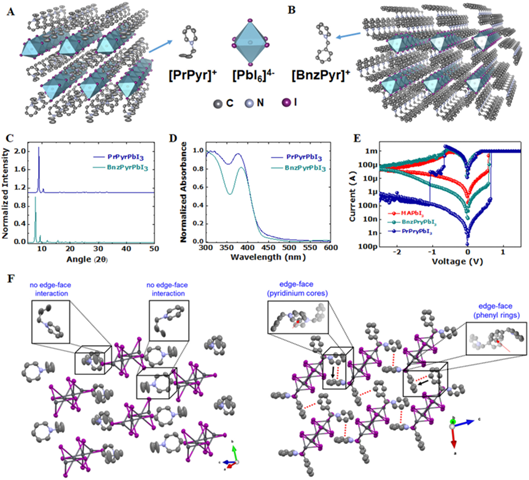
The main goal of the field of neuromorphic computing is to build machines that emulate aspects of the brain in its ability to perform complex tasks in parallel and with great energy efficiency. Thanks to new computing architectures, these machines could revolutionize high-performance computing and find applications to perform local, low-energy computing for sensors and robots. The use of organic …
Neuromorphic computers modeled after the human brain can now solve the complex equations behind physics simulations — something once thought possible only with energy-hungry supercomputers. The breakthrough could lead to powerful, low-energy supercomputers while revealing new secrets about how our brains process information.
Unlocking the brain’s “magic” in tech is the job of neuromorphic computing and three scientists at UT San Antonio’s MATRIX AI Consortium who are working toward that goal — as they also seek ways to make AI trustworthy. “In a nutshell, neuromorphic computing is trying to approach computing inspired by how the brain works,” said William Severa, PhD, associate professor in […] The post Podcast: The …
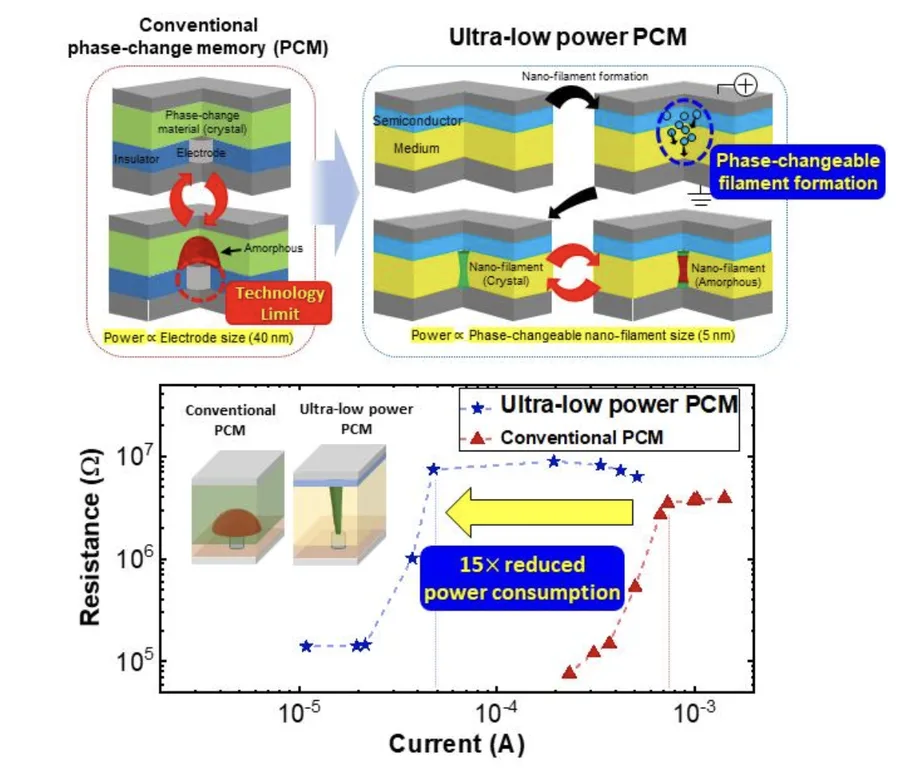
A team of Korean researchers is making headlines by developing a new memory device that can be used to replace existing memory or used in implementing neuromorphic computing for next-generation artificial intelligence hardware for its low processing costs and its ultra-low power consumption. The post KAIST Researchers Developed a Novel Ultra-Low Power Memory for Neuromorphic Computing appeared f…
Neuromorphic computing, inspired by the structure of the human brain, aims to overcome the limitations of traditional computing architectures by more closely integrating processing and memory functions. It is believed that this approach is a step towards dramatically improving the efficiency of artificial neural networks by in-memory computing. Specifically, compared to conventional graphics proc…
The NeuRRAM chip is the first compute-in-memory chip to demonstrate a wide range of AI applications at a fraction of the energy consumed by other platforms while maintaining equivalent accuracy. The post A New Neuromorphic Chip for AI on the Edge, At a Small Fraction of the Energy and Size of Today’s Compute Platforms appeared first on Semiconductor Digest .
Neuromorphic computing is an approach to hardware design and algorithms that seeks to mimic the brain. The concept doesn’t describe an exact replica, a robotic brain full of synthetic neurons and artificial gray matter. Rather, experts working in this area are designing all layers of a computing system to mirror the efficiency of the brain. Compared to conventional computers, the human brain bare…