

optimization

Casey Muratori
2d ago

Some time ago, much effort was expended to convince people to replace approximations of “pi” (3.14159…) with approximations of “tau” (6. 28318…). The idea, according to numerous blog posts and YouTube videos, was that common formulas become simpler, and it’s easier to work with a constant describing an entire circle instead of half a circle. Generally, I agree. While it’s a minor point, it’s wort…

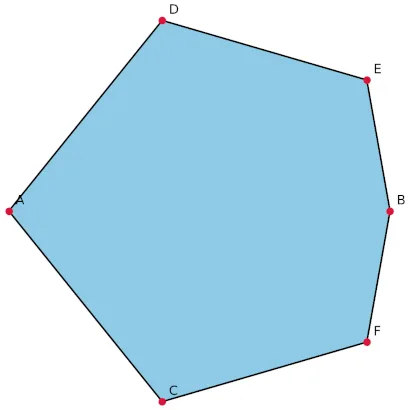
A new paper just came out, The Maximum-Area Small Polygon Problem. The paper solves the problem of finding, for each n, the n-gon with diameter 1 and maximum area. For odd n, the solution is what you might expect: a regular n-gon. I would expect this to be the solution for even n as well, […] The post Big little hexagon first appeared on John D. Cook .

Kernel-based optimal transport (OT) estimators offer an alternative, functional estimation procedure to address OT problems from samples. Recent works suggest that these estimators are more statistically efficient than plug-in (linear programming-based) OT estimators when comparing probability measures in high-dimensions [Vacher et al., 2021]. Unfortunately, that statistical benefit comes at a ve…

Alexandros A. Voudouris (voudourisalexandros@gmail.com)
7d ago

We consider a class of jump games in which agents of different types occupy the nodes of a graph aiming to maximize the variety of types in their neighborhood. In particular, each agent derives a utility equal to the number of types different from its own in its neighborhood. We show that the jump game induced by the strategic behavior of the agents (who aim to maximize their utility) may in gene…

Saha; Rahul; Li; Alan; Xue; Anton; Chaudhuri; Swarat; Klivans; Adam; Kothari; Pravesh K; Meka; Raghu
8d ago

Computer Science > Computational Complexity Title:New Lower and Upper Bounds for the Grothendieck Constant View PDF HTML (experimental) Abstract:We establish new bounds on the Grothendieck constant $K_G$: \[ \frac{6\pi}{11} \le K_G \le \frac{\pi}{2\log(1+\sqrt2)} - 10^{-4}. \] Methodologically, our lower bound approach differs from previous works by establishing limitations on the asy…

Contents The problem The first attempt wasn't enough What closed the gap Where the value was Try it Closing thought The problem I'd just spent a few sessions in fast.ai's 04_mnist_basics.ipynb finally pinning down what a gradient actually means: not "3's gradient," but the slope of the loss curve at the exact point where the weight currently sits. Small distinction, but it's the one that had stay…

dc.title: Dynamic whole-body planning for humanoids in confined spaces : a morphology-aware synthesis approach dc.description.abstract: While bipedal locomotion on flat and structured terrains has seen significant progress through methods ranging from reduced-order models to learning-based methods, navigating confined and unstructured environments remains a critical challenge for humanoid robots.…

A little-known branch of engineering mathematics is moving beyond theory and finding potential uses in everything from robots and aircraft to extremely small nanotechnology devices. Known as negative imaginary, or NI, systems theory, the approach helps engineers control machines and structures that naturally vibrate, bend or wobble. A new study examining two decades of research […] The post Once-…

Hector Williams
12d ago

Problem You are given an integer array arr. We split arr into some number of chunks (i.e., partitions), and individually sort each chunk. After concatenating them, the result should equal the sorted array. Return the largest number of chunks we can make to sort the array. Example 1: Input: arr = [5,4,3,2,1] Output: 1 Explanation: Splitting into two or more chunks will not return the required resu…

research.ioresearch.io

Sign up to keep scrolling

Create your feed subscriptions, save articles, keep scrolling.

Already have an account?