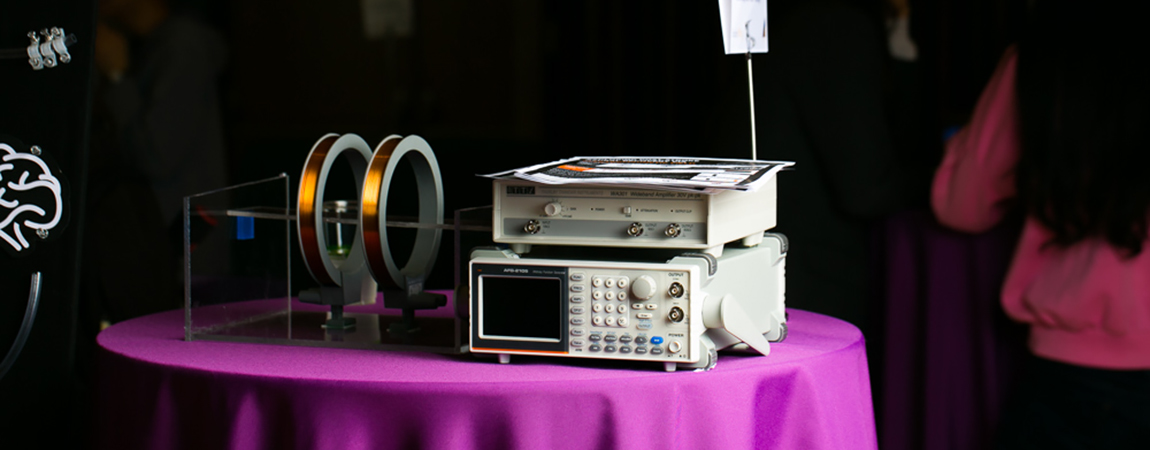
Every year, millions of people around the world suffer a stroke. A stroke occurs when blood flow to part of the brain is suddenly blocked or reduced. Without enough oxygen, brain cells can become damaged or die. Many people survive a stroke, but recovery can be difficult and may take months or even years. One […] The post Sound Waves May Help Improve Coordination after Stroke appeared first on Kn…
In 2023, a stroke transformed Naresh Shanbhag, a 53-year-old smooth-talking sales professional in Bengaluru, into someone who was unable to speak words, let alone sentences. “I began physical therapy to regain strength in my paralyzed right side, but forming sentences or remembering the right words was hard for me,” he... The post Singing the Shopping List: How Music Can Rewire the Brain After St…
According to the National Aphasia Association, about 2 million U.S. citizens live with aphasia, but only two-thirds of Americans are aware of the condition, which is a communication disorder that often occurs after a stroke.
Neurorehabilitation poses a crucial problem in clinical recovery tasks, particularly for individuals with poor motor functions and neurological impairments, and problems in activities of daily living (ADL). To resolve this, we design a novel model, Rehab-DRLX, with a hybrid deep learning (HDL) framework that combines deep reinforcement learning (DRL) with an explainable transformer model to provi…
IntroductionDisorders of consciousness (DoC) are common disabling conditions following severe brain injury that impose a substantial burden on families and society. Music intervention, as a non-invasive stimulation method, has garnered increasing attention in the field of neurorehabilitation. However, evidence regarding its awakening effects in patients with DoC remains inconsistent. This study s…
Scientific Data, Published online: 22 April 2026; doi:10.1038/s41597-026-07287-z An EEG-EMG-kinematics dataset from wrist pointing tasks for biomarker research in neurorehabilitation
Brain–computer interfaces (BCIs) are increasingly explored as tools for post-stroke neurorehabilitation. Motor imagery (MI)-based paradigms are widely used but may be difficult for some patients to perform reliably, motivating the exploration of alternative control strategies. This study presents a retrospective exploratory case series (n = 5) evaluating the feasibility and safety of a P300-based…