A future that continues to have increasingly fast computing depends on quantum physics – but research is showing that there are limits to how fast quantum computers can go.
In science, the word ‘theory’ has a very specific meaning that’s easy for nonscientists to misunderstand or misconstrue. Here’s what a theory must withstand to be accepted by the scientific community.
In my previous article we discussed the “who, what, when, where and how” of the worldwide gravitational wave detection effort. The observant observer will have noticed we’re still missing the “why”. Why…
A radical discovery by my colleagues and I – reported this week in Physical Review Letters – could help explain why it was possible for life (at least as we know it) to develop on Earth, but not in other…
David Blair·...·The University of Western Australia
28d ago
School students today are taught physics based on obsolete theories and outmoded ways of thinking. Instead of the truth, most learn a naive simplification - the 300 year-old Newtonian physics, itself based…
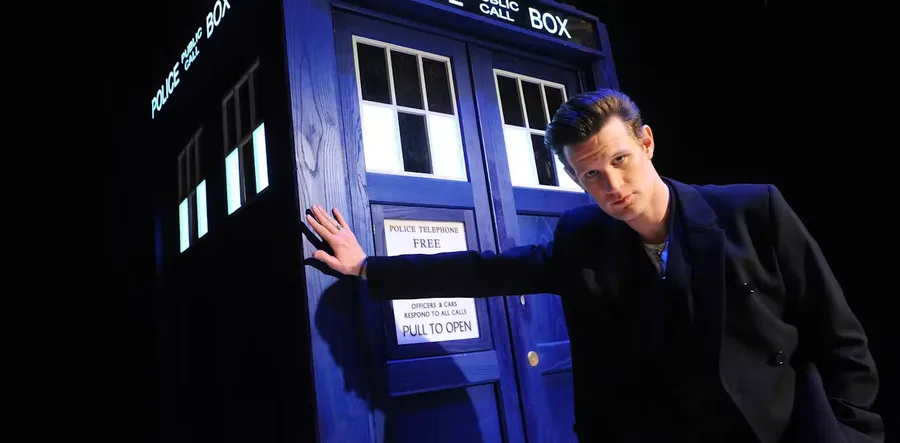
As Doctor Who’s 50th anniversary looms, time travel is everywhere – on the screen, at least. Famously, the Doctor can whizz through the years using a “dimensionally transcendental” machine, the TARDIS…
Time dilation might seem like science fiction, but it’s not. There are astronauts circling the Earth right now who are experiencing it – though luckily nowhere near as much as Buzz Lightyear.
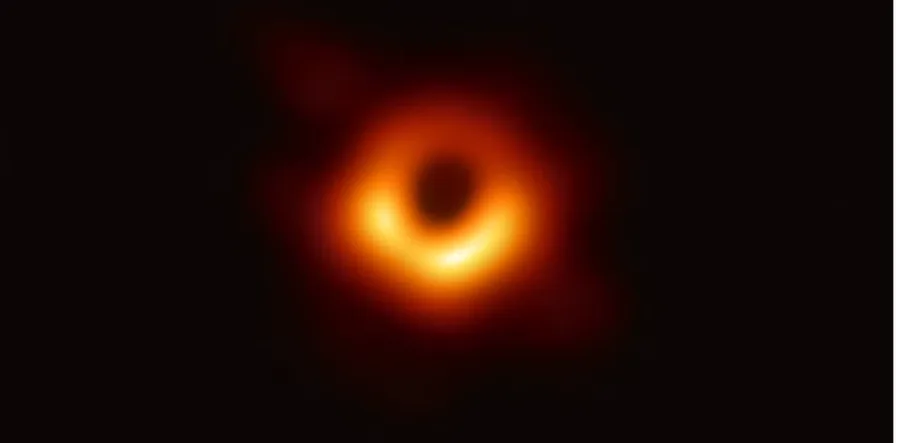
Roger Penrose helped resurrect Einstein’s general theory of relativity, and Reinhard Genzel and Andrea Ghez showed there was a black hole in the middle of our galaxy.
The discovery of gravitational waves has ushered in a new era in astronomy and physics. Where will the next big discovery be made? There’s no reason for it not to be Africa.
Gravity is something every person on Earth intuitively understands: It is what keeps you on the ground. But how come gravity pulls down, rather than pushes up? Einstein came up with the answer.
It’s taken centuries for our understanding of gravity to evolve to where it is today, culminating in the discovery of gravitational waves, as predicted by Albert Einstein a century ago.
It’s the year 2100. You wake up alone in a small, windowless room. The only other thing in the room is a small ball. Maybe the room is located in your city, but maybe it’s inside that new spaceship everyone’s…
Einstein’s theory of general relativity suggests that our universe originated in a Big Bang. But black holes, and their gravitational forces, challenge the limits of Einstein’s work.
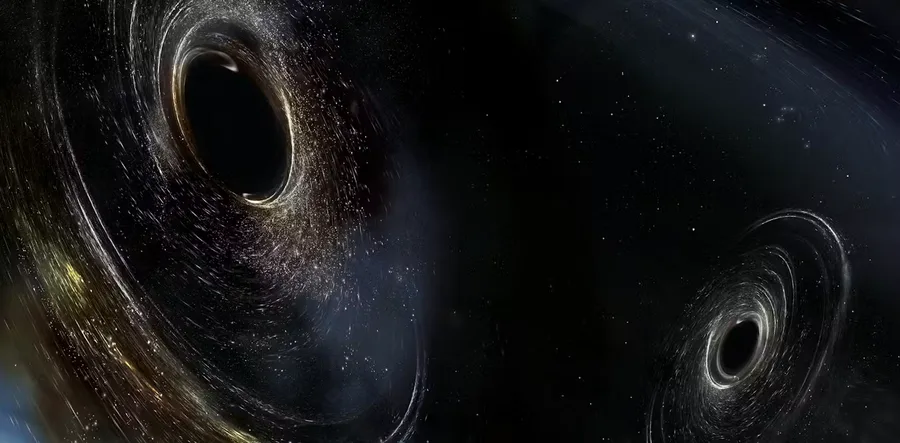
These ripples in the very fabric of the universe were hypothesized by Einstein a century ago. Now scientists have detected them for the third time in a year and a half – ushering in a new era in astrophysics.
General relativity challenges our intuitive conception of how space and time work, which might explain why it’s such a popular target for crank theorists.
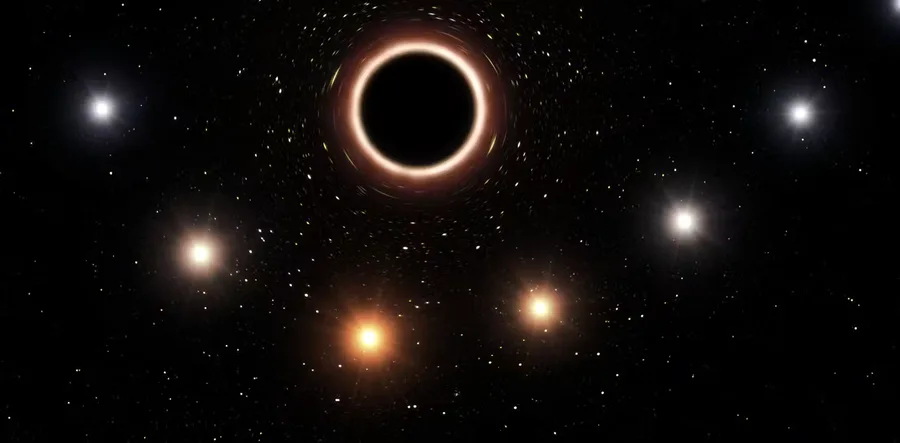
Astronomers traced a single star as it passed close to the black hole at the centre of our galaxy, and detected the telltale signature of Einstein’s gravity in action.




 research.io