gravitational-waves

The Scientific World - Let's have a moment of science
Mahtab A Quddusi (noreply@blogger.com)
3h ago

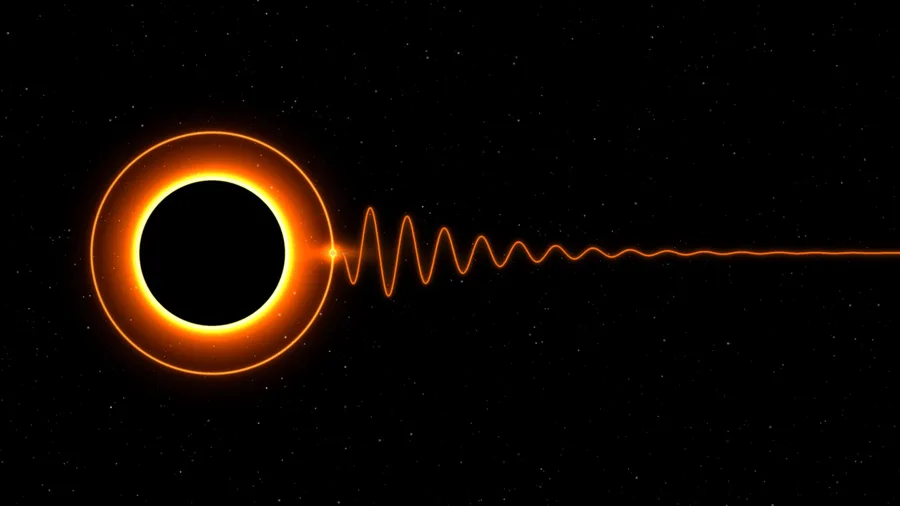
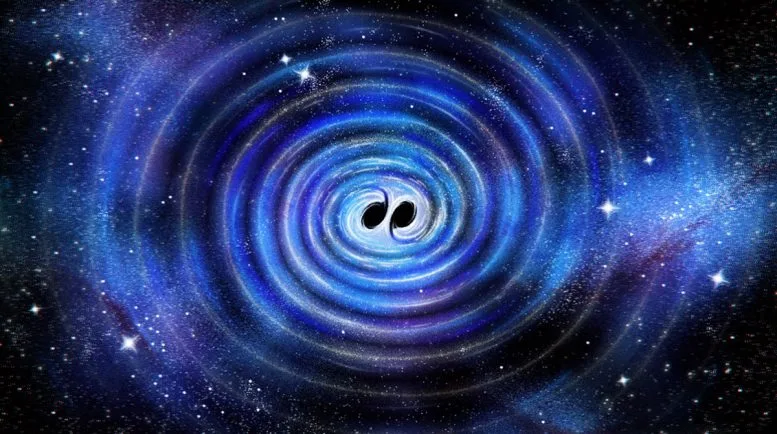
Gravitational anomalies exist near black hole mergers, but they are generally understood as extreme manifestations of gravity predicted by General Relativity (GR), rather than violations of physics. These mergers are the most energetic events in the universe, generating massive ripples in spacetime called gravitational waves. Explore whether gravitational anomalies occur during black hole mergers…

astronomyastrophysicscosmologygravitational-waves
Newswise: Latest News
Space Telescope Science Institute (STScI)
1d ago

The American Association for the Advancement of Science (AAAS) has elected Dr. Jennifer Lotz, director of the Space Telescope Science Institute (STScI) in Baltimore, Maryland, as a 2025 Fellow of the AAAS. She is being honored for distinguished leadership and scientific contributions to astronomy, particularly insights learned about the early universe from gravitational lensing observed by the gr…

astronomycosmologygravitational-waves
ScienceBlog.com

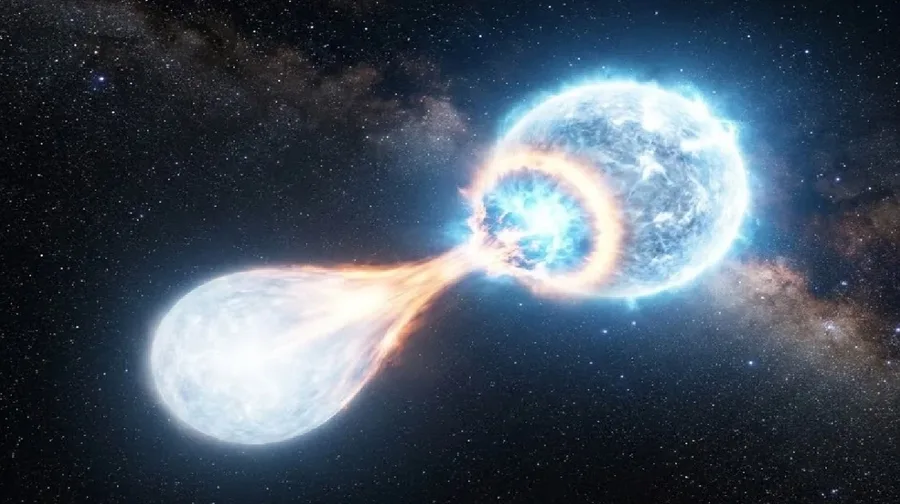
For eighteen years, radio telescopes have been staring at the same small patch of sky in the constellation Cygnus, watching a black hole do something that black holes do rather well: devour its companion star and fling what it can’t swallow back into the universe at half the speed of light. The watching has been patient, meticulous, and until very recently, frustrating. The jets blazing outward f…

astronomyastrophysicsgravitational-waves
PhilPapers: Recent additions to PhilArchive

_SSRN_. forthcomingA unified description of gravitational phenomena across galactic and cosmological scales remains incomplete within the standard framework of General Relativity supplemented by dark matter and dark energy. In particular, the empirical regularity of galaxy rotation curves and the persistent, structured discrepancy between early-and late-universe determinations of the Hubble const…

astronomycosmologygravitational-wavesphysics
astrobites
astrobites
OzGrav

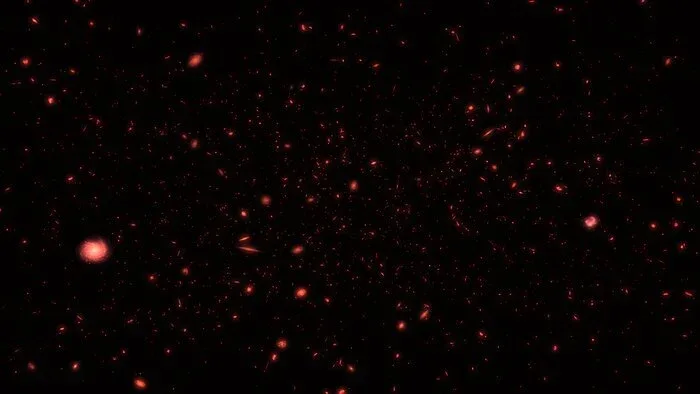
An awe-inspiring new chapter in science engagement has begun, with Professor Matthew Bailes, Director of the ARC Centre of Excellence for Gravitational Wave Discovery, officially launching Swinburne Virtual Universe. The space is exactly what it sounds like. A fully immersive room wrapped in more than 100 square metres of high-contrast LED screens, where you’re not […] The post OzGrav Director Pr…

astronomygravitational-wavesspace-exploration
PhilPapers: Recent additions to PhilArchive

Could a ring of massive bodies generate a collective gravitational structure in which rotation, orbital confinement, and debris distribution emerge in a manner analogous to how magnetic fields organize metallic particles?

astronomygravitational-waves
Latest Science News -- ScienceDaily

In the chaotic first moments after the Big Bang, ripples in spacetime may have done more than just echo through the cosmos—they could have helped create dark matter itself. New research suggests that faint, ancient gravitational waves might have transformed into particles that eventually became the invisible substance shaping galaxies today.

astronomycosmologygravitational-wavesphysics
Eos

This schematic of the receiver plane illustrates the definition of the laser deflection angle and the laser transverse displacement. The ideal laser beam should be parallel to the z-axis and pass through the intersection point of the x- and y-axis. However, when the real laser beam passes through the space plasma, it generates a deflection of the laser direction (red dashed line) and a displaceme…

astronomygravitational-wavesopticsphysicsplasma-physics
astrobites

Most gravitational-wave models throw away uncertainty, which could make Einstein's theory look wrong when it isn't. Today’s authors show when this could happen and how to take care of the problem.

astronomygravitational-waves
Nature

Nature, Published online: 22 April 2026; doi:10.1038/d41586-026-01347-5 A decades-long experiment has brought researchers no closer to the value of the gravitational constant. Plus, how the X and Y chromosomes affect your health and why malaria is rising despite the advent of vaccines.

astronomygravitational-waves
Knowridge Science Report

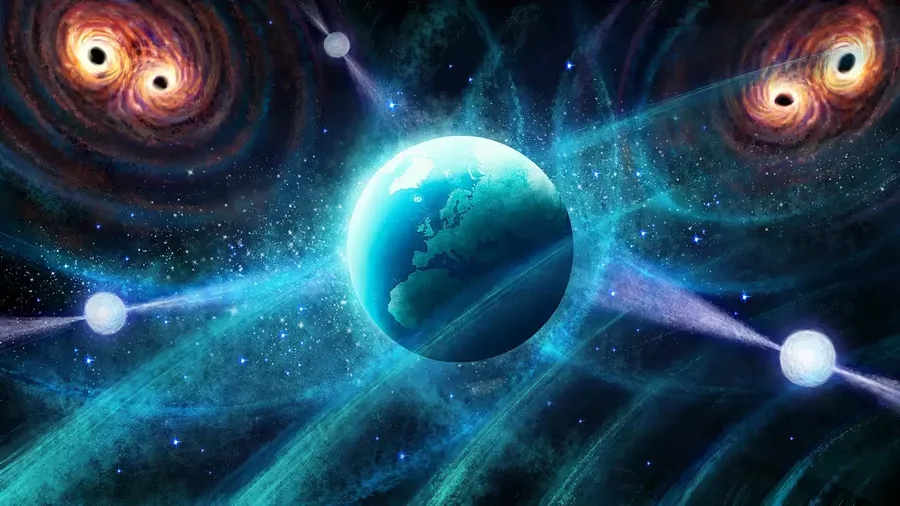
When the first gravitational wave (GW) was detected back in 2015, scientists said they had opened a new window into the Universe. While most of astronomy is based on detecting electromagnetic energy, GW are different. They’re ripples in spacetime predicted by Einstein. GW detectors have let us detect mergers between black holes (BH), which emit […] The post Exploding stars, black holes, and the f…

astronomyastrophysicsgravitational-waves
The Scientific World - Let's have a moment of science
Mahtab A Quddusi (noreply@blogger.com)
15d ago

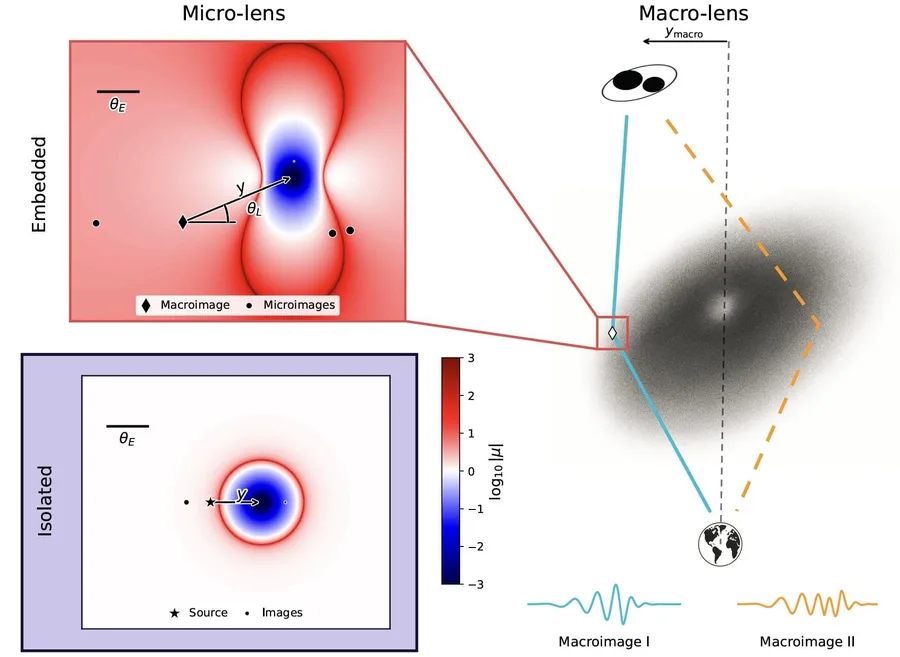
Einstein Rings: Windows to the Edge of the Universe Gravitational lensing, predicted by Einstein’s general relativity, occurs when a massive galaxy or cluster bends and magnifies light from a background source. In rare cases of near-perfect alignment, the background galaxy appears as an Einstein ring – a near-circular halo of light. Such rings act as “natural telescopes,” boosting the brightness …

astronomycosmologygravitational-waves
The Scientific World - Let's have a moment of science
Mahtab A Quddusi (noreply@blogger.com)
16d ago

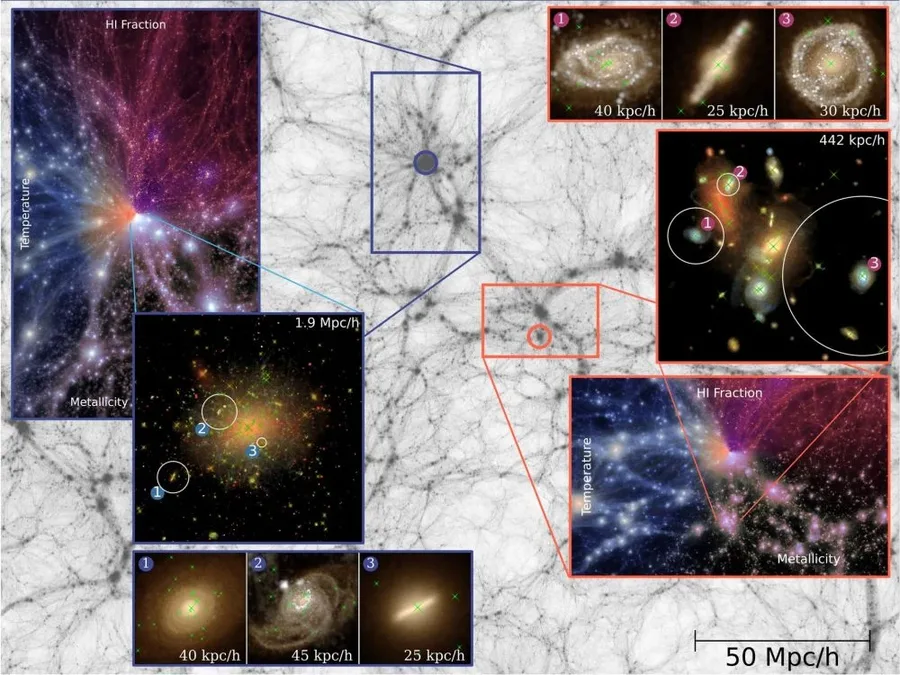
Cosmic voids significantly affect galaxy formation, evolution, and the propagation of gravitational waves, acting as distinct environments that shape the large-scale structure of the universe. Cosmic voids are huge, quiet spaces in the universe with very little matter. Because of this, fewer galaxies form there, and the ones that do grow slowly and stay simple. These empty regions also let gravit…

astronomycosmologygravitational-waves
Physics Forums

Dear Sir: While studying optics, I discovered a new method for detecting gravitational waves. I am now sending the paper to your journal, hoping that you can publish it, while findings may well prove stimulating to others' thinking about such questions. The preprint of the paper has posted in... Read more

astronomygravitational-wavesopticsphysics
astrobites
Latest from Live Science
NASA Science
jmbrill
19d ago

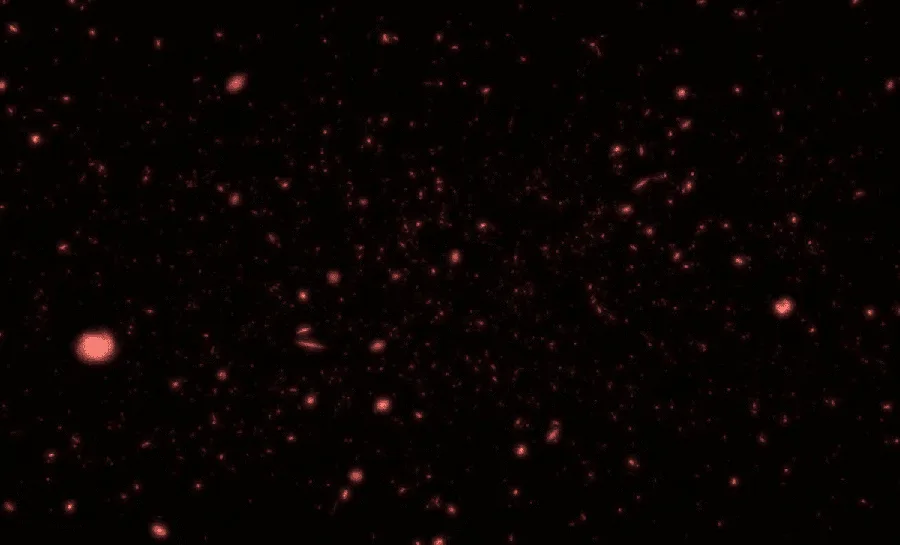
Roman will study how the universe’s web of matter has evolved by measuring how gravity subtly bends the path of light across vast distances—a phenomenon called gravitational lensing.  This effect occurs because anything that has mass warps space-time, the underlying fabric of the universe. Extremely massive things like clusters of galaxies warp space-time so much […] The post Weak Lensing appeare…

astronomycosmologygravitational-waves
PhilPapers: Recent additions to PhilArchive

This work presents a structural peer-style analysis of a set of recent contributions in gravitational-wave data analysis, including photon-counting inference, control optimization methods, the GWTC-4.0 series of general relativity tests, and black-hole spectroscopy studies. The aim is to examine the methodological and conceptual structure of these approaches. It is shown that all analyzed works r…

astronomyastrophysicsgravitational-waves
research.ioresearch.io

Sign up to keep scrolling

Create your feed subscriptions, save articles, keep scrolling.

Already have an account?