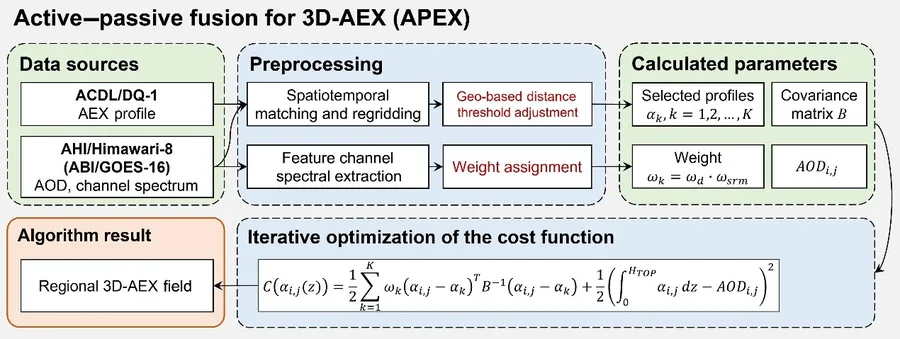
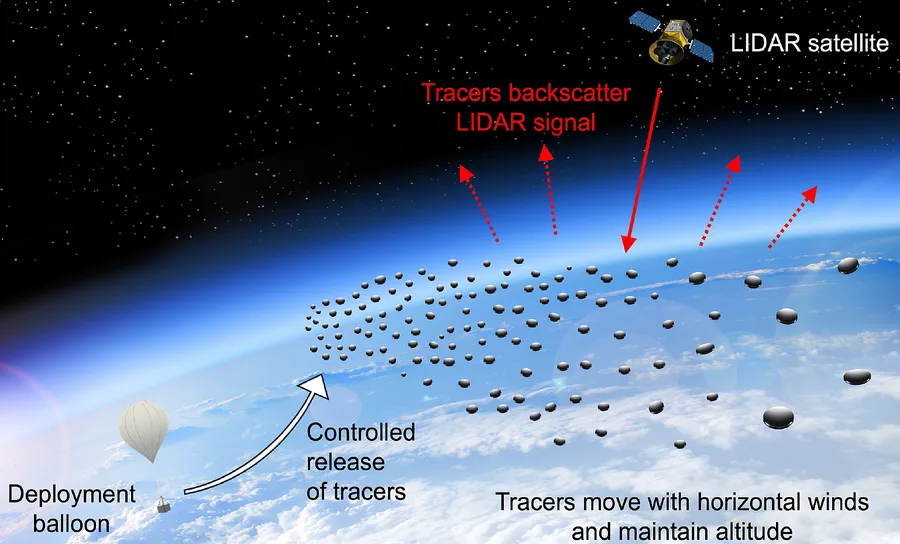
A satellite-data fusion algorithm maps atmospheric aerosols in three dimensions beyond narrow lidar tracks. By combining vertical profiles with geostationary observations, the method produces regional aerosol extinction fields and boundary-layer heights at high resolution. The advance could strengthen research on pollution transport, atmospheric stability, aerosol-boundary layer interactions, and…
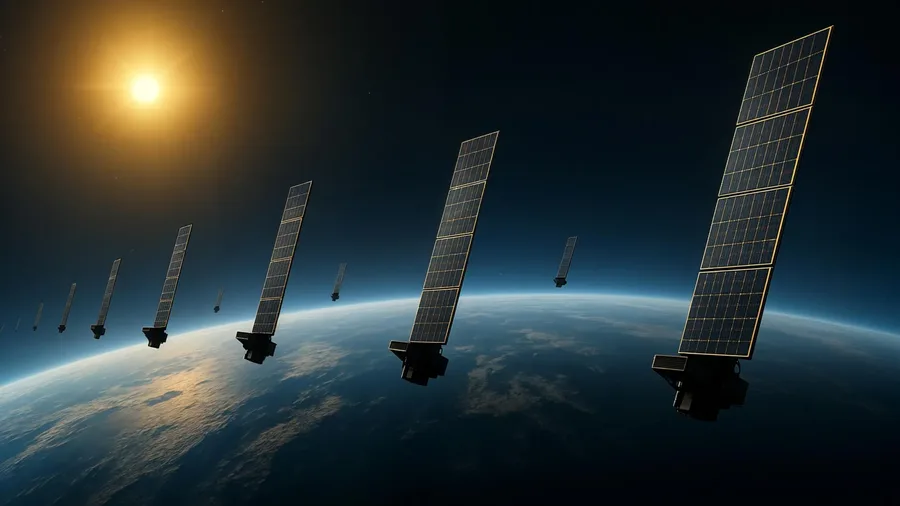
Researchers have found a clever new way to map a part of Earth’s upper atmosphere that is notoriously difficult to observe. Using orbital data from roughly 1,200 Starlink satellites, they reconstructed changes in atmospheric density about 500 kilometers above Earth. The approach could sharpen satellite tracking and help reduce the growing risk of collisions in increasingly crowded orbits.
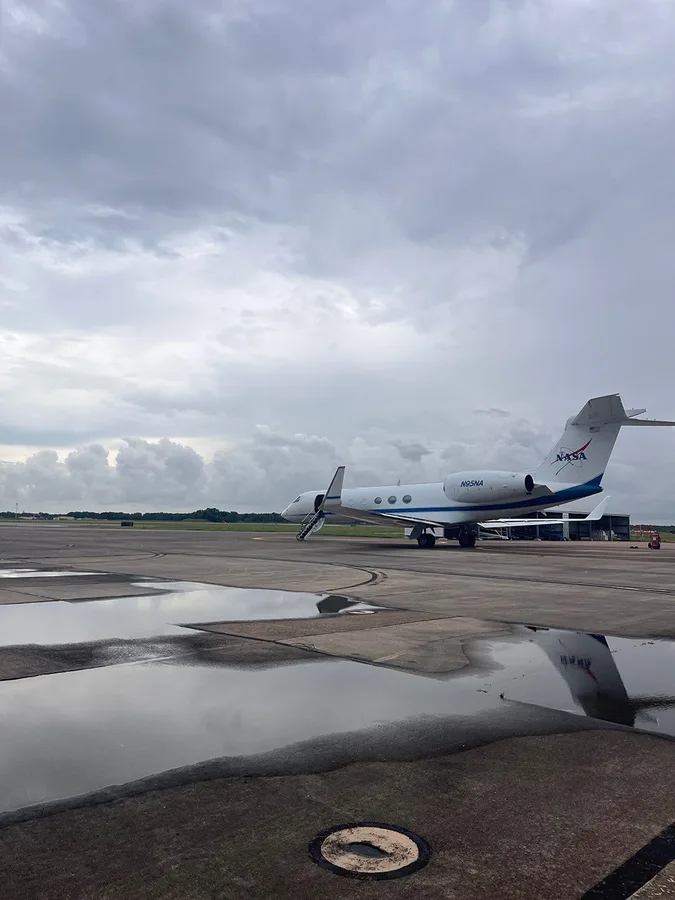
The gusty wind didn’t make it easy to hold tight to a balloon so large. The balloon, a scientific instrument called an ozonesonde, was about to be released into the atmosphere above the Texas Gulf Coast by students from NASA’s SARP (Student Airborne Research Program), which concluded its summer session July 27. The balloon’s job […] The post Students Take on Airborne Field Research with NASA appe…
In this thread, I propose a very naive, homemade model of particle behavior in an atmosphere. Assume that the Earth and its atmosphere rotate as a unified rigid body about a fixed axis with constant angular velocity ##\boldsymbol\omega##. Assume that a particle of mass ##m## moves in a plane... Read more
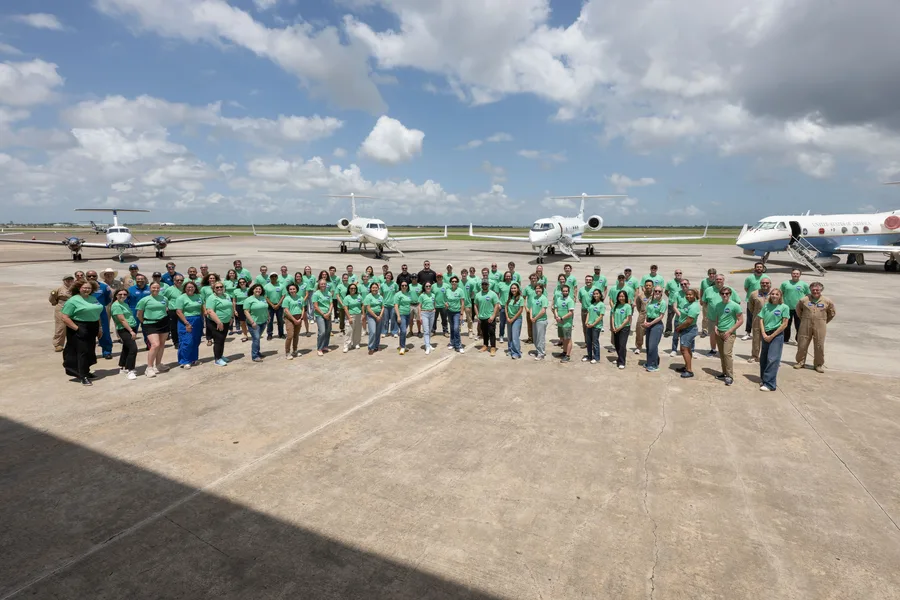
From June 3 to 13, aircraft at Ellington Field in Houston gave students a firsthand look at how scientists study Earth from the air. Through NASA’s Student Airborne Research Program, or SARP, students learned how airborne field campaigns collect data used in atmospheric science, ecology, air quality research, and climate modeling. This year’s activity took place […] The post NASA Students Get Air…
Gannet Hallar Named Chair of Atmospheric Sciences
June 18, 2026
Above: Gannet Hallar
Accomplished researcher, Storm Peak director, and dedicated mentor takes the helm of the Department of Atmospheric Sciences effective July 1, succeeding outgoing chair Brenda Bowen.
Gannet Hallar has spent nearly two decades with her head in the clouds—literally. As director of Storm Peak Laboratory, the premier …
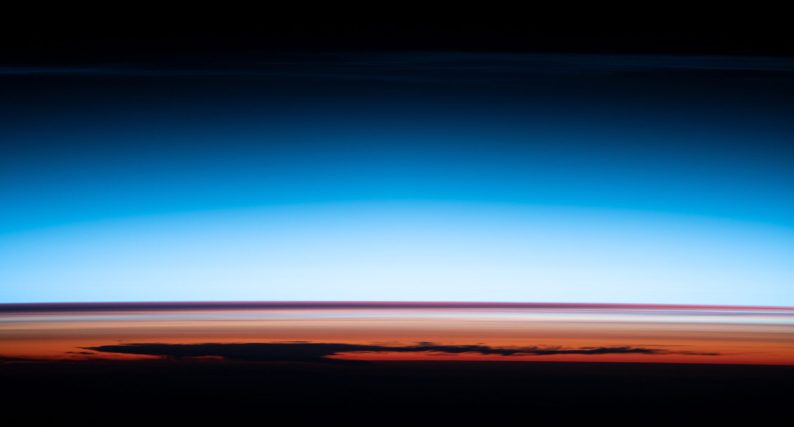
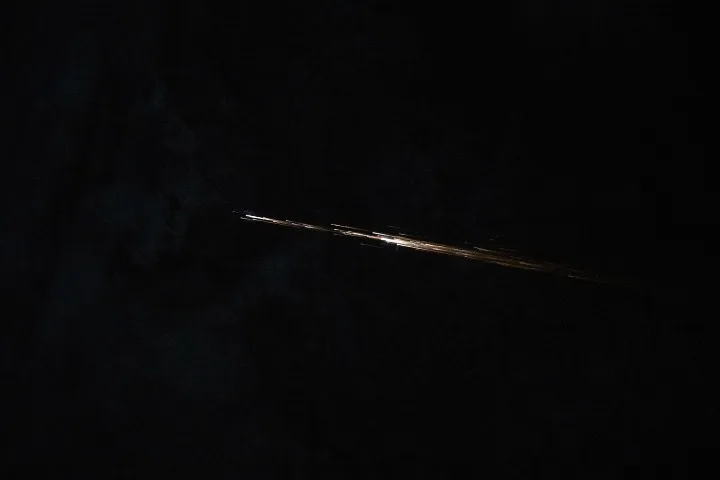
The outermost layers of Earth's atmosphere, the thermosphere and exosphere, are relatively busy places. In these layers, tens of thousands of trackable objects, including satellites and various types of debris, orbit the planet. They are also where dozens of tons of meteoric material enter daily, occasionally producing bright fireballs as the pieces burn up.
Convection Links Biomass Burning to Increased Tropical Ozone: However, Models will tend to Overpredict O3Chatfield, R., and A. C. Delany (1990), Convection Links Biomass Burning to Increased Tropical Ozone: However, Models will tend to Overpredict O3, J. Geophys. Res., D11, 18. Are There Interactions of Iodine and Sulfur Species in Marine Air Photochemistry?Chatfield, R., and […] The post 1990 Am…
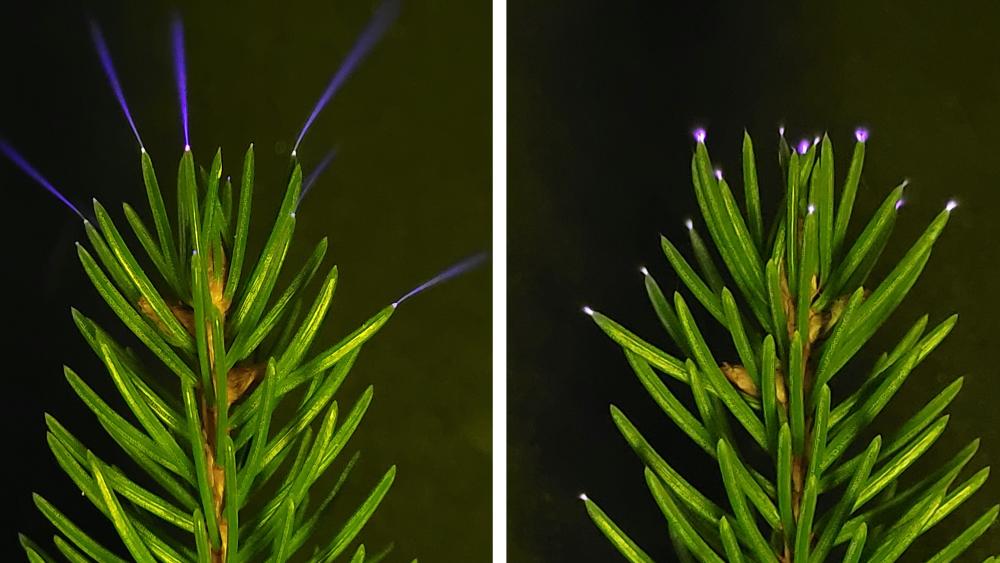
Penn State experts in meteorology and atmospheric science made their way down the nation’s eastern coast in June 2024 in search of corona discharges, a long-hypothesized atmospheric weather phenomenon where miniscule pulses of electricity dance at the tips of tree leaves, causing the canopy to glow in the ultraviolet (UV). They found them and captured the phenomenon on film for the first time.
Delving into how gas mixtures behave under different conditions is essential for advancing environmental and industrial technologies. This exploration highlights the subtle shifts between diffusion and convective mixing in gas mixtures, providing pivotal insights for their practical handling. Diffusion, where gases mix due to concentration gradients, and convective mixing, involving collective ga…
A project led by the University of Washington to better understand our atmosphere’s complexity is a finalist for NASA’s next generation of Earth-observing satellites. The space agency this week announced the projects that will each receive $5 million to advance to the next stage and conduct a one-year concept study.
STRIVE seeks to better understand the troposphere that we inhabit and the stratos…
DRI is pleased to announce that the 23rd annual Peter B. Wagner Memorial Award for Women in Atmospheric Sciences has been awarded to Yi Zhang, Ph.D., of Princeton University. The post Yi Zhang of Princeton University Receives DRI’s 23rd Annual Wagner Award for Women in Atmospheric Science appeared first on DRI .
The Graduate Research Center of the Southwest (GRCSW) appoints Dr. Francis (Frank) Johnson to lead its atmospheric and space science division. Johnson is joined by William B. Hanson, Dr. Gilbert Plass, Dr. John Hoffman, Dr. Brian Tinsley and Dr. Walter Heikala.