The production of green hydrogen through water splitting requires highly efficient electrocatalysts, but the current trial-and-error-based synthesis or discovery is time-consuming, costly and resource-intensive. Machine learning (ML) provides a powerful, data-driven alternative that can model complex structure-activity relationships across large chemical spaces at orders-of-magnitude speed. This …
Electrochemical water splitting is limited by sluggish oxygen evolution kinetics and high energy consumption. Thermo-electricity coupling, utilizing heat and electric fields, has become an effective strategy to break away from traditional thermal methods and improve electrocatalytic efficiency. This work summarizes the core mechanisms of thermo-electric coupled water splitting, including thermal …
With the increasing demand for rapid energy replenishment in electric vehicles and portable electronics, fast-charging lithium-ion batteries require graphite anodes with improved Li+ transport kinetics while maintaining high energy density and long-term stability. Graphite remains the dominant commercial anode material, but its layered structure leads to anisotropic Li+ diffusion, limited edge-pl…
Lithium-metal batteries are widely regarded as one of the most promising routes toward cell-level energy densities beyond the limit of conventional graphite-based lithium-ion batteries. However, the practical energy delivered by a lithium-metal cell is not determined only by the theoretical capacity of the cathode or the low potential of lithium metal. In many cases, the accessible energy is grad…
Herein, a straightforward, and mild synthetic co-precipitation method is used to prepare Cr-ZnO/RGO nanocomposite to be used in supercapacitor applications. First, the chromium (Cr) doping concentration in zinc oxide (ZnO) nanoparticles was systematically varied (2, 4, 6, 8, and 10%) to evaluate its influence on the electrochemical performance. The composite was constructed by combining reduced g…
The electrocatalytic valorization of furfural, a key biomass-derived platform molecule, offers a sustainable pathway for the synthesis of value-added chemicals under mild conditions. In this study, we report the development and application of nanostructured carbon-based electrodes, synthesized via a hard templating approach using SBA-15 silica and carbon precursors (furfuryl alcohol, FA, and glyc…
Growing energy consumption and concerns regarding the effects of global warming are driving development of greener energy alternatives. Green hydrogen production and consumption are essential in modern energy conversion and storage. The progression of water splitting technologies for sustainable hydrogen production relies on the development of efficient and cost-effective electrocatalysts for the…
The core advantages of rechargeable aqueous metal-ion batteries lie in their high safety and low cost. Their application prospects primarily focus on two key directions: first, serving as a secure grid-scale energy storage solution for renewable energy integration and peak shaving; second, providing irreplaceable safety assurance in specialized fields, such as, wearable devices, medical implant e…
Abstract
For aqueous lithium-ion batteries (A-LIBs), the hydrogen evolution reaction (HER) poses a significant challenge, as it competes with the primary electrochemical processes of the anode, resulting in capacity loss and reduced cycling stability. In this study, we investigate the use of fluorine-based additives in anodes to mitigate HER in LIBs with aqueous electrolytes including low or high…
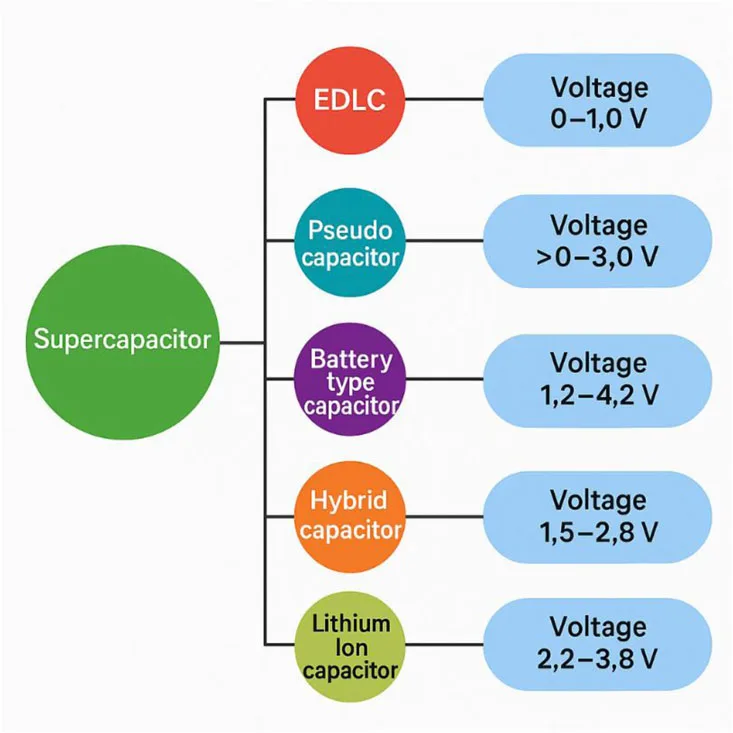
Due to the demand for fast-charging consumer electronics and electric vehicles, high power density is essential for advanced electrochemical energy storage devices. As an electrochemical energy storage device characterized by both excellent capacity and power performance, supercapacitors hold significant importance for technological development. Recent studies in materials science and electrochem…
Abstract
The increasing threat of bacterial infections to human health has positioned the development of antibacterial materials as a critical global research priority. Recently, hydroxyapatite (HAP), which is chemically similar to the main components of bone and teeth, has attracted considerable attention as a promising antibacterial material due to its ability to inhibit bacterial adhesion and …
Abstract
Precise modulation of the pore structure in activated carbon can further enhance the capacitance performance of supercapacitors. As a carbonaceous precursor, phenol-formaldehyde resin (PR) plays a dual role in both carbon deposition and activation for pore regulation; however, the activation mechanism governing its pore-tuning effect remains unclear. In this study, trace PR with a mass r…
Abstract
Electrochemical water splitting is a promising solution to energy challenges, yet the kinetically sluggish oxygen evolution reaction (OER) at the anode demands highly active and cost-effective catalysts. Herein, we develop a facile one-pot hydrothermal oxidation strategy to simultaneously achieve the oxidative cleavage of petroleum coke into nanoscale carbon dots (HO-CDs) and the in situ…
Abstract
FexCo1-x thin films were electrodeposited from a choline–urea deep eutectic solvent (DES) containing Fe3+ and Co2+ ions under ambient conditions. Anomalous co-deposition was observed, with Fe preferentially depositing over Co. With higher cathodic potential, the film’s morphology shifted from smooth to nodular. X-ray diffraction (XRD) analysis showed iron oxide impurities at lower overpo…
Abstract
The growing global demand for clean and sustainable energy has intensified the development of novel technologies capable of harnessing naturally available resources. Among these, blue energy, referring to the power generated from the mixing of waters with different salinities, has emerged as a promising yet underutilized source. This perspective presents a comprehensive synthesis of rece…
Abstract
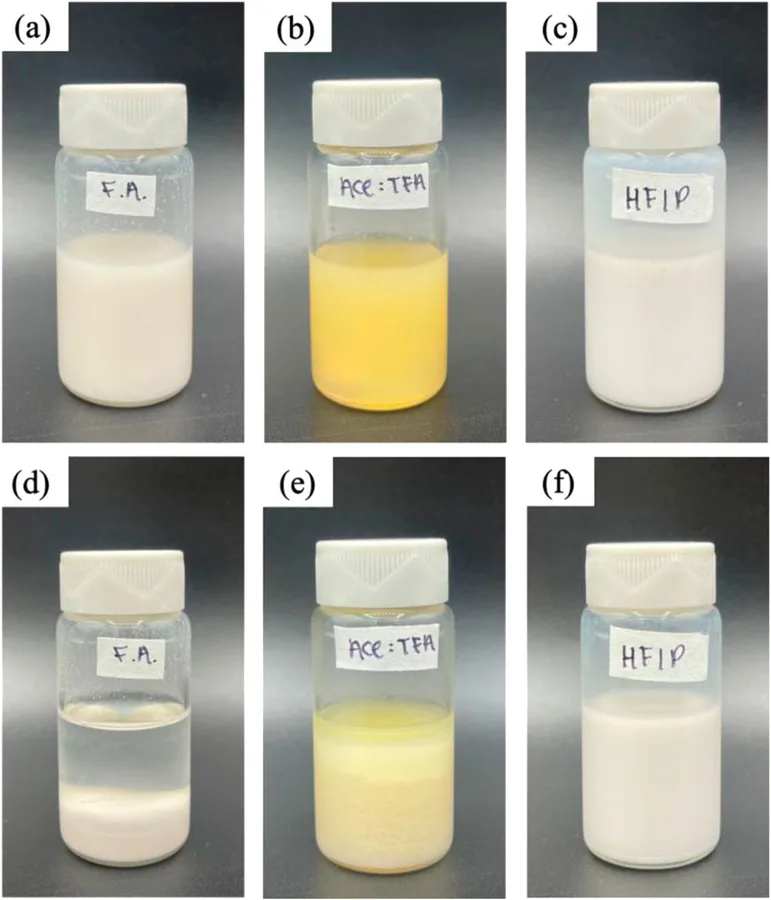
Lanthanum oxide (La2O3) nanoparticles-embedded polyamide 6 nanofiber membranes were electrospun using hexafluoroisopropanol (HFIP) as the solvent. Unlike other solvents such as formic acid and an acetone: trifluoroacetic acid (ace: TFA) mixture, HFIP allowed La2O3 nanoparticles to remain well-suspended without altering their composition. Various material characterizations confirmed La2O3…
Abstract
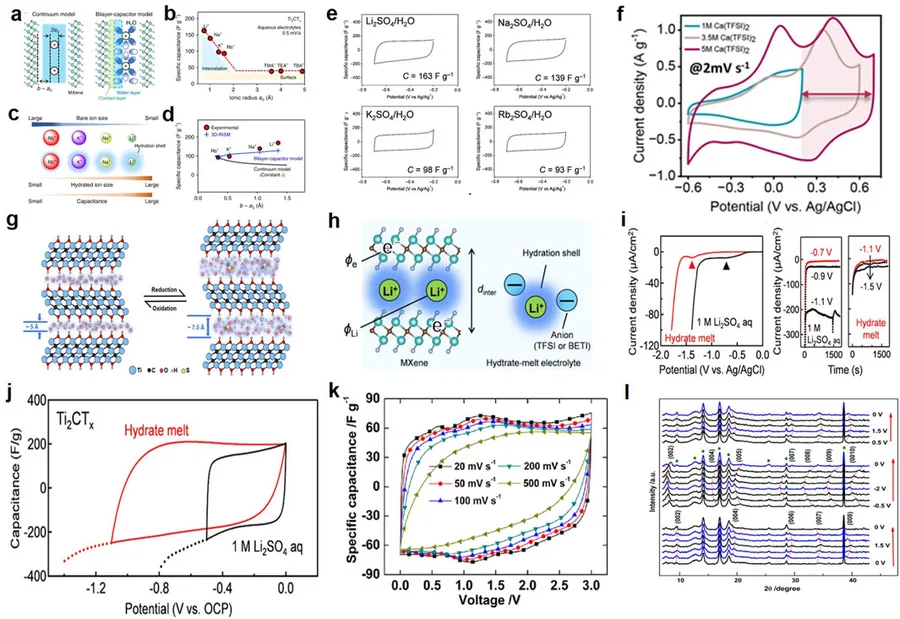
Supercapacitors (SCs) are high-performance electrochemical energy storage devices, and their performance hinges on the electrode materials. 2D MXene nanomaterials, with their excellent conductivity, tunable interlayer spacing, and rich surface chemistry, have emerged as highly promising electrode materials for SCs. However, the capacitive performance of intrinsic MXene fails to meet appl…
Abstract
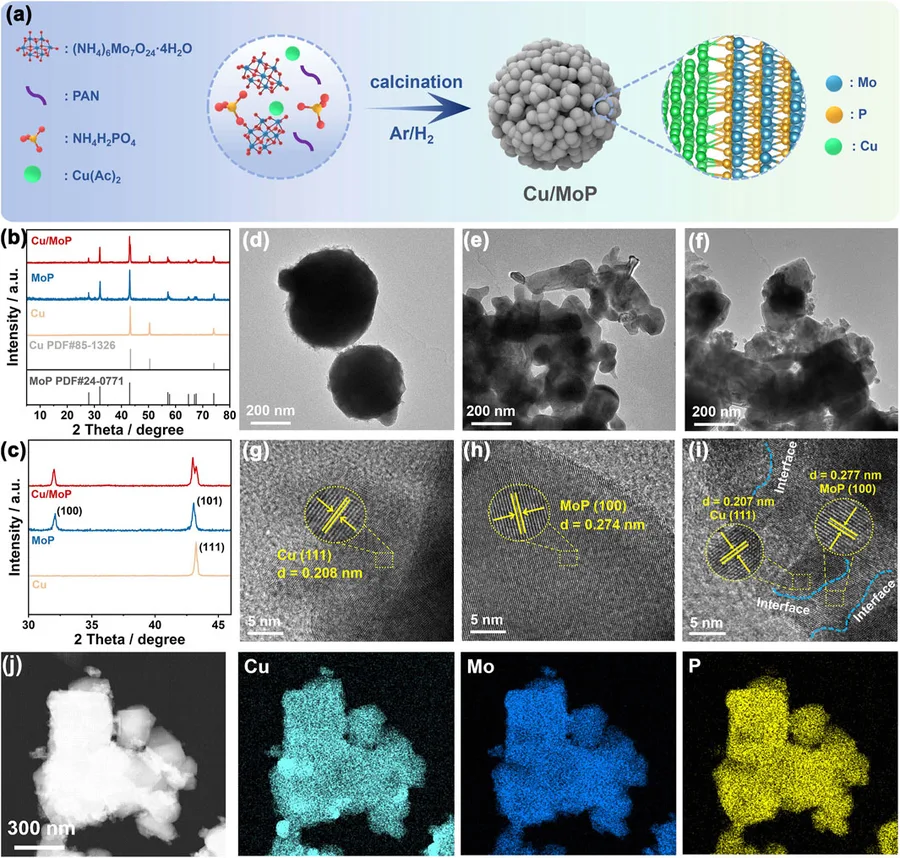
The electrochemical nitrate reduction reaction (NITRR) offers a sustainable route for ammonia synthesis and environmental remediation but faces challenges such as sluggish kinetics and competing hydrogen evolution. This study aims to address these limitations by designing a Cu/molybdenum phosphide (MoP) heterostructure catalyst through one-pot calcination, which integrates Cu nanoparticl…
Abstract
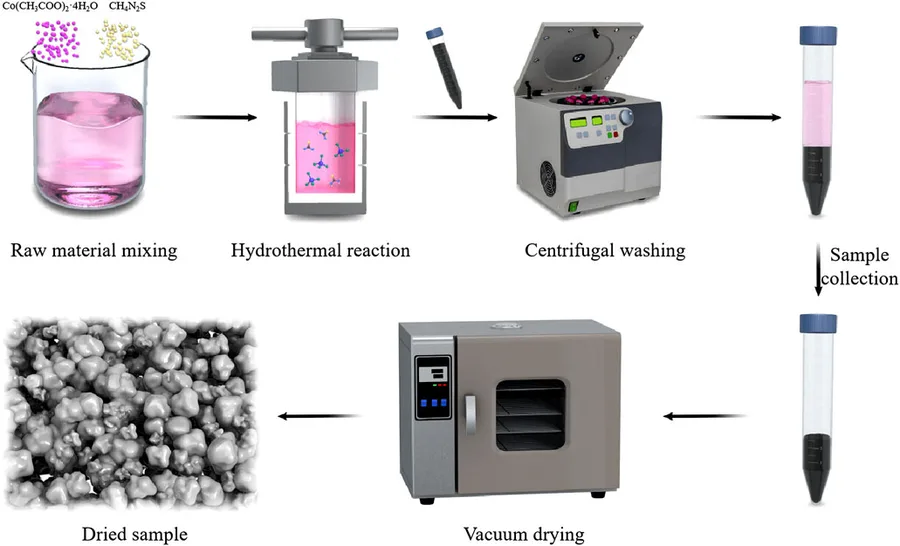
Rechargeable aluminum-ion batteries (AIBs), as novel energy storage systems featuring low-cost, high-energy density, and superior safety, demonstrate promising potential as a next-generation battery technology. However, the lack of high-performance cathode materials remains a critical barrier to practical implementation. In this study, highly crystalline cobalt sulfide (Co9S8) nanopartic…
Abstract
The growing demand for efficient energy storage has intensified interest in pseudocapacitive materials, known for their high-power density, rapid charge–discharge capabilities, and tunable physicochemical properties. This review explores the foundational principles and evolution of pseudocapacitive materials, emphasizing recent strategies to improve their electrochemical performance in s…


 research.io