Let's say I want to calculate the wavelength of the photon emitted when an electron of an arbitrary element (let's say Carbon) drops from $n=4$ to $n=3$ . Correct me if I'm wrong, but I think I would have to find the change in the electron's energy value $\Delta E = E_i - E_f$ , set that equal to $hc/\lambda$ and solve for the wavelength ( $\lambda$ ). How could I find $E_f$ and $E_i$ ? My textbo…
Scientific Reports, Published online: 22 August 2026; doi:10.1038/s41598-026-65358-y A density functional theory study of an S N 2 reaction mechanism for hydrolysis of Al-O-Si linkages: implications for dissolution of aluminosilicates under acidic and basic conditions
Fullerenes (FLNs) have attracted attention as lubricant additives because of their antioxidant properties and potential to reduce friction and wear. However, the mechanisms by which FLNs function in lubricating oils remain unclear, particularly with respect to their existence forms in oil and interactions with sliding surfaces. In this study, the tribological properties of FLN-containing oils wer…
Nature Communications, Published online: 21 August 2026; doi:10.1038/s41467-026-76887-5 To understand nitrogen activation in the Haber–Bosch process, the study simulates the iron catalyst at atomistic level under realistic industrial conditions of high pressure and temperature, revealing catalytic activity despite substantial coverage.
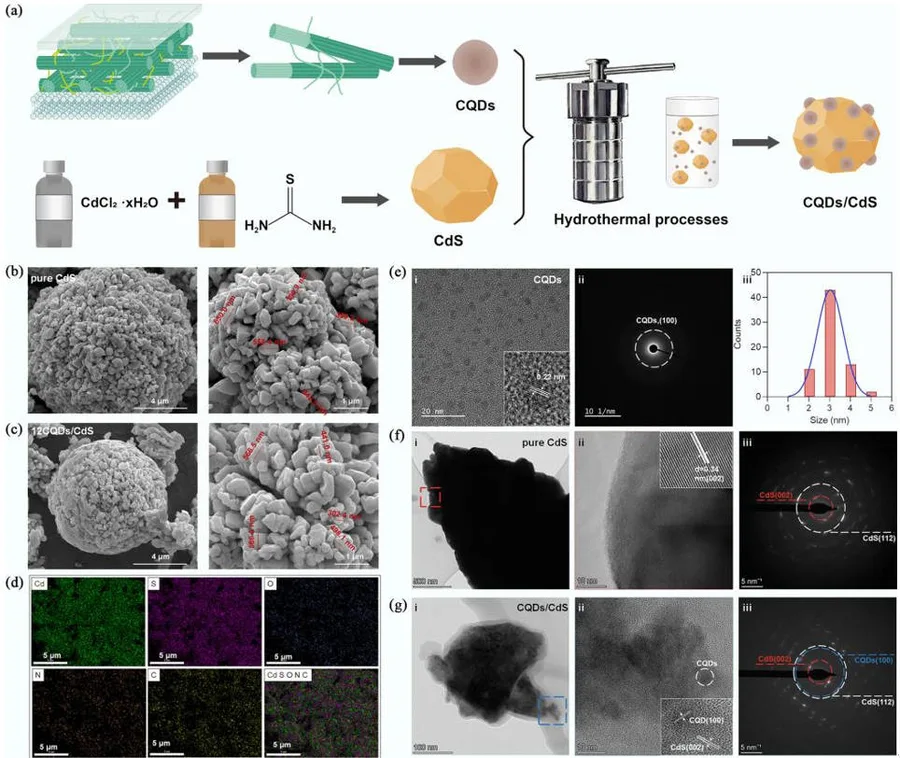
A research team has developed a visible-light photocatalyst that nearly doubled hydrogen production by decorating cadmium sulfide (CdS) nanoparticles with carbon quantum dots (CQDs) derived from cellulose. The optimized composite produced 7,812.5 (micro)mol of hydrogen per gram within five hours, compared with 4,633.5 (micro)mol/g for unmodified CdS. The CQDs improved light harvesting, accelerate…
Our Minireview about NIR-photoswitching by direct excitation is accepted for publication in Angewandte Chemie! We set the stage for the emerging field of low-energy light responsive photoswitching!
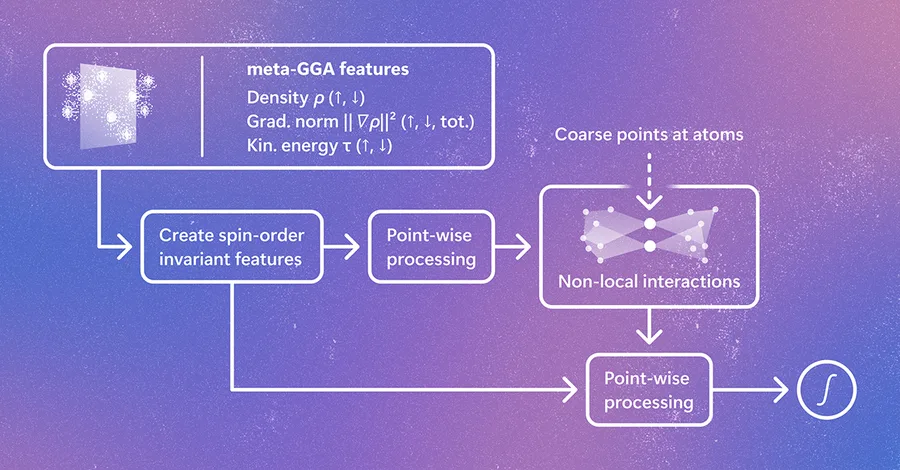
Skala 1.1, the updated deep-learning exchange-correlation functional from Microsoft Research, provides greater accuracy, expanded accessibility across the computational chemistry ecosystem, and a living benchmark to track computational performance. The post Broadening access to Skala creates a faster path to predictive DFT appeared first on Microsoft Research .
Preprint articles are available on servers, such as arXiv and ChemRxiv, at no-cost to benefit the movement toward open access of research. However, the use of preprint research articles as a reference source in academia is not heavily documented. To examine if researchers are utilizing preprint articles, this paper examines citation trends in the dissertations of chemistry and physics PhD candida…
Daniel Eldridge·...·Swinburne University of Technology
3d ago
The molecules that make micelles are in your dishwashing detergent, your body wash, your shampoo, your toothpaste and even many foods. They are there to help the water interact with the dirt and oils.
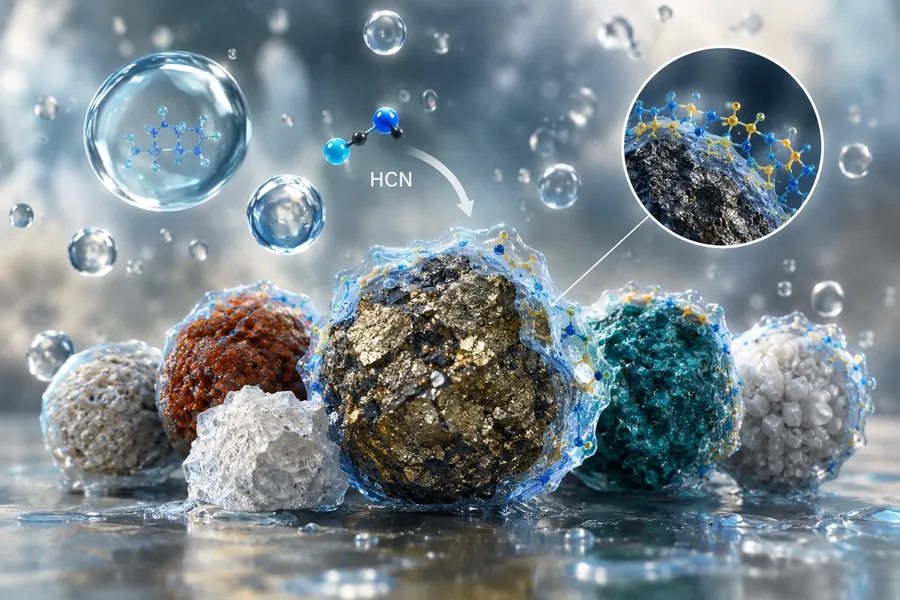
Researchers showed that alkaline cyanide aerosols interacting with six mineral substrates can spontaneously form mineral-organic hybrid materials, with mineral identity and reaction time shaping the resulting nitrogen-rich organic structures. The findings reveal that minerals can actively influence prebiotic molecular complexity while organic coatings can also stabilize or transform the underlyin…







 research.io