Nature Communications, Published online: 22 July 2026; doi:10.1038/s41467-026-75699-x Controlling long-range, directional fibrillar morphology is important for organic solar cells (OSC). Here, the authors show that cobalt phosphosulfide nanocrystals can template film formation in OSCs, improving charge generation and transport, and achieving a power conversion efficiency of 21.0%.
New molecule design for more solar power Chemists at FAU hope to use optimized carbon-rich molecules to push the boundaries of organic photovoltaics. In the project UP&DOWN, carbon compounds are to be designed in such a way that sunlight striking them is used significantly more effectively, thereby generating more electrical current. Spectroscopy in the femtosecond […]
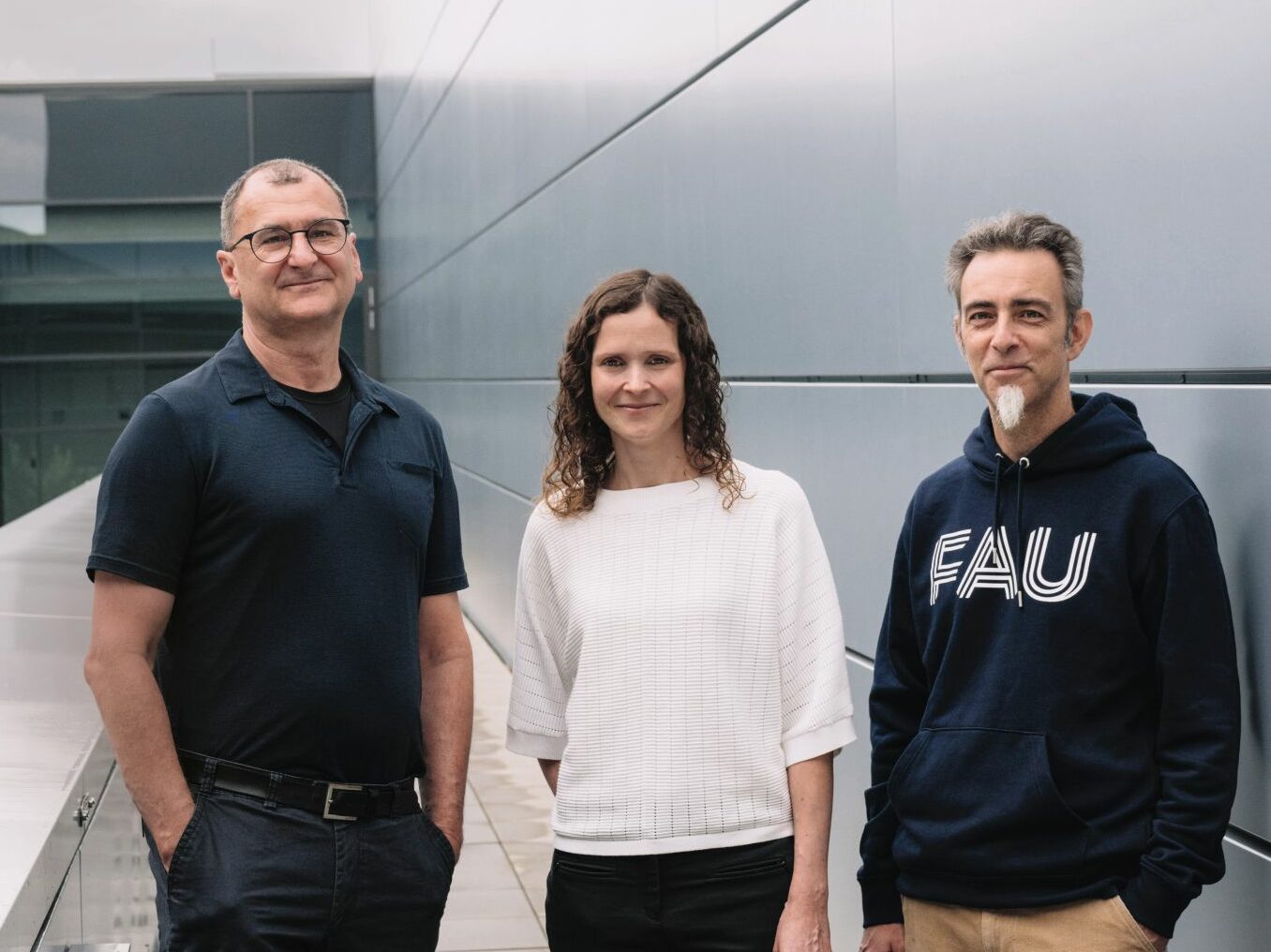
How photovoltaic technology can be advanced Limited efficiency, difficult to recycle and no notable production sites in Germany. There is much to improve when it comes to photovoltaic technology. Christoph Brabec, Verena Tiefenbeck and Ian Marius Peters have now come together to give photovoltaic technology new impetus. Christoph Brabec is looking for the perfect material. […]
Efficient CdTe photovoltaics by co-passivating grain boundaries Click here for article The post Jake Wands, Angus Rockett and Others 2018 IEEE 7th World Conference on Photovoltaic Energy Conversion (WCPEC) (A Joint Conference of 45th IEEE PVSC, 28th PVSEC & 34th EU PVSEC) appeared first on Colorado Center for Advanced Ceramics .
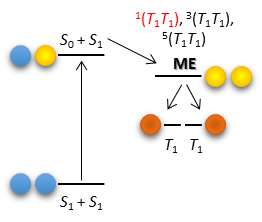
If you work in the field of photovoltaics or polyacene photochemistry, then you are probably aware of the Singlet Fission (SF) phenomenon. SF can be broadly described as the process where an excited singlet state decays to a couple of degenerate coupled triplet states (via a multiexcitonic state) with roughly half the energy of the […]
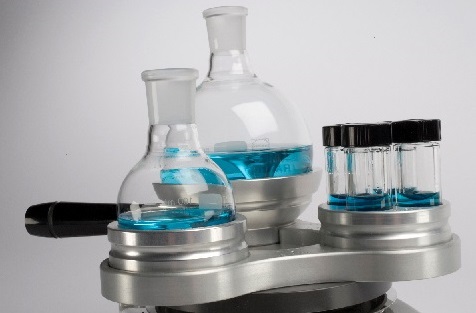
Asynt reports on how the School of Chemistry at Monash University in Melbourne, Australia has invested in a range of its DrySyn MULTI heating block systems to support its ground breaking synthetic research in photovoltaics, water splitting and nanoimaging.
With a first hand account from Prof Spiccia, we are told why his group use the DrySyn system in Photovoltaic research being undertaken at the …