The Mediterranean is getting hotter and drier, pushing scientists to look for water even in the air itself. A German team has now scaled up a porous material that does exactly that, even when the air feels bone-dry. Continue Reading Category: Materials , Engineering Tags: Kiel University , Materials , metal-organic frameworks , Water , Chemistry
Nature Communications, Published online: 23 June 2026; doi:10.1038/s41467-026-74776-5 Researchers show that metal-organic frameworks can organize confined gases into ordered lattice-like states, opening new ways to control adsorption and gas transport in porous materials.
Scientific Reports, Published online: 01 June 2026; doi:10.1038/s41598-026-54314-5 Interpretable white-box modeling for nitrogen storage in metal–organic frameworks
Nature Chemistry, Published online: 04 May 2026; doi:10.1038/s41557-026-02115-8 The properties of metal–organic framework glasses can be modulated by additives, but understanding how they modify the glass network is challenging. Now, alkali-modifier sites in MOF glasses have been identified, and the impact of both modifier content and identity on the processing temperatures and hierarchical poros…
Metal-organic frameworks (MOFs) have become a recurring phenomenon in modern materials science. Every few years they re-enter the spotlight: first as the revolution for hydrogen storage, then as the future of CO₂ capture, then as the next big thing in catalysis, sensing, or drug delivery. And now once again, MOFs are appearing in discussions about the recent Nobel Prize.
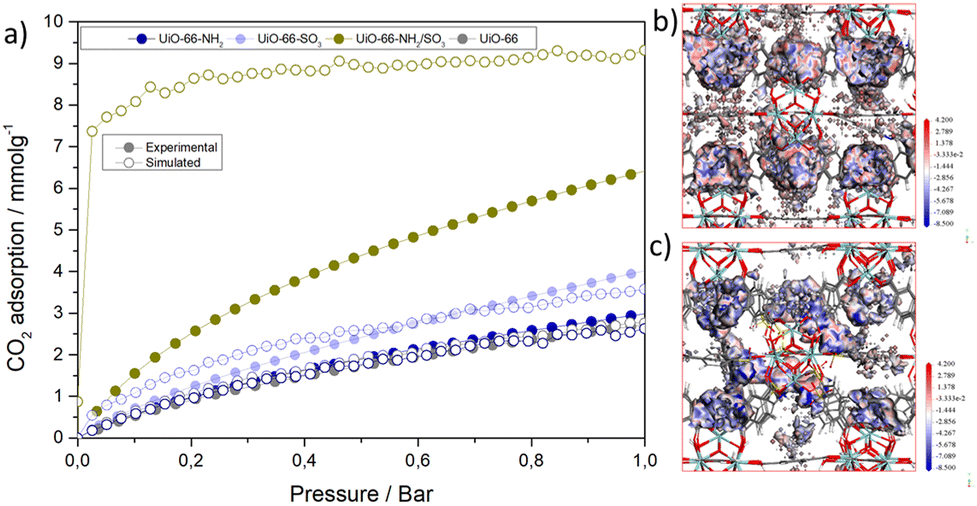
A recent paper by Abánade…
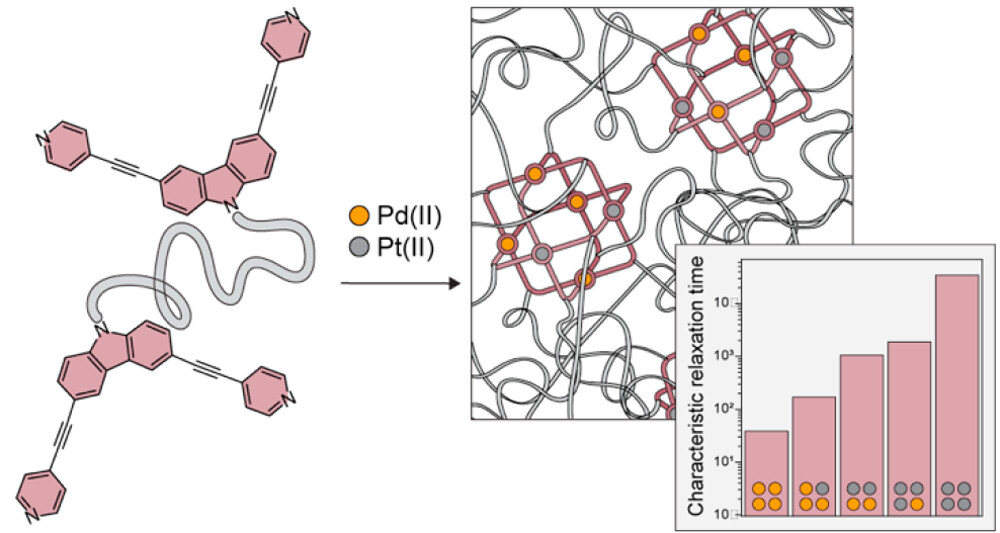
Metal–organic cages/polyhedra (MOCs) are versatile building blocks for advanced polymer networks with properties that synergistically blend those of traditional polymers and crystalline frameworks. Nevertheless, constructing polyMOCs from very stable Pt(II)-based MOCs or mixtures of metal ions such as Pd(II) and Pt(II) has not, to our knowledge, been demonstrated, nor has exploration of how the d…