Syndicated from the original on lkforge.com . The two games under test are playable at tic-tac-toe and 2048 . The games on my site don't think with a language model. Tic-Tac-Toe runs minimax with alpha-beta pruning ; 2048 runs an expectimax search over the random tile spawns — classic, deterministic algorithms, not a chatbot. To pressure-test that claim, I handed the same engineering brief to two…
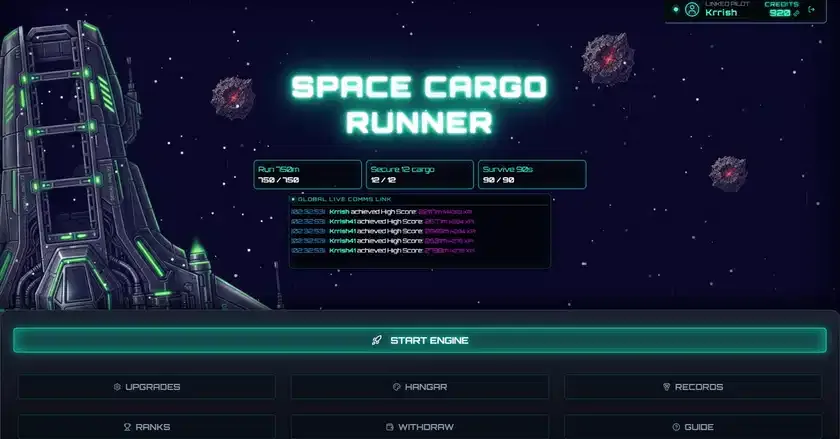
If your game client tells your backend what score the player achieved, your game is already hacked. When building Space Cargo Runner — a cyberpunk-themed, real-time arcade runner bridging traditional browser gaming with Web3 token economies — the biggest engineering challenge wasn't rendering 60 FPS in the browser. It was building a tamper-proof, server-authoritative backend architecture that cou…
This volume extends the general theory of Smarandache structures from its mathematical foundations to the domain of computational sciences. Building on the central principle that an ambient structure may contain proper subsystems satisfying stronger or weaker collections of axioms, constraints, or formal properties, the study develops systematic applications in computer science, artificial intell…
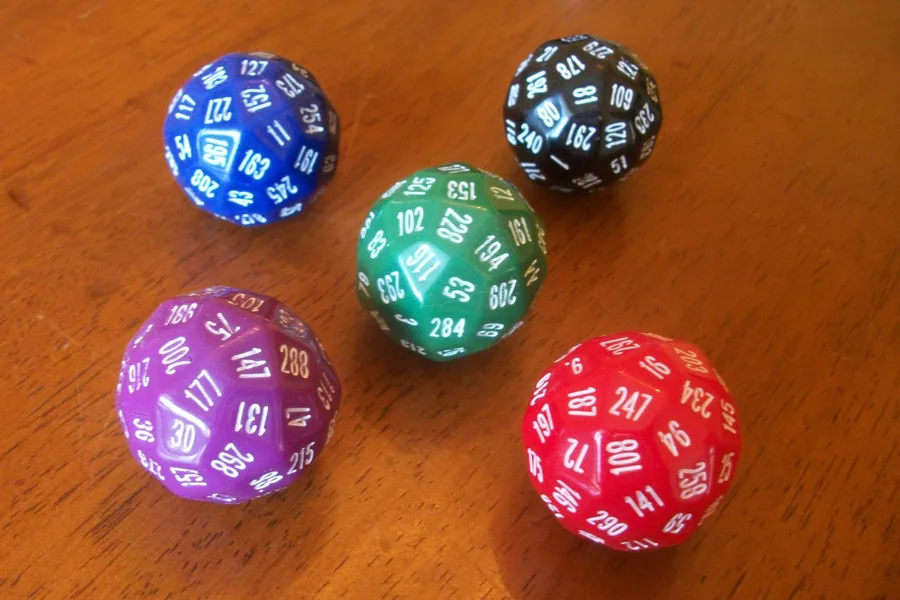
After years of searching, mathematicians have found dice that can allow five players to fairly decide who moves first in a board game, with a winner guaranteed from just a single roll
Hertz Fellow Noah Golowich spent his MIT doctoral thesis working out the theory behind that question, and other topics related to how AI programs tackle game theory--a field that has implications far beyond poker. His thesis, "Theoretical Foundations for Learning in Games and Dynamic Environments," was awarded the 2025 Hertz Thesis Prize from the Hertz Foundation. He was advised by Constantinos D…
Daniel O'Leary·...·University of Southern California
26d ago
Buying and selling stocks – with real or play money – is a way to harness the wisdom of the crowd about questions like who is going to win a competition.
Alexandros A. Voudouris (voudourisalexandros@gmail.com)
8/15/2026
We consider a class of jump games in which agents of different types occupy the nodes of a graph aiming to maximize the variety of types in their neighborhood. In particular, each agent derives a utility equal to the number of types different from its own in its neighborhood. We show that the jump game induced by the strategic behavior of the agents (who aim to maximize their utility) may in gene…
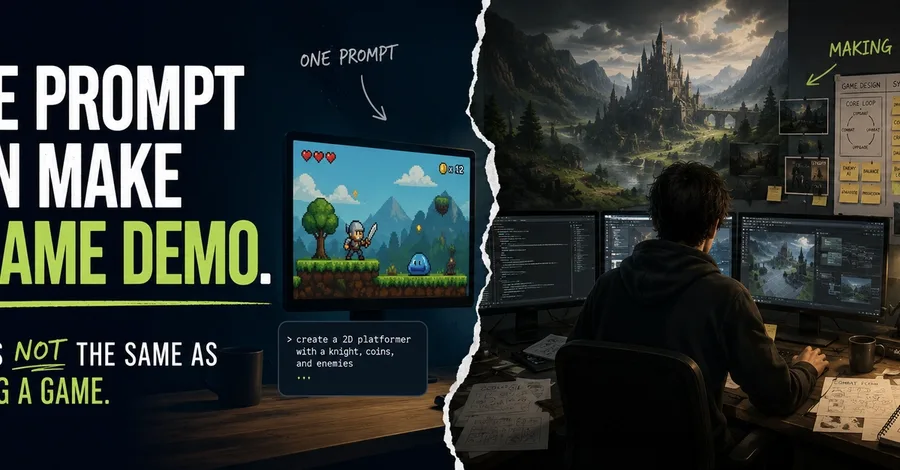
A playable first-person shooter generated from one prompt would have sounded absurd not long ago. Now, videos of AI-built browser games that resemble Call of Duty and Counter-Strike are spreading across social media. On August 10, Axios reported on the rise of “one-shot” AI game prompting : give a model one detailed instruction, let it produce the code, and receive something you can play. This is…
dc.title: Strategic decision making for multi-agent interaction : a study in game theory and optimization
dc.description.abstract: Autonomous robots increasingly operate in environments shared with other agents, including humans, teleoperated machinery, and other autonomous robots. In these scenarios, safe and effective decision-making requires strategic reasoning about the intentions, capabiliti…
When targeting modern iOS and Android devices in Unity, ASTC is often the first texture format people reach for. It supports RGB and RGBA, offers block sizes from 4x4 through 12x12, and gives you a practical way to trade image quality for memory and bandwidth. But "use ASTC" is not a complete production strategy. You still need answers to questions such as: Which iPhones and Android devices can a…
Mathematics shows that every electoral system must compromise among proportionality, local representation, and parliament size. Denmark’s 2022 national election came down to a single seat, even though its proportional voting system was designed to make party representation closely match the vote. That outcome points to a deeper mathematical problem: no electoral system can always preserve [...]
Published on August 6, 2026 7:45 PM GMT Statement on AI use: AI models (mostly Fable 5 and Opus 5) were extremely helpful in 1. iterating through lots of variations on the game theory models presented, 2. helping to confirm my understanding of the math, 3. fact checking, finding sources, and catching errors, and 4. providing editorial feedback. The game theory visualizations are entirely vibecode…
Selfish mining undermines incentive compatibility of proof-of-work blockchains, letting a miner earn disproportionate rewards at a hashrate lower than the majority threshold. A decade of work has asked whether a strategy is profitable, however, far less is understood about when it becomes profitable. Timing is critical since selfish mining operates at a loss before it turns a profit, typically re…
Previously: Ordinal numbers and basic set theory Ordinals as nim-heaps Nim always ends, even with infinite ordinals Infinite Nim as a coin-moving game In the previous article we saw how to interpret Nim heaps of up to beans as coins on a quarter-infinite array: The coin here represents a heap of beans. The heap can be
reduced to any smaller number of beans. In the coin version of the
game, this…
We study auctions where two positions are sold to unit-demand bidders with private heterogeneous order preferences: some are specialists who value only the first position, while others are generalists indifferent between the two. First, we consider a first-price rule which allocates the first and second items to the highest and second-highest bidders, respectively. We show that no strategy profil…
Mathematicians have shown that no electoral system can perfectly balance local representation, proportional national results, and a fixed-size parliament once enough parties compete. A newly proposed voting method could soften these unavoidable trade-offs and produce outcomes that are much closer to fair.
Previously: Ordinal numbers and basic set theory Ordinals as nim-heaps Nim always ends, even with infinite ordinals In the previous articles I talked about the game of Nim, a very simple
game for two players: There are some piles of beans Players alternate turns A legal move is to take any number of beans from one pile Whoever takes the last bean wins I wrote about how Nim could be extended to i…



 research.io