Nature Physics, Published online: 14 September 2026; doi:10.1038/s41567-026-03450-w Conformal field theories describe universal physics at quantum critical points, but it is hard to find microscopic models that realize particular field theories. Studying competing boundary conditions of topological phases provides a systematic way to build such models.
Nature Physics, Published online: 14 September 2026; doi:10.1038/s41567-026-03452-8 Thousands of 3D-printed microscopic rotors spontaneously synchronize their motion when assembled into a lattice. Counterintuitively, small imperfections among individual motors drive the propagation of waves across such artificial active matter.
I feel quite lost with regard to forming any sort of career plan at the moment. Right now, I’m at the start of my 4th year as a Physics PhD student at a good school (one of the Ivies). My work so far has been in theoretical condensed matter physics (cold atom gases in optical cavities). I think... Read more
I'm writing a paper on how attaching non-conductive mass to a magnet and dropping it through a copper pipe to see how it affects the breaking force that acts on the magnet and therefore its terminal velocity as it exits the pipe. This is what I have so far: Breaking force = Force of Gravity, so mg=kv (m=mass, v=terminal velocity, and k is a constant). The constant k consists of several variables …
Researchers review how ultrafast XFEL techniques can reveal structural changes, metastable phases, and chemical reactions at pressures and temperatures found inside planets.
This Collection welcomes original research Articles, Reviews and Perspectives spanning theoretical, computational and experimental work across photonic, acoustic, mechanical and condensed-matter platforms, as well as emerging signatures of non-Hermitian behaviour in real materials.
The Bloch sphere is usually drawn for qubits, but the same geometry describes a classical vibrating nanostring whose two flexural modes can be coupled and steered by dielectric fields. What the analogy captures, and where it breaks.
A powerful new X-ray instrument has started operating at the BESSY II research facility in Germany, giving scientists a much more sensitive way to study extremely small or dilute samples. The device can detect X-ray photons far more efficiently than conventional instruments, opening experiments that were previously too difficult or too slow. The new instrument […] The post New Superconducting X-R…
Physicists have uncovered an in-plane Hall response that overturns a century-old assumption about how this famous electrical effect works. The discovery could eventually make multidirectional magnetic sensing possible with one tiny device. Scientists at Carnegie Mellon University have identified an unexpected form of the Hall effect that challenges a long-standing assumption about how electronic …
Let's consider the 4d Nonlinear Sigma model with $SU(n)$ target space, without a topological term. The Lagrangian is $$\frac{f^2}{16}\mathrm{Tr}(\partial_{\mu}U^{-1} \partial^{\mu}U)$$ where $U$ is a $SU(n)$ matrix, and $f$ is a coupling constant.
Dimensional analysis shows $f$ has mass dimension 1. This means under RG, $f$ will grow. I am puzzled what happens when we flow to deep infrared? Does …
Scientists blasted diamonds with lasers to get the best measurement of the mineral's melting point yet. The new, more accurate numbers could help improve fusion experiments and studies of giant planets.
What happens to water when the usual rules no longer seem to apply? Scientists have recreated extraordinary conditions in the lab, uncovering a state of matter that could be hiding deep inside distant planets.
While chemical bonds usually determine the structure and properties of a material, bonds between neighboring metal atoms can also change as temperature or other conditions change. These changes can lead to unusual electronic and magnetic behaviors. A new study on Li₀.₅VS₂ shows that bonding between vanadium atoms can reorganize as the material passes through successive […]
Using a cold atom quantum simulator, Harvard researchers observed a crossover to a pseudogapped metal in the Hubbard model, achieving several-fold lower temperatures.
In nonlinear classical field theories that admit localized or topological solutions (for example, Skyrme-type or Faddeev–Skyrme-type models), what mathematical and numerical evidence is normally considered sufficient to distinguish a genuinely stable localized solution from a stationary... Read more
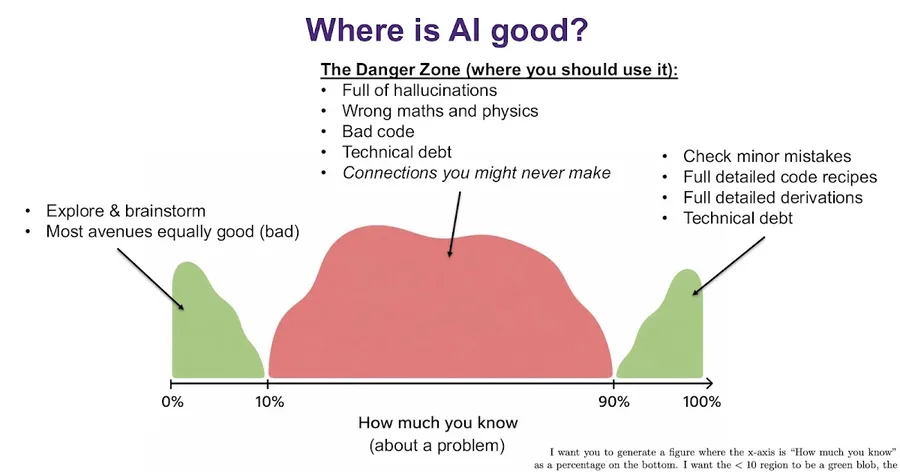
I have been dabbling a little with using AI (at a very basic level) to help me with some research problems. For example, in a recent preprint, I did the maths in the Appendix with help from AI. I am curious to hear from the experience of others of using it for research in condensed matter theory and theoretical chemistry. Peter Woit made a similar request to the high-energy theory community. The …









 research.io