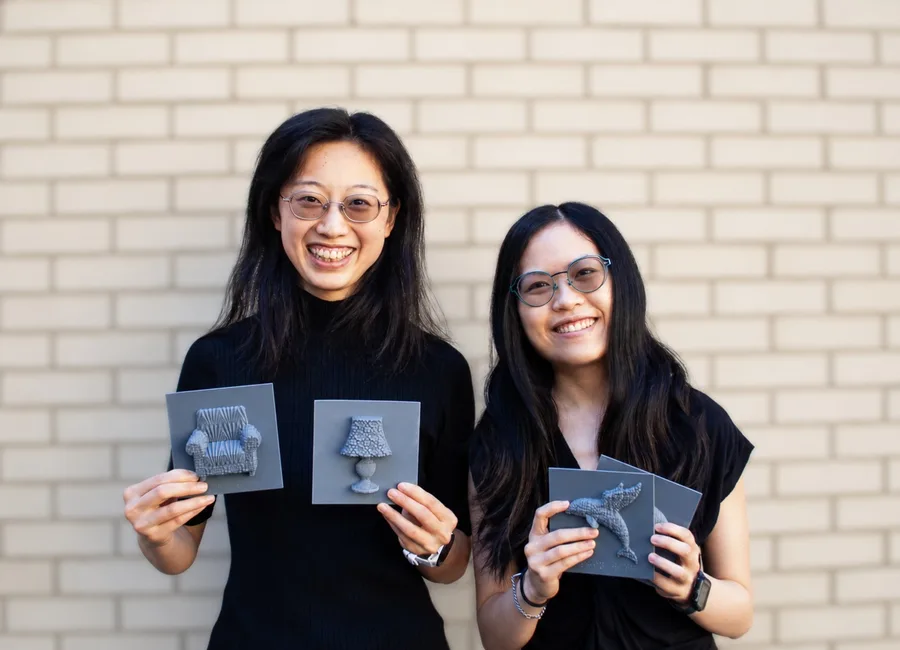
The Breakdown Researchers used generative AI to turn text prompts into 3D-printed tactile graphics. Text2TactileGraphics creates raised shapes and textures to help convey visual information to users who are blind or have low vision. The research team tested the tool with participants from VisAbility Pittsburgh and the Library of Accessible Media for Pennsylvanians. * * [...] The post Bringing I…
Research is central to life in Carnegie Mellon University's School of Computer Science. Faculty and graduate students continually define new questions, develop new approaches and expand the boundaries of their fields. The post PAIR Helps Students Find Their Place in AI Research appeared first on Robotics Institute Carnegie Mellon University .
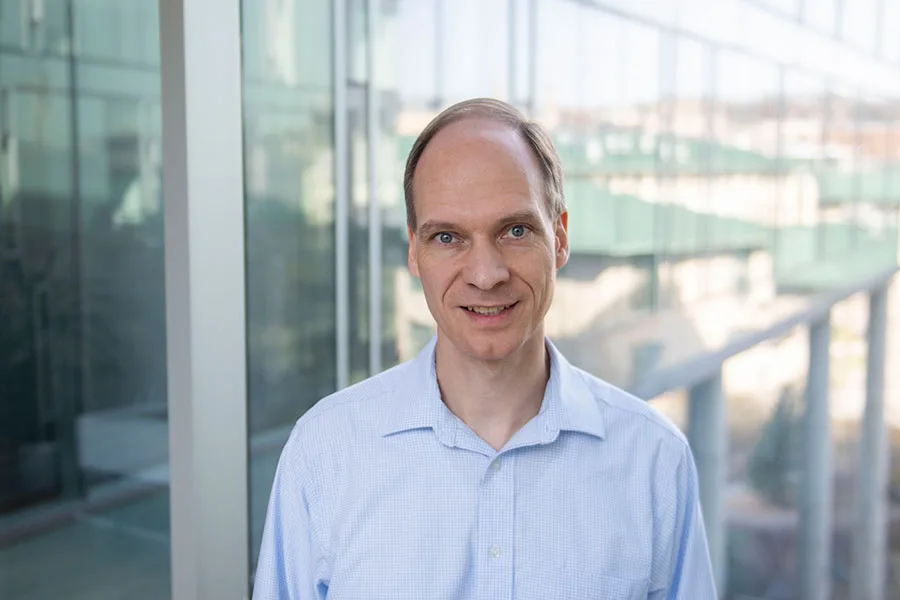
Michael Kaess, a professor in Carnegie Mellon University's Robotics Institute, has been named an inaugural fellow in the Office of Naval Research's (ONR) Chief of Naval Research Fellows program. The post Kaess Named to Inaugural Chief of Naval Research Fellows Program appeared first on Robotics Institute Carnegie Mellon University .
Carnegie Mellon University has named Damion Shelton (SCS 2004, 2007) as associate vice president and the next executive director of the Swartz Center for Entrepreneurship, appointing an experienced entrepreneur, technology executive and Carnegie Mellon alumnus to lead the university's next phase of growth in entrepreneurship, enterprise creation and research commercialization. His first day will …
Zackory Erickson, an assistant professor at the Robotics Institute in Carnegie Mellon University’s School of Computer Science, has earned a National Science Foundation (NSF) Faculty Early Career Development (CAREER) Award. The program recognizes early career faculty who show exemplary dedication to their institution's mission and act as academic role models. Erickson’s project, “Scaling Up Physic…
Researchers at Carnegie Mellon University will develop AI-based tools that will enable autonomous laboratories to work together as one connected research ecosystem. The project has been selected to receive funding by the U.S. Department of Energy (DOE) as part of the Genesis Mission. The post Connecting Autonomous Laboratories to Speed Scientific Advancement appeared first on Robotics Institute C…
Researchers from Carnegie Mellon University will develop a new artificial intelligence framework to better identify critical minerals in the ground, increasing America’s access to these valuable materials and reducing the cost and time for exploration and extraction. The post Harnessing AI to Find Critical Minerals appeared first on Robotics Institute Carnegie Mellon University .
Carnegie Mellon University researchers worked alongside international search and rescue teams in Venezuela to explore collapsed buildings with snake robots following two massive earthquakes that devastated cities. The post Snake Robots Support Earthquake Search and Rescue in Venezuela appeared first on Robotics Institute Carnegie Mellon University .
The Breakdown In 18% of cases, Claude, GPT-5 and Gemini fabricated medical diagnoses, despite supporting images being omitted. The AI models used demographic-based clinical assumptions to invent these diagnoses. CMU research emphasizes the need for demographic sensitivity testing and verification before deploying AI tools in medical systems. * * * Siddharth Vohra is a [...] The post Healthcare B…
Carnegie Mellon University showcased a number of exciting new partnerships, technologies and research during the 2026 Pennsylvania Defense and Innovation Summit. The event, hosted by U.S. Sen. David McCormick, ran from July 14-15 at the U.S. Army War College in Carlisle, Pennsylvania. The post CMU Advances Defense Manufacturing and Military Education at Pennsylvania Defense and Innovation Summit …
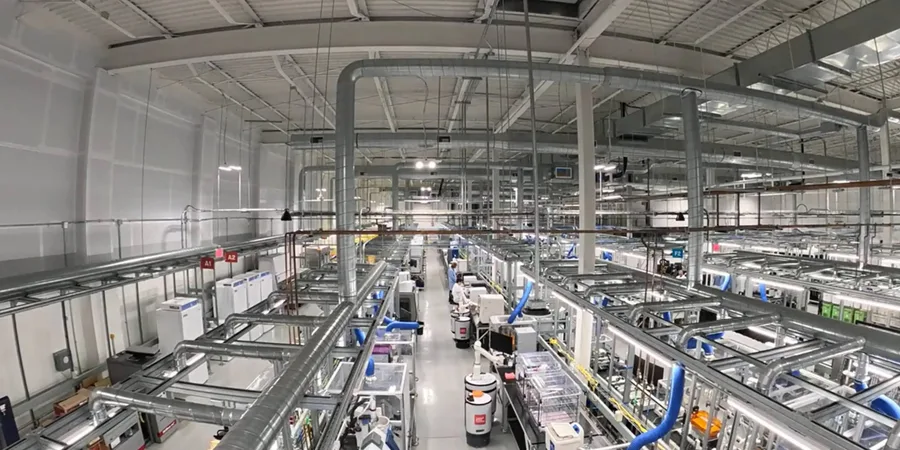
Leveraging more than $50 million in Carnegie Mellon investments in robotics, advanced manufacturing and commercialization infrastructure, the initiative brings together CMU’s National Robotics Engineering Center (NREC), Carnegie Foundry and multiple leading U.S. drone manufacturers to create a new Autonomous Systems Manufacturing Platform (ASMP). The post Carnegie Foundry, Carnegie Mellon and Ame…
Carnegie Mellon University's Robotics Innovation Center (RIC) welcomed global technology company Fujitsu Limited as its latest corporate tenant in the university’s robotics and artificial intelligence research facility at Hazelwood Green. The post Fujitsu Joins CMU Robotics Innovation Center appeared first on Robotics Institute Carnegie Mellon University .
The Breakdown: RIO lets researchers use the same software across different robots, reducing the need to rebuild code for each new platform. This functionality speeds up robot setup and lets researchers spend more time developing and testing robot behaviors. The system helps accelerate robotics research and real-world deployment. * * * Researchers set up [...] The post The Missing Infrastructure…
The Breakdown: VideoManip teaches robots manipulation skills using videos of people interacting with objects. It reconstructs movements and estimates how people make contact with objects. The system helps robots learn new skills without time-consuming, human-operated demonstrations. * * * Researchers in Carnegie Mellon University's School of Computer Science are developing a new way for robots …
Fire blight can devastate orchards, killing branches and entire trees while causing major economic losses for growers. To help farmers detect the disease earlier and reduce the spread of infection, a team of students from Carnegie Mellon University's Robotics Institute (RI) developed a robotic solution that recently earned national recognition. The team, the Fire Blighters, [...] The post Carnegi…
Deepak Pathak, the Raj Reddy Associate Professor of Robotics in Carnegie Mellon University’s Robotics Institute (RI), has received a 2026 Pattern Analysis and Machine Intelligence (PAMI) Young Researcher Award at the IEEE Conference on Computer Vision and Pattern Recognition (CVPR). This award is among the highest honors in computer vision for early-career researchers and recognizes [...] The pos…
The Breakdown: World2Rules learns patterns of risky aircraft behavior from real airport operations and incident data. It explains its warnings in simple terms that are easy for humans to understand. World2Rules is designed to work alongside existing prediction systems to enhance aircraft safety. * * * When managing airport traffic, small errors can lead to [...] The post CMU Researchers Develop …
Beverly (Bev) Da Costa is the inaugural graduate from the Bachelor of Science in Robotics program. A mass email from the dean to the entire Carnegie Mellon University School of Computer Science felt especially personal to Beverly (Bev) Da Costa. The email, sent by Martial Hebert back in 2023, announced the Bachelor of [...] The post Work Hard and Dream Harder appeared first on Robotics Institut…
A research group at Carnegie Mellon University’s Robotics Institute (RI) will host the latest phase of the Vision-Language-Navigation (VLN) Challenge, bringing researchers together to enable robots to understand and act on human instructions in the real world — one of robotics’ most famously difficult pursuits. This year’s challenge pushes beyond earlier versions by removing “ground [...] The po…
The Breakdown: LiveSplats lets audiences experience sports events in 3D. Fans can choose their own camera angles for an immersive experience instead of watching on a flatscreen. The system uses advanced rendering techniques to recreate scenes with high visual fidelity. * * * LiveSplats allows fans to follow sports events from any angle using [...] The post Moving Beyond the Broadcast appeared …






 research.io