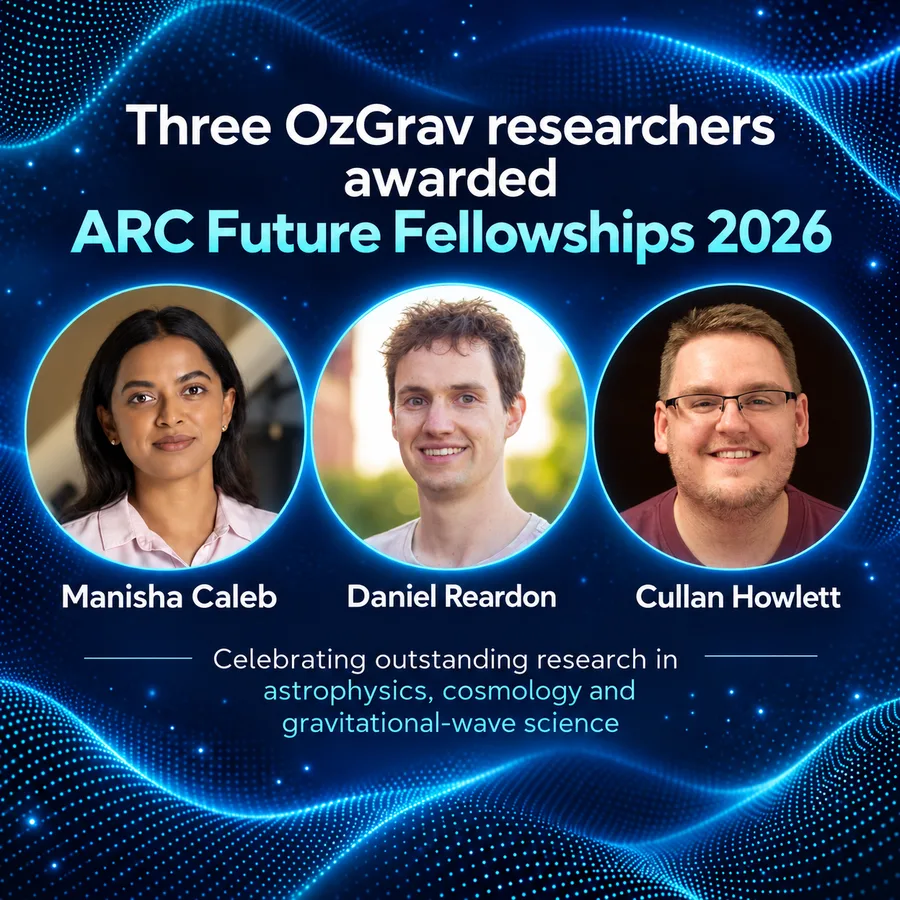
Three OzGrav researchers have been awarded prestigious Australian Research Council (ARC) Future Fellowships, supporting ambitious research across fast radio bursts, gravitational waves and dark energy. Congratulations to Dr Manisha Caleb, Dr Daniel Reardon and Dr Cullan Howlett, who were named among the recipients of the 2026 Future Fellowships funding round. ARC Future Fellowships support outsta…
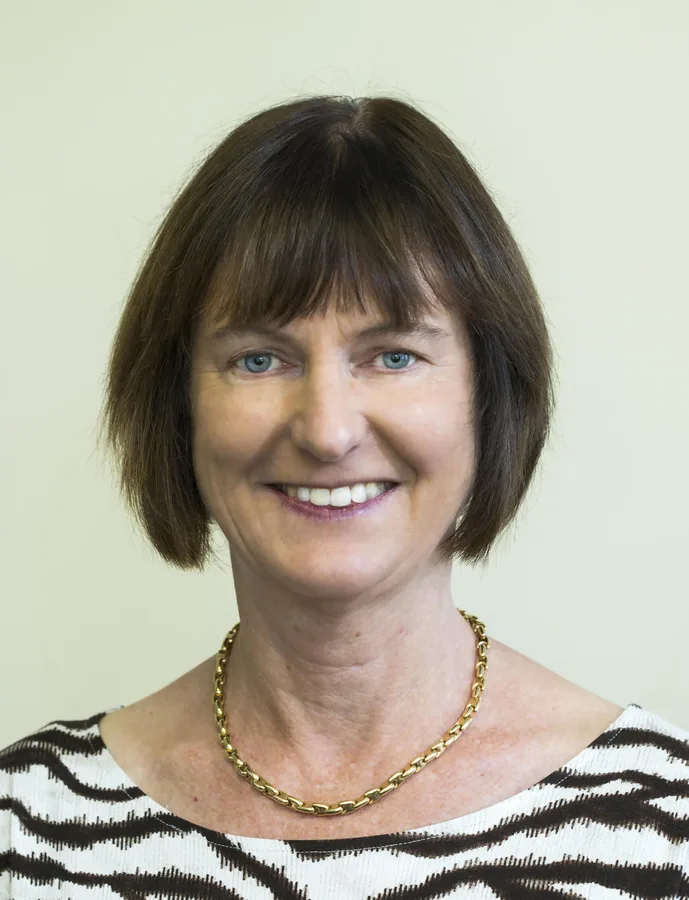
OzGrav Chief Investigator Distinguished Professor Susan Scott has been awarded the 2026 Harrie Massey Medal and Prize, one of Australian physics’ most prestigious honours. The Australian Institute of Physics (AIP), jointly with the UK Institute of Physics (IoP), awarded Professor Scott the Medal in recognition of her “groundbreaking discoveries in the fields of general relativity, cosmology and …
OzGrav is delighted to congratulate Dr Fiona Panther, who has been named a finalist in the Early Career Scientist of the Year category at the 2026 Premier’s Science Awards. This milestone year marks the 25th anniversary of the Premier’s Science Awards, celebrating outstanding research, study, education and engagement in science, technology, engineering and mathematics (STEM) […] The post OzGrav’s…
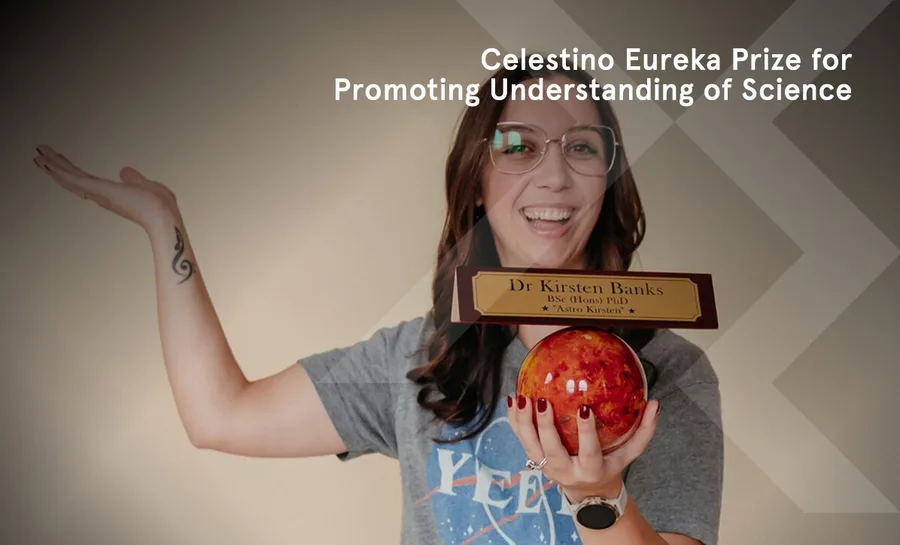
The Australian Museum (AM) has announced the finalists of the 2026 Australian Museum Eureka Prizes, recognising the outstanding homegrown scientists, innovators and communicators that drive exploration and discovery across Australia. Spanning 19 categories, this year’s awards recognise 58 finalists representing 150 individuals from across Australia. OzGrav is proud to congratulate Dr Kirsten Bank…
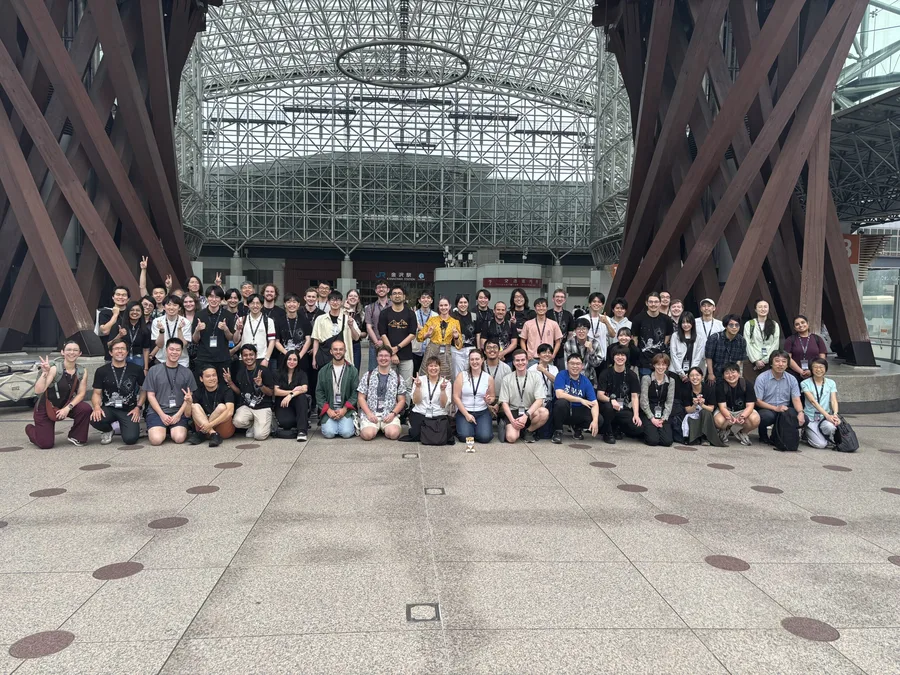
Celebrating the 50th anniversary of the Australia–Japan Basic Treaty of Friendship and Cooperation through science, cultural exchange and collaboration. Young gravitational-wave researchers from Australia and Japan came together in Kanazawa to exchange scientific ideas, experience each other’s cultures and build the relationships that will shape the future of international science. As Australia a…
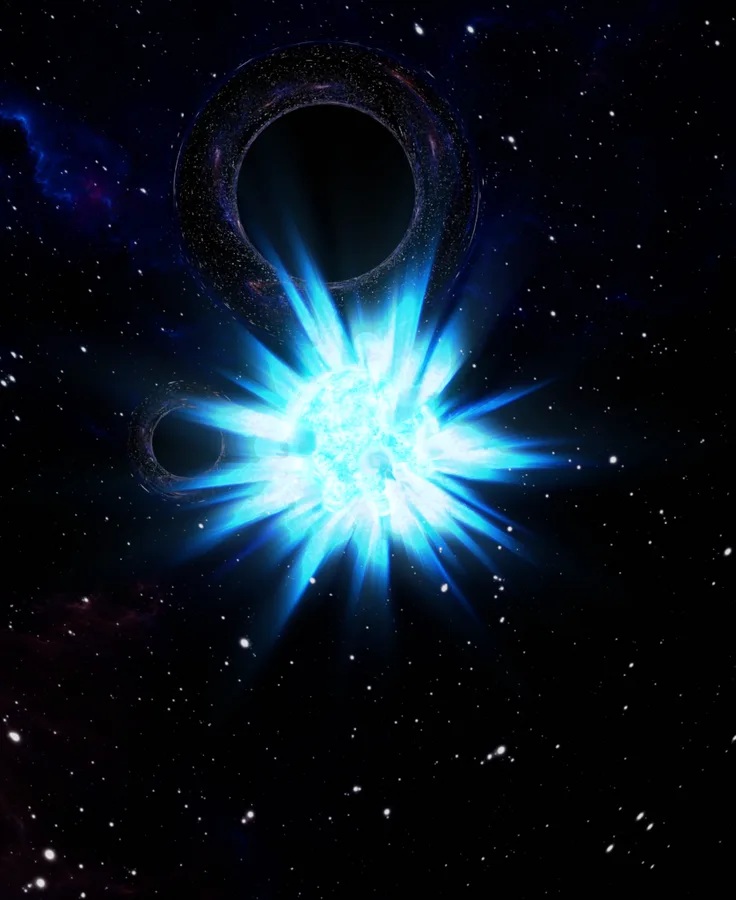
For a decade, gravitational-wave observatories have been detecting collisions between black holes across the Universe. Now, after analysing more than 150 binary black hole mergers, researchers have found evidence that these collisions can be divided into at least three distinct families, each with different characteristics and potentially different origins. The study, led by postdoctoral fellow …
Researchers closely observing the fiery aftermath of an immense cosmic collision have made a new measurement of the speed at which the Universe is expanding. The international team led by researchers from the ARC Centre of Excellence for Gravitational Wave Discovery (OzGrav) at Swinburne University of Technology and CSIRO, Australia’s national science agency, combined telescope and […] The post N…
If, in space, no one can hear you scream – it seems that you can actually hear the sound of a crash when two black holes collide. Using the loudest gravitational wave ever heard, two Australian scientists and colleagues have been the first to witness the previously elusive “event horizon” – at the actual moment of collision, right before all light and sound are swallowed by the newly formed bla…
OzGrav is delighted to congratulate Professor David Blair, one of Australia’s pioneering gravitational-wave physicists, on being appointed an Officer of the Order of Australia (AO) in the 2026 King’s Birthday Honours. Professor Blair was recognised for his distinguished service to physics, precision measurement science, gravitational-wave research and scientific education. A founding figure in Au…
White dwarf binary provides unique natural laboratory for extreme physics An international team led by astronomers at the University of Sydney has uncovered the clearest evidence yet for the origin of an unusual class of cosmic signals. In doing so, they have identified a rare stellar system that is providing scientists with a natural laboratory […] The post Student astronomer discovers ‘Rosetta …
We are thrilled to congratulate OzGrav member Dr Kirsten Banks, widely known as AstroKirsten, on making to the 2026 Forbes 30 Under 30 Asia list. Kirsten is an Australia-based astrophysicist whose work sits at the intersection of cutting-edge science and community, translating complex topics such as black holes, cosmic discoveries, and the search for life […] The post Celebrating Dr Kirsten Banks…
Congratulations to OzGrav’s Dr Iris de Ruiter, who has been awarded a prestigious 2026 Gruber Foundation Fellowship. Each year, The Gruber Foundation (TGF), in collaboration with the International Astronomical Union (IAU), funds a US$ 75,000 fellowship programme for promising early-career astronomers. As in recent years, the Selection Committee has decided to award this year’s fellowship jointly …
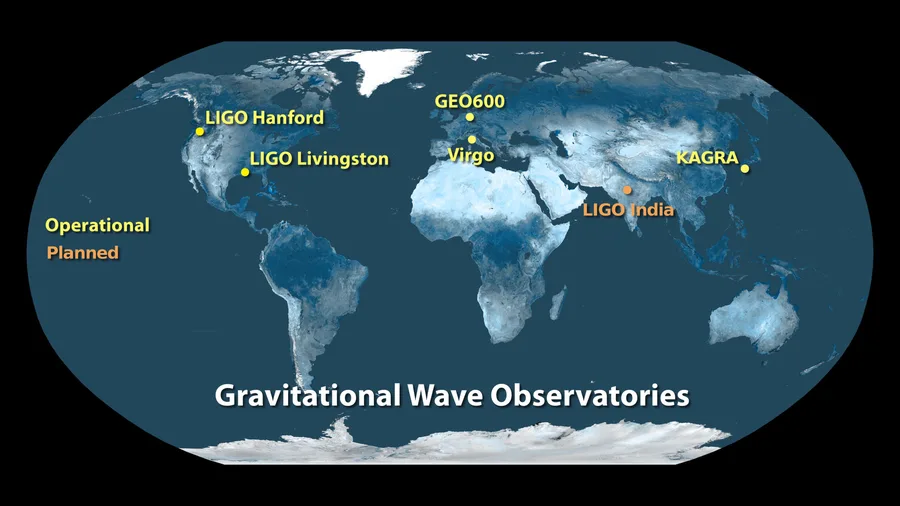
The LIGO-Virgo-KAGRA (LVK) Collaboration has today released its latest catalog of gravitational-wave detections. The data analysed for this update were collected by the twin Laser Interferometer Gravitational-wave Observatory (LIGO) detectors and the Virgo detectors. They are the world’s premier observatory of gravitational waves, ripples in the fabric of spacetime. This catalog aggregates hundre…
An international team of scientists from the LIGO, Virgo, and KAGRA collaborations, including researchers from the ARC Centre of Excellence for Gravitational Wave Discovery (OzGrav), has completed one of the most sensitive searches yet for continuous gravitational waves from young supernova remnants. Neutron stars (NSs) are among the most exotic objects in the Universe. They […] The post Huntin…
An international team of scientists from the LIGO, Virgo, and KAGRA collaborations, including researchers from the ARC Centre of Excellence for Gravitational Wave Discovery (OzGrav), has shown for the first time that gravitational waves, ripples in space and time produced by some of the most violent events in the Universe, such as the collision of […] The post How black hole mergers are helping s…
An awe-inspiring new chapter in science engagement has begun, with Professor Matthew Bailes, Director of the ARC Centre of Excellence for Gravitational Wave Discovery, officially launching Swinburne Virtual Universe. The space is exactly what it sounds like. A fully immersive room wrapped in more than 100 square metres of high-contrast LED screens, where you’re not […] The post OzGrav Director Pr…
An international team of scientists led by the ARC Centre of Excellence for Gravitational Wave Discovery (OzGrav) at Monash University has uncovered evidence of a rare form of exploding star, helping to shed light on one of the most cataclysmic events in the Universe. At the end of their lives, most massive stars collapse into […] The post New Study Finds Evidence of Cosmic Explosions with Missin…
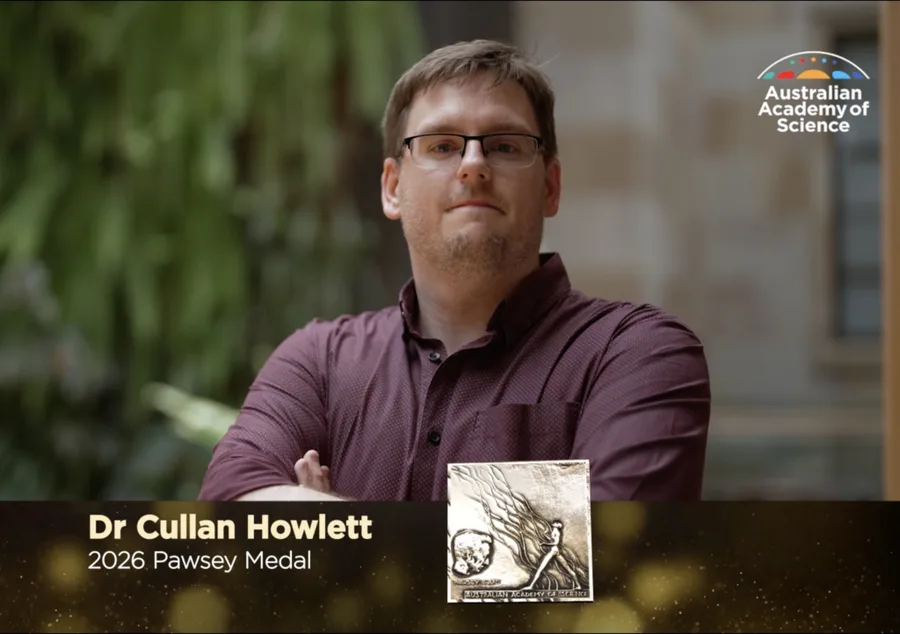
Congratulations to OzGrav’s Dr Cullan Howlett on being awarded the 2026 Pawsey Medal Dr Cullan Howlett is one of Australia’s most exceptional cosmologists. His research – focused on assembling the largest and most complete map of our universe ever made – has shaped our understanding of the fundamental forces and ingredients that make up the […] The post Congratulations to OzGrav’s Dr Cullan Howle…
Australia may be far from the world’s seismic hotspots, but a team from the ARC Centre of Excellence for Gravitational Wave Discovery (OzGrav) at the Australian National University (ANU) is leading a breakthrough that could transform how earthquakes and tsunamis are detected worldwide. With $671,000 in new funding from the Australian Research Council’s (ARC) Discovery […] The post Speed-of-Light …
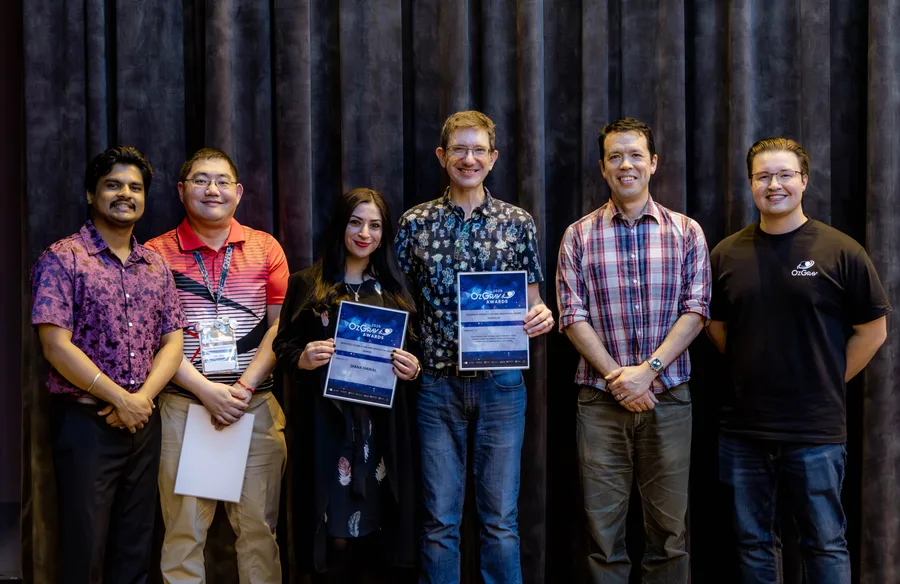
OzGrav Annual Awards Our Annual Awards celebrate the people and teams who embody OzGrav’s values — excellence in research, collaboration, service, equity, and community. From scientific leadership to mentoring, outreach, and care for others, these awards recognise the many ways our members strengthen both our science and our culture. We thank the judging panel for […] The post 2025 OzGrav Achieve…
research.io
Sign up to keep scrolling
Create your feed subscriptions, save articles, keep scrolling.


 research.io