Long before humans discovered biodegradable plastics, microorganisms had already invented their own. Many bacteria and archaea produce natural bioplastics called polyhydroxyalkanoates (PHAs), storing them inside their cells as reserves of carbon and energy.
Until now, scient...
Growing concern about plastic waste has increased the search for environmentally friendly alternatives to conventional plastics. Among the most promising options is polyhydroxybutyrate (PHB), a biodegradable plastic that can naturally break down in the environment and is produced by microorganisms. While PHB offers important environmental benefits, its wider use has been limited by a major [̷…
Polyhydroxyalkanoates (PHAs) are increasingly proposed for agricultural applications due to their biobased origin and microbial degradability. They are often assumed to serve as environmentally compatible substitutes for conventional plastics. However, PHA behavior in soil is controlled by the interactions between polymer composition, structure, environmental transport conditions, and microbial a…
Plastic pollution resulting from the continued dominance of fossil-derived polymers is a major global environmental challenge. Although biodegradable plastics, such as polylactic acid (PLA), polyhydroxyalkanoates (PHAs), polybutylene succinate (PBS), polybutylene adipate terephthalate (PBAT), and related materials, are increasingly being deployed as alternatives, their environmental performance i…
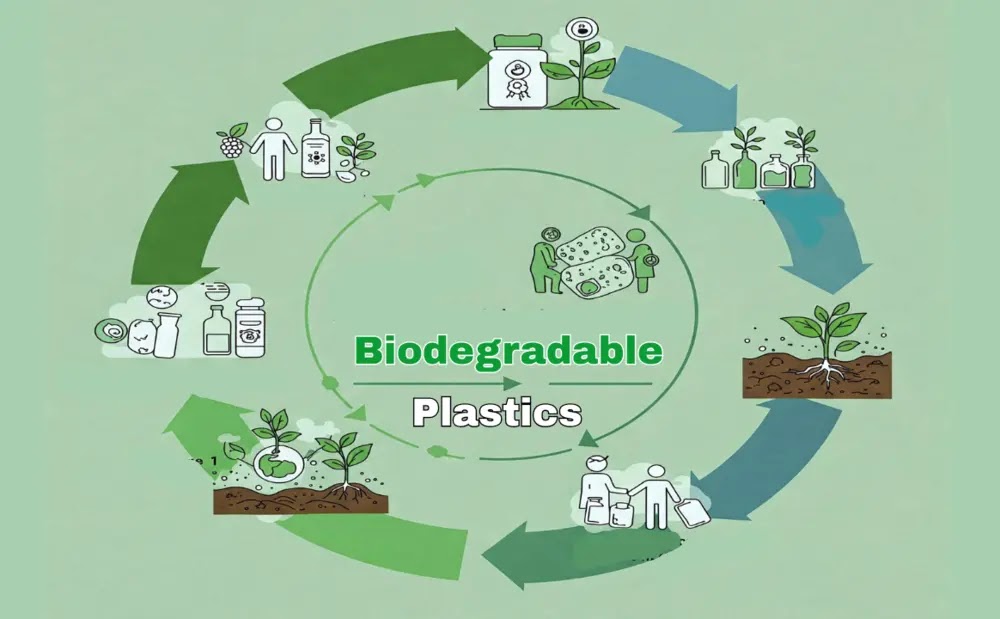
Global demand for sustainable packaging materials is growing, driven by industries such as food, beverages, pharmaceuticals, and cosmetics. Biodegradable plastics play a pivotal role in achieving a sustainable future by reducing persistent plastic waste and lowering reliance on fossil fuels. Biodegradable plastics are emerging as an alternative to conventional polymers today. Let’s explore why ch…