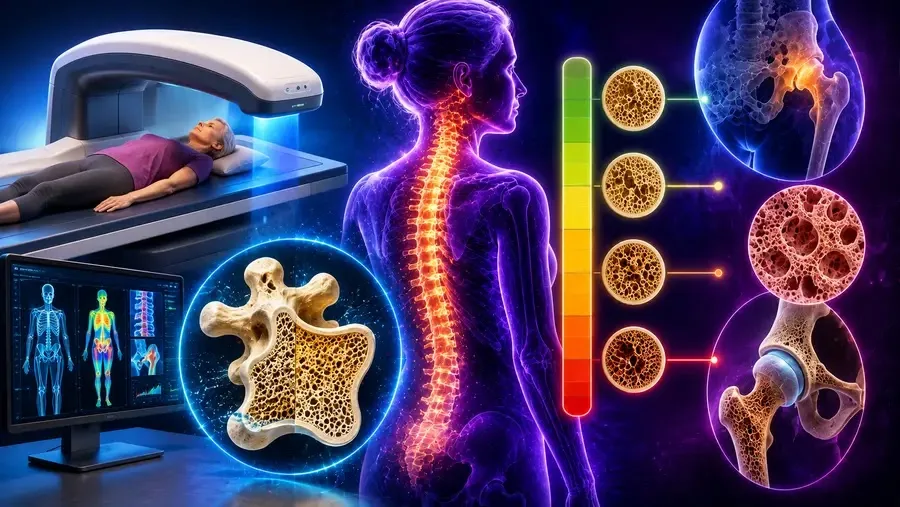
DEXA Scan Explained: How T‑Scores Predict Osteoporosis Risk and Fracture Chances A DEXA (Dual-Energy X-ray Absorptiometry) scan is a quick, painless, and highly accurate medical imaging test used to measure bone mineral density (BMD). It is the gold standard for diagnosing osteoporosis and assessing your risk for bone fractures. A T-score compares your bone density to that of a healthy, young adu…
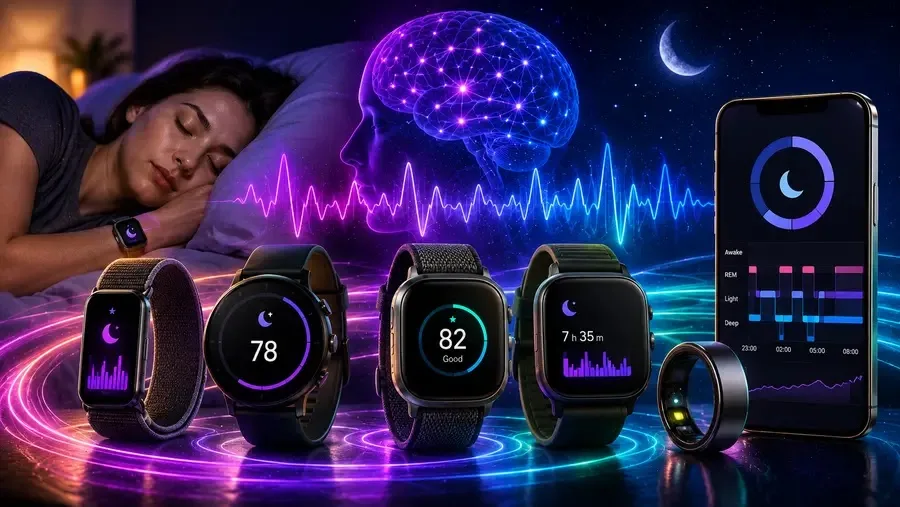
Which wearable device is most clinically accurate for tracking deep sleep stages? Based on independent clinical validations against polysomnography (PSG), the Oura Ring Generation 3 is currently considered the most accurate consumer wearable for tracking deep sleep stages, achieving 70–80% agreement with clinical hardware. A 2024 independent study found that the Oura Ring is 5% more accurate than…
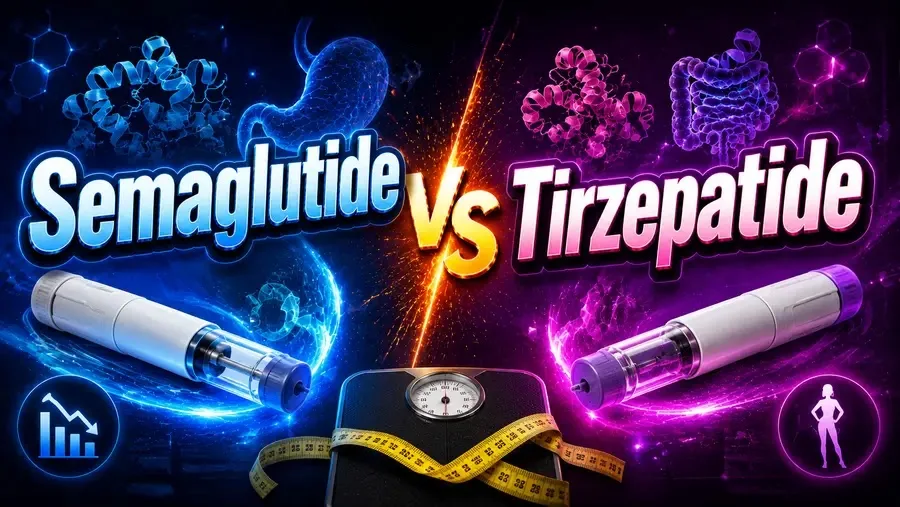
What is the Difference between Semaglutide and Tirzepatide for Weight Loss? The primary difference between semaglutide and tirzepatide lies in their mechanism of action and overall weight loss efficacy: semaglutide targets a single gut hormone receptor (GLP-1), achieving an average body weight reduction of 15%, whereas tirzepatide targets two gut hormone receptors (GLP-1 and GIP), delivering an a…
You can get Testosterone Replacement Therapy (TRT) prescribed online for chronic fatigue and brain fog, provided blood tests confirm a clinical testosterone deficiency. Legitimate telehealth clinics require a comprehensive blood panel (including total and free testosterone) and a virtual consultation with a licensed medical provider. If your lab results and symptoms indicate Low-T, the provider c…
Brain fog is a real, medically recognized symptom of perimenopause. Clinical studies show that between 44% and 62% of women experience subjective cognitive decline—commonly called brain fog—during the menopausal transition. It is driven primarily by erratic fluctuations and the eventual drop in estrogen and progesterone. Estrogen is a master regulator in the brain, essential for memory processing…
Access to an updated official domain often shapes how digital reading spaces are experienced. A stable entry point reduces confusion and keeps navigation simple across devices. Consistent structure also supports smooth movement through large collections of materials. Z-Library Access the Updated Official Z‑Library Domain Today – Your Gateway to Free Knowledge Z‑Library has emerged as one of the w…
Urolithin A (specifically via the purified formulation Mitopure) does not technically rewrite your chronological DNA, but it fundamentally rejuvenates cellular age by restoring a vital clean-up process called mitophagy (selective mitochondrial recycling). As cells age, mitophagy efficiency drops, leading to an accumulation of damaged, energy-depleted mitochondria. Mitopure triggers a unique calci…
Have you ever experienced "butterflies in your stomach" before a major public speaking event, or noticed that your digestion goes completely haywire during periods of high stress? If so, you have experienced the gut-brain-microbiome axis (GBMA) in real-time. Pendulum Postbiotics and traditional probiotics support gut health in different ways. Traditional probiotics introduce beneficial live bacte…
Dealing with brain fog? It is not just in your head. It is an energy crisis. Your brain burns 20% of your body's fuel, and when it runs out of ATP (its primary energy source), your focus crashes. That is where creatine comes in. As a natural energy buffer, creatine instantly recycles used energy back into usable ATP through the phosphocreatine system. Whether you are sleep-deprived or mentally ex…
The primary difference between Retatrutide and Zepbound lies in their hormonal targets and how they manipulate metabolism. Zepbound (tirzepatide) is a dual agonist that mimics two hormones: GLP-1 and GIP, primarily driving weight loss by suppressing appetite and slowing digestion. Retatrutide is a next-generation triple agonist that adds a third hormone: glucagon. While Zepbound helps the body st…
If you are serious about optimizing your physical performance, managing stress, or biohacking your sleep, you have likely realized that step counters and basic heart rate monitors are no longer enough. The frontier of wearable technology has shifted toward tracking a much deeper biological metric: Central Nervous System (CNS) recovery. Currently, the two undisputed heavyweights in this space are …
From Lab to Life: How 3D Bioprinting Could Change Medicine Forever Scientists are developing 3D bioprinting technology to create tissues, blood vessels, skin, and experimental organ structures using living cells and biomaterials. 3D bioprinting is reshaping personalized medicine. It permanently solves the global organ shortage and prevents immune rejection. Surgeons use a patient's own stem cells…
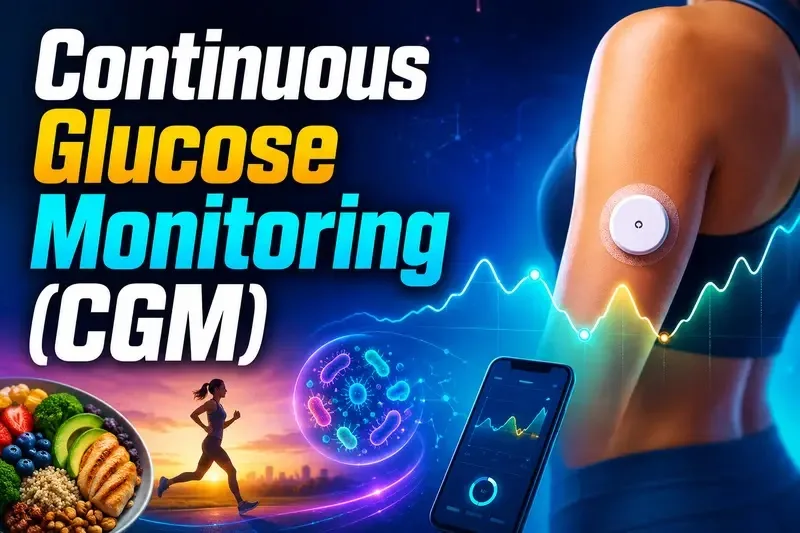
Continuous Glucose Monitors (CGMs) are increasingly used by non-diabetics to track real-time glucose responses to food, sleep, stress, and exercise. Research shows that even healthy people can experience large glucose spikes and high glycemic variability despite normal A1C levels. CGMs help users understand personalized nutrition, metabolic flexibility, and early signs of insulin resistance. Scie…
The Abbott FreeStyle Libre 2 Plus is a continuous glucose monitoring (CGM) sensor designed for real-time diabetes management. It provides automatic glucose updates every minute through Bluetooth Low Energy (BLE) connectivity. The Libre 2 Plus sensor is approved for adults and children aged 2 years and older. It offers up to 15 days of wear time, making it one of the longest-lasting CGM sensors av…
Science pays — and it’s smarter than ever. Science careers empower modern society and deliver high-impact opportunities without the need for a doctorate. With bachelor’s or master’s degrees, professionals can thrive in biotech, AI, finance, and cloud industries. The Top 10 Science Jobs That Pay Over $150k Without a PhD include Staff Data Scientist, Senior Machine Learning Engineer, Applied AI Res…
A new scientific study suggests that the Great Pyramid of Giza could interact with resonant radio waves and focus certain electromagnetic waves under specific conditions. Researchers used theoretical physics models to examine how the pyramid’s shape and limestone structure respond to wavelengths between 200 and 600 meters. The study found that electromagnetic energy may concentrate inside the pyr…
Multiphoton Microscopy: A Game-Changer in Fertility Surgery Multiphoton microscopy is changing the future of surgical sperm extraction by helping fertility surgeons identify sperm-producing testicular tissue in real time with advanced laser imaging. This technology may improve sperm retrieval rates for men with non-obstructive azoospermia (NOA), which affects nearly 10–15% of infertile men. Tradi…
Surgical sperm retrieval techniques like PESA, MESA, TESA, TESE, and micro-TESE help men with azoospermia and severe male infertility achieve biological fatherhood through IVF-ICSI. PESA and MESA are commonly used for obstructive azoospermia, while micro-TESE offers higher sperm retrieval success in non-obstructive azoospermia. This expert guide explains how each procedure works, success rates, r…
Surgical sperm retrieval is a medical procedure used to collect sperm directly from the testes or epididymis in men with infertility or azoospermia. The process usually begins with fertility testing, hormone evaluation, and selection of the appropriate technique such as TESA, TESE, PESA, or micro-TESE. During the procedure, doctors retrieve sperm using aspiration or microsurgery under anesthesia.…
The human heart beats about 100,000 times daily and nearly 35 million times yearly. Scientists estimate around 2.57 billion heartbeats in 70 years, 2.94 billion in 80 years, and 3.31 billion in 90 years, based on an average heart rate of 70 beats per minute. Although the “2.5 billion heartbeat” theory is widely discussed, there is no fixed lifetime heartbeat limit. Longevity depends on genetics, …


 research.io