Max Planck Institute for Demographic Research - Press Releases and News

Johann Behrendt was a visiting researcher at the Max Planck Institute for Demographic Research (MPIDR) in Rostock from February to April. He is currently studying psychology in Leipzig. In the MPIDR blog, he describes his experiences as a research intern gaining an insight into a scientific discipline other than his own.

social-sciencesociology

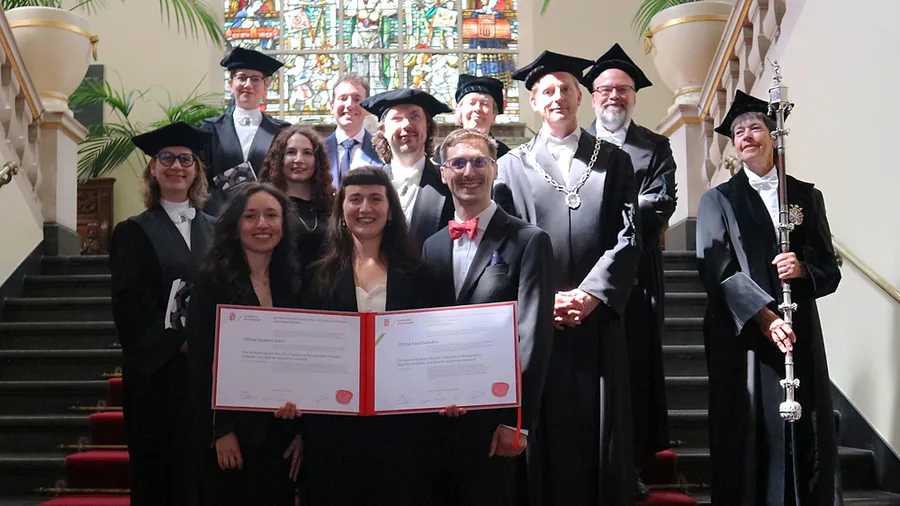
Chia-Jung Tsai from the Laboratory of Migration and Mobility at the Max Planck Institute for Demographic Research (MPIDR), successfully defended her doctoral thesis, “Factors Shaping Public Attitudes and Responses to Refugee and Immigrant Populations: Examining the Interplay of Demographics, Media, and Contextual Influences“, at the University Pompeu Fabra. Her findings contribute to our understa…

social-sciencesociology

Researchers investigated whether men or women have fewer children. Using international datasets, they demonstrate that imbalances in population structure, particularly an increasing proportion of men, affect male fertility. Globally, women have and will have a higher fertility rate than men. The scientists offer recommendations to counteract the social implications of this trend.

demographysocial-science

The Max Planck Society is launching a 6-year research project to explore how education must change to account for rapid societal transformations. As of April 2026, the “EduTrack” project initiates a collaboration between researchers across three Max Planck Institutes. Experts from demography, history, computer science and political science will collaborate to produce fresh insights on digital edu…

educationeducation-policylearning-science

The Laboratory of Demographic Data welcomes Moradhvaj Dhakad as a new team member. Moradhvaj is joining the Datalab as a scientist researcher as part of the Marie Skłodowska-Curie Fellowship program. Prior to joining MPIDR, he worked at the International Institute for Applied Systems Analysis (IIASA), University of Vienna and the Vienna Institute of Demography (VID) of the Austrian Academy of Sci…

demographysocial-science

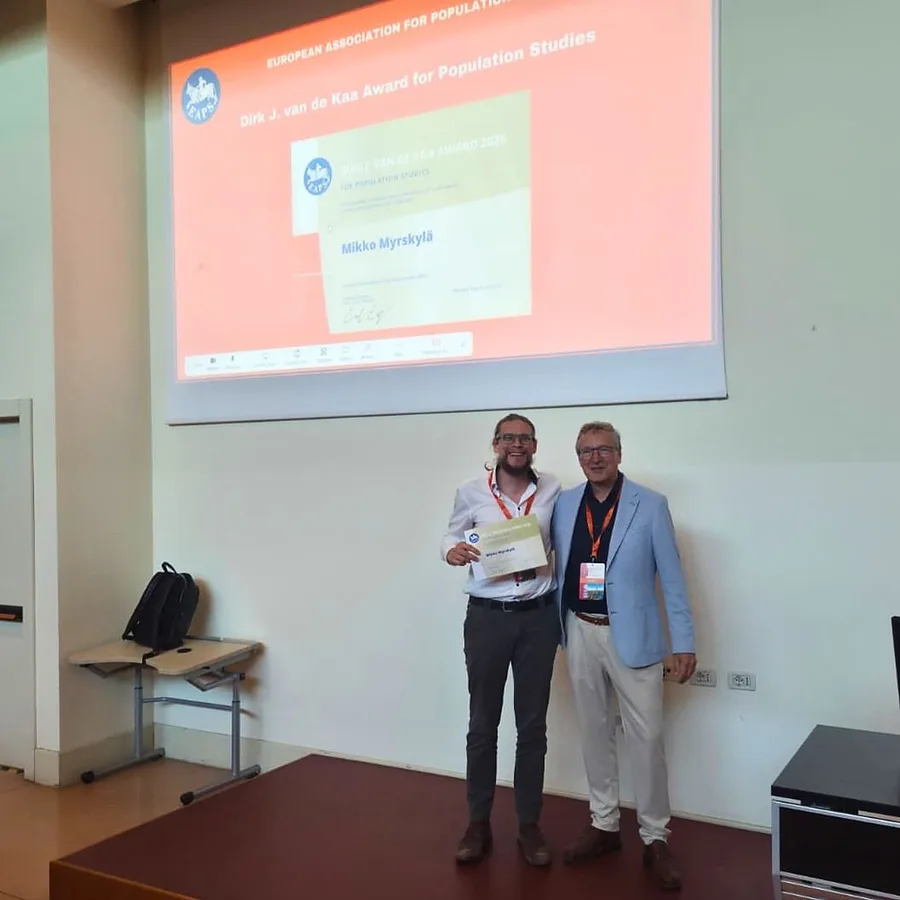
MPIDR researcher Philipp Dierker has won the Best Paper Award of the German Society for Demography (DGD). Philipp received the award on February 11 at the DGD's Workshop on “Changing Work Ability: Health, Disability, Care Work in the Context of Demographic Developments” for his paper "Re-partnering and single mothers‘ mental health and life satisfaction trajectories" in the Journal of Marriage an…

Moradhvaj Dhakad joined the Max Planck Institute for Demographic Research (MPIDR) in November 2025. During his time at IIASA, he collaborated with Erich Striessnig, Nandita Saikia, Samir K.C. and Wolfgang Lutz to explore why mortality among working-age adults remains high in India despite rapid economic growth. They found that education, at both the individual and community levels, was more stron…

demographysocial-science

In September 2025, Ben Malinga John became the head of the Max Planck Partner Group UNIMAX at the University of Malawi in Zomba. Previously, he worked at the Max Planck Institute for Demographic Research (MPIDR) in the Laboratory Fertility and Well-Being. In February, he and his colleagues from Department of Sociology and Population at the University of Malawi hosted a kickoff workshop for the ne…

demographysocial-science

In a recent study published in the journal Population and Development Review, researchers quantified how many Colombians have ever lost at least a family member to conflict-related violence in the country. These killings and disappearances can be considered a deliberate tactic to destabilize families and communities.

demographysocial-science

Here is an overview of the latest reading recommendations for papers published by scientists at the MPIDR.

A study by the Max Planck Institute for Demographic Research (MPIDR) and the Norwegian Institute of Public Health found that spouses tend to be very similar in terms of their risk of separation. Marriage is shaped not only by a person's own background, but also by that of their partner. The analysis of over 350,000 Norwegian marriages reveals a previously underestimated phenomenon: people with a …

demographysocial-science

The Lab of Population Dynamics and Sustainable Well-being welcomes Mallika Snyder as a new team member. Mallika joins MPIDR after spending over two years at the United Nations Population Fund (UNFPA) in New York, where she worked as an applied demographer developing subnational population projections to inform UN humanitarian action. She is a graduate of the UC Berkeley Ph.D. program in Demograph…

demographysocial-science

For more than five decades, the Max Planck Research Groups have been a key focus of promoting young scientists within the Max Planck Society. The selection process for group leader positions is rigorous. Last year, Marcus Ebeling, a scientist at the Max Planck Institute for Demographic Research (MPIDR), successfully completed the process. He will lead the 'Medical Demography' research group from …

demographysocial-science

Migration research focuses primarily on high-income countries and regions, such as Europe, North America, and parts of Asia. Despite their significant migrant populations, researchers have found that low-income countries, particularly in Africa and parts of Asia, are underrepresented. A recent study identified and analyzed about 125,000 migration-related publications. It shows that research outpu…

migrationsocial-science