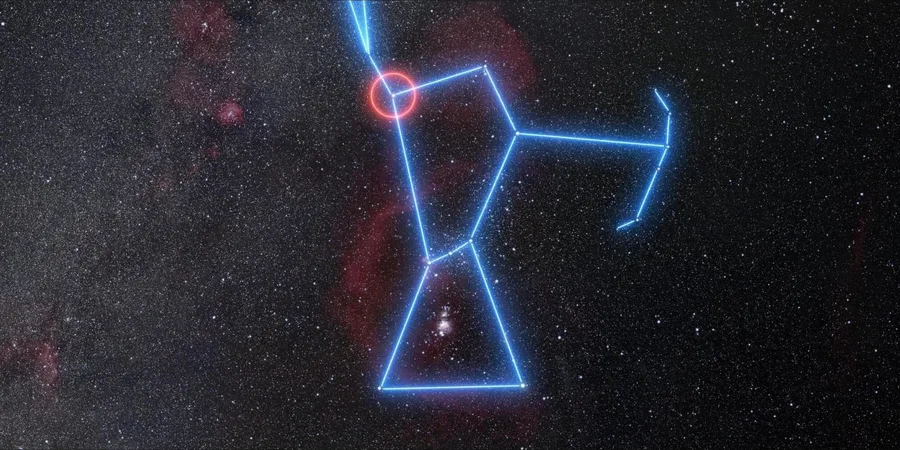
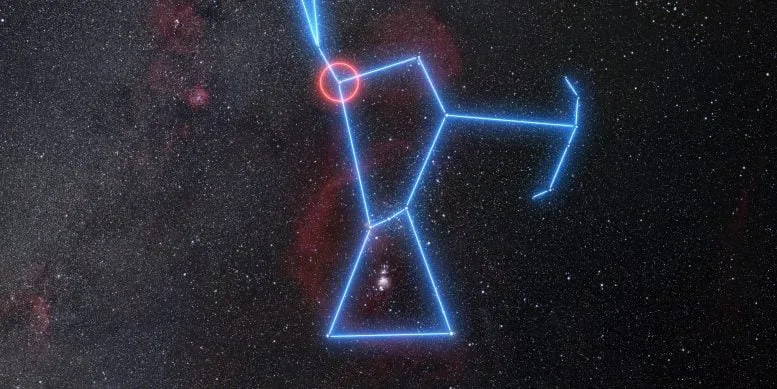
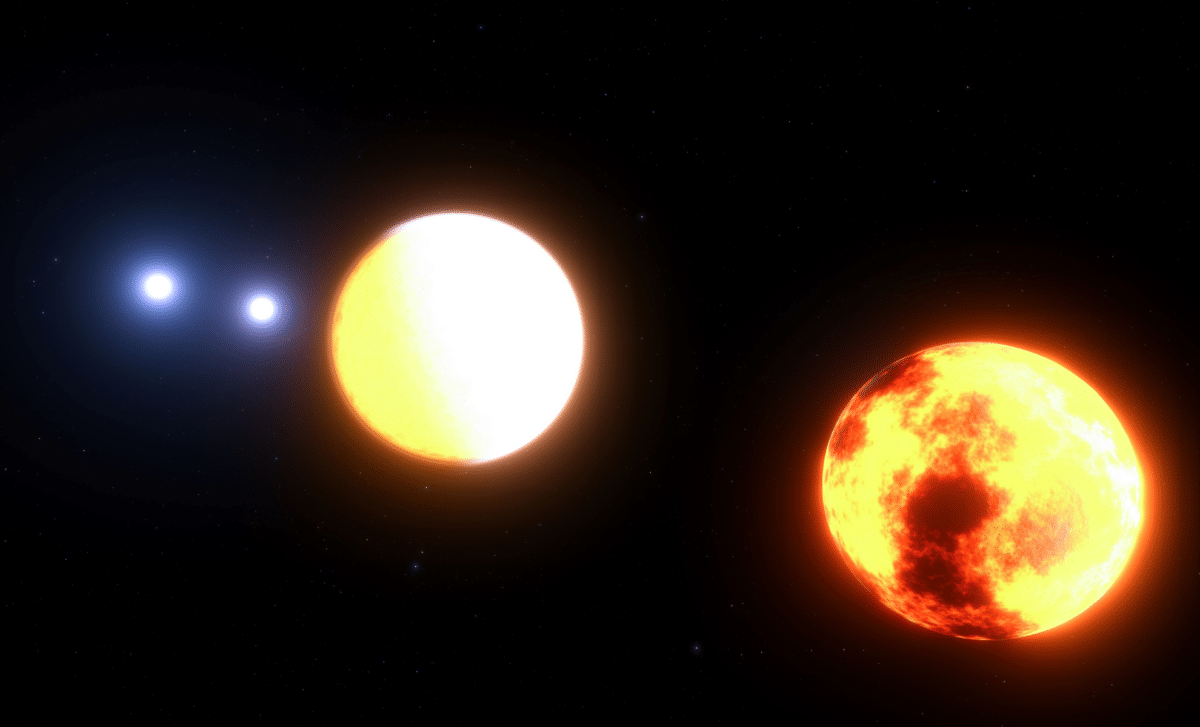
Direct imaging has revealed strong evidence that Betelgeuse is orbited by a companion two to three times as massive as the Sun. For generations, Betelgeuse has appeared to the naked eye as a single reddish point in the constellation Orion. Now astronomers have obtained their strongest evidence yet that the famous star has company. Using […]
Direct imaging has revealed strong evidence that Betelgeuse is orbited by a companion two to three times as massive as the Sun. For generations, Betelgeuse has appeared to the naked eye as a single reddish point in the constellation Orion. Now astronomers have obtained their strongest evidence yet that the famous star has company. Using [...]
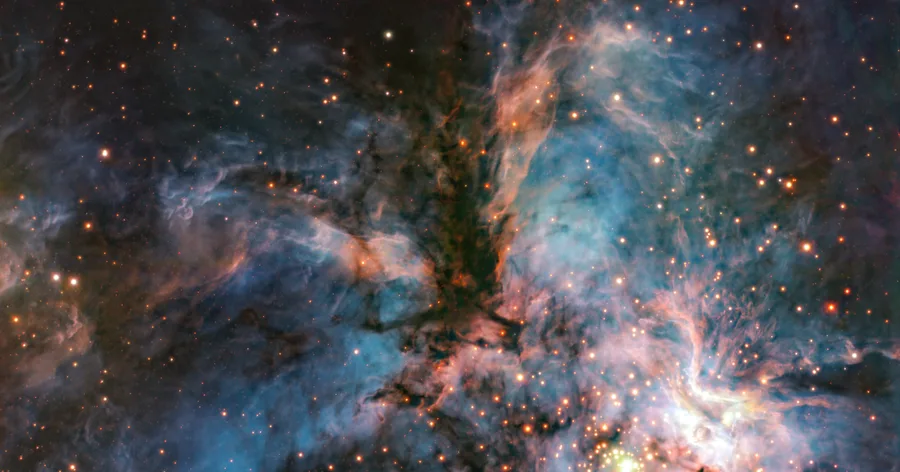
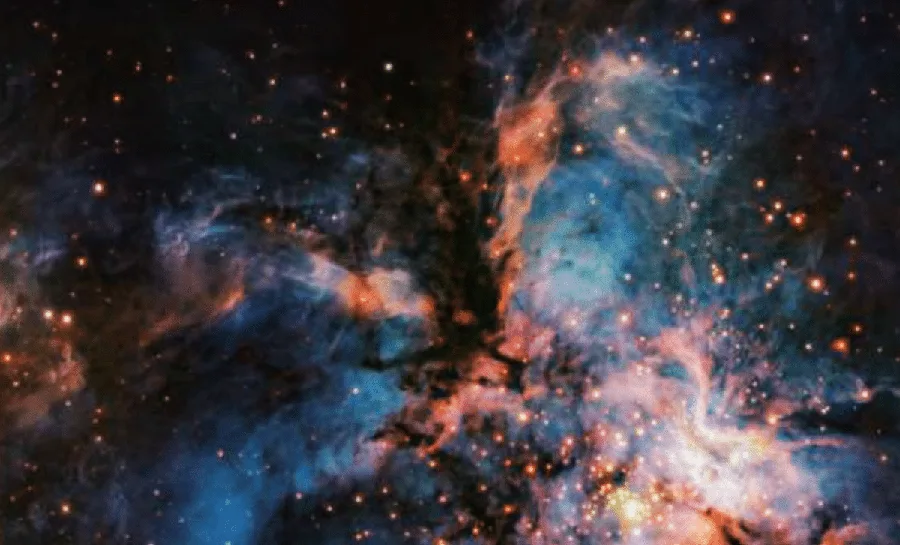
In the early 1960s, Alexander Rodgers, Colin Campbell, and John Whiteoak compiled a catalog of emission nebulae in the southern Milky Way. A particularly impressive entry, RCW 36, resides 2,300 light-years away in the constellation Vela the Sails. RCW 36 boasts an open cluster of massive young stars at its heart, surrounded by glowing clouds Continue reading "RCW 36: A bird of prey sails away" Th…
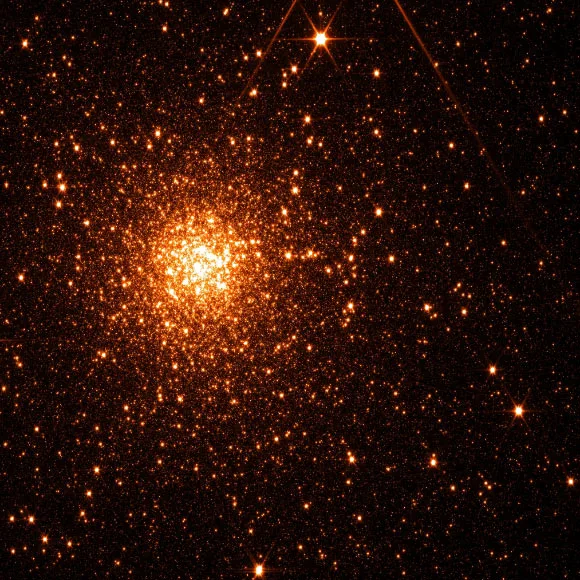
Astronomers have discovered the first known stellar-mass black hole hiding inside the massive star cluster Omega Centauri, solving part of a mystery that has puzzled scientists for decades. Omega Centauri, located about 18,000 light-years from Earth, is the largest globular star cluster in the Milky Way. It contains around 10 million stars packed closely together. […] The post Astronomers uncover…
Researchers at the University of Warwick and the University of Colorado Boulder have directly observed, for the first time, four white dwarfs in binary star systems in our nearby region of space. These stellar binaries are all within 65 light-years of Earth, and one contains the ninth-closest white dwarf to the sun. The four systems […]
Hubble has captured a spectacular view of LH 95, where about 2,500 young stars are still on their journey to becoming full-fledged stars. Scientists discovered these growing stars can keep pulling in gas and dust for millions of years, extending an important stage of stellar development. The region also contains multiple generations of stars living side by side, offering fresh clues about how sta…
Celebrating the United States' 250th anniversary, NASA released a stunning Hubble portrait of Messier 3, an ancient globular cluster with more than 500,000 stars. The remarkable cluster is helping scientists unravel the Milky Way's past thanks to its rare stars and possible origins in a long ago cosmic merger.
New Webb and Hubble data not only confirm the existence of two distinct populations of stars in the ancient stellar system Terzan 5, once classified as a globular cluster, but also provides evidence for two more recent rounds of star formation. The post Astronomers Find Four Separate Generations of Stars in ‘Globular Cluster’ Terzan 5 appeared first on Sci.News: Breaking Science News .
The RCW 36 nebula, resembling a cosmic hawk, is home to massive, newly-formed stars and elusive brown dwarfs, offering new insights into stellar birth and evolution.