Interoception has received growing attention in the past few decades. Yet, its conceptual foundations remain underexplored. This paper aims to expose conceptual limitations in dominant accounts of interoception, which are typically either viscerocentric or internalist. I argue that current philosophical definitions of interoception fail to accommodate the bidirectional feedback loop between olfac…
An agent’s status fundamentally relies on acknowledgement from other agents, defining a ‘mutually recognitive conception of agency’ according to new findings relating to QBism. The team reconstructed two formulations of this concept as it relates to Wigner’s friend paradox, revealing implicit connections to longstanding philosophical traditions. Agency, essentially who counts as making observatio…
The contemporary decline in Christian church-going and sacramental participation is due in part to the legacy of the Enlightenment, which valorizes the life of the mind over actual practice, a distortion due to a conceptualism of human action, widespread in Western thought, that sees in human action the mere execution of ideas. From here, it is a short step to the willful blindness that restricts…
The philosophical relationship between Jacques Derrida and Zhiyi Guo can be understood as a fundamental confrontation over the nature and stability of meaning. Derrida’s philosophy of différance emphasizes the relational character of signs and the continual deferral of meaning. Guo, by contrast, argues that meaning cannot be adequately explained through difference and deferral alone. He seeks to …
_Journal of Value Inquiry_. 2026Is it necessary to apply a distinct conception and framework of responsibility to address structural injustice, one that differs from those used for interactional injustice? The answer this paper presents is both yes and no. While a distinct conceptual and normative framework is indeed necessary to ameliorate structural wrongs, most real-world injustices require a …
Published on August 20, 2026 10:01 PM GMT Like many submissions to the Cluelessness Competition, this essay wasn't featured in the entries list for some criteria reason, so I am asking for potential feedback here. I think a summary of this post is sufficient (paste into Claude), because it is long, and you might expect the argument I am trying to make. Critiquing premise three (from the summary …
The Stoic secret isn't denying that bad things happen—it's recognizing that your suffering comes not from the event itself, but from the story you tell about it.
Nature, Published online: 20 August 2026; doi:10.1038/d41586-026-02455-y Studying a condition after being diagnosed with it can be rewarding but also presents some ethical and psychological challenges.
This paper presents a meta-critique of David Benatar’s antinatalism, demonstrating that his arguments do not merely yield counter-intuitive conclusions, but rest on foundational axioms that collapse into internal contradiction, triviality, or arbitrariness under rigorous logical scrutiny. Rather than engaging within the normative boundaries set by Benatar, this study employs a strict reductio ad …
Every organized society depends on obedience. Families, courts, corporations, religious communities, bureaucracies, professions, militaries, and states could not coordinate action if every instruction had to be reconstructed from first principles by every participant. Yet the same structure that makes collective action possible also creates a recurring moral temptation: the person who acts under …
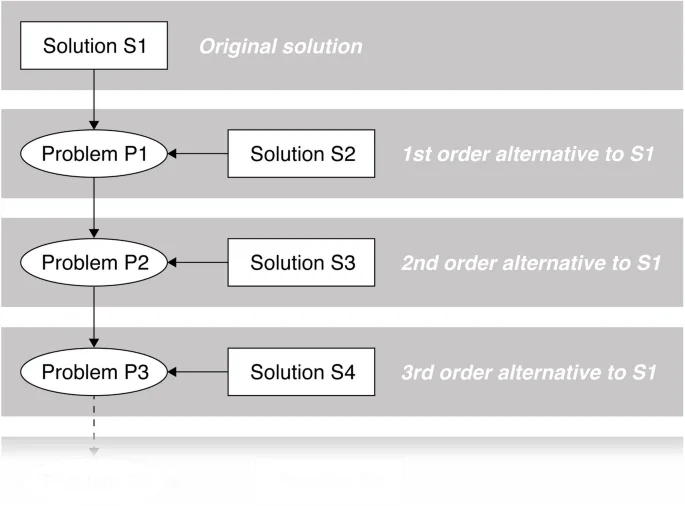
Turner (2026) articulates and defends the Proactive Principle of Choosing Less Harmful Alternatives, which asks agents and communities to develop new alternatives to current harmful practices. Drawing on examples from animal experimentation, this commentary argues that an overly alternatives-oriented approach to harm reduction has problematic limitations. The ethics of proactive harm reduction sh…
An intellectually humble person may have strong commitments to various beliefs − but balanced with an openness to the likelihood that others, too, may have valuable insights, ideas and evidence.
An ethicist who studies disagreement and civility assumed she could handle a neighborly dispute – until the neighbor refused to even interact with her.










 research.io