Discover how Hivenet’s Compute accelerates engineering simulations, research, and game development with high-performance, scalable, and cost-effective computing resources.
This paper presents a computational acoustic analysis of the 10:5:4 modular ratio derived from architectural specifications in the Book of Ezekiel (Chapters 40-48). By subjecting these dimensions to finite element method (FEM) and ray-tracing simulation, this study identifies a statistically significant local maximum (3.2\sigma performance gap) in acoustic quality factors. The findings suggest th…
LEAP 71, a Computational Engineering firm out of Dubai, and Sindan, an AI-driven manufacturing company headquartered in Abu Dhabi, revealed their strategic alliance at the Make it in the Emirates trade show on May 4, 2026. The collaboration targets the full integration of autonomous engineering design with advanced production, collapsing what has traditionally been a…
Juha Riippi; Alexandre Halbach; Valtteri Lahtinen; Asser Lähdemäki; Andrew Tweedie
1/24/2026
Key takeaways
-
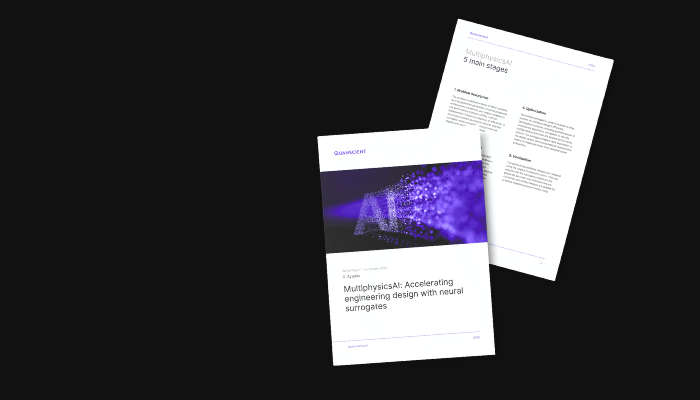
MultiphysicsAI integrates neural surrogate models with conventional multiphysics solvers to accelerate engineering design workflows.
-
Neural surrogates allow rapid evaluation of large numbers of design configurations at minimal computational cost.
-
Candidate designs identified by surrogates are verified with full solvers to ensure physical accuracy.
-
The approach enables explor…
Welcome to Carry the Two, the podcast about how math and statistics impact the world around us from the Institute for Mathematical and Statistical Innovation. In this season of Carry the Two we are going to be examining how math and stats is helping scientists, engineers, and industry develop new and emerging technologies. This episode is all about Digital Twins. Hosts Sam Hansen and Sadie Witkow…
Welcome to Carry the Two, the podcast about how math and statistics impact the world around us from the Institute for Mathematical and Statistical Innovation. In this season of Carry the Two we are going to be examining how math and stats is helping scientists, engineers, and industry develop new and emerging technologies. This episode is all about Computation Imaging. Hosts Sam Hansen and Sadie …
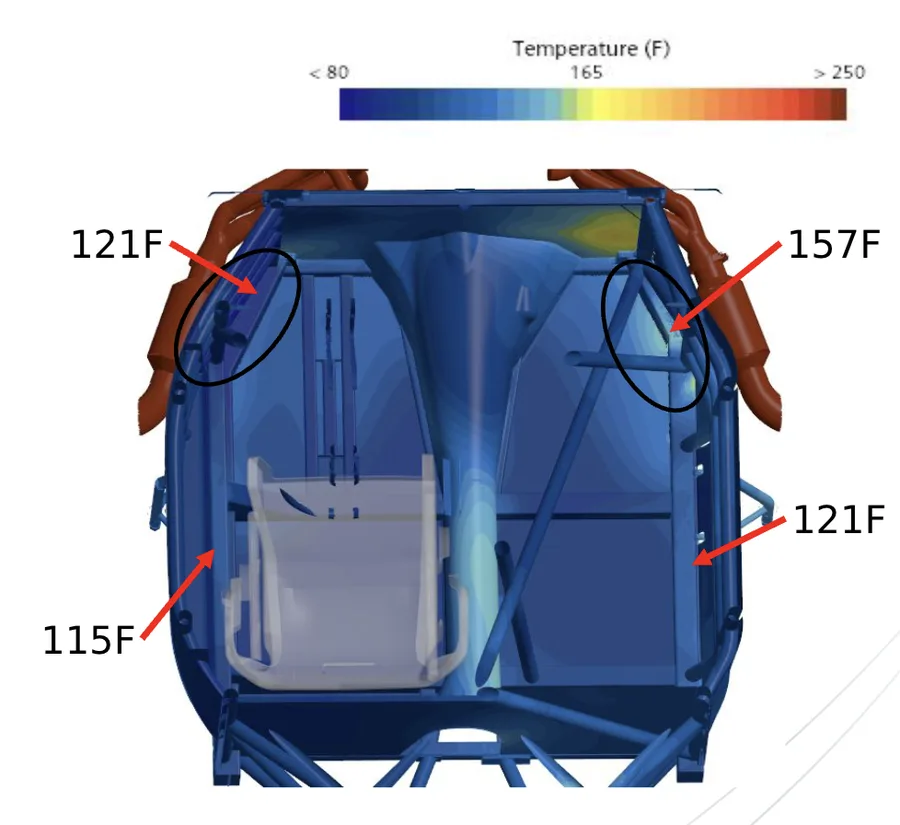
The Ohio Supercomputer Center (OSC) has released a new case study showcasing its pivotal role in helping TotalSim enhance the thermal management systems for NASCAR’s NextGen race cars. The case study, titled Accelerating Innovation: OSC Helps Power TotalSim’s Thermal Management Solutions for NASCAR’s NextGen Race Cars, details how OSC’s computational power enabled TotalSim to quickly […]
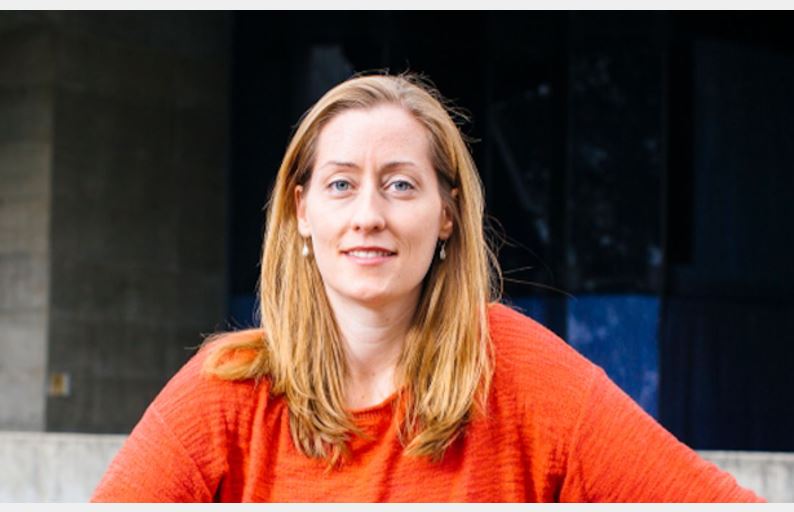
Laura Waller, professor of electrical engineering and computer sciences at University of California Berkeley, has been awarded the Max Planck-Humboldt Medal for her outstanding achievements in computational microscopy. Prof. Waller uses algorithms – some of which are based on machine learning – to improve microscopy, particularly of biological samples, as well as the imaging . . .