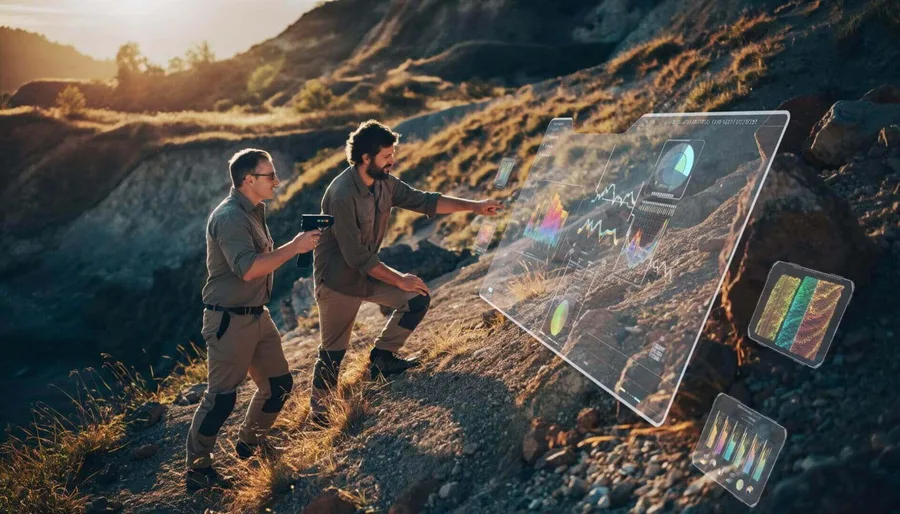
Mining has always been a business of uncertainty. Every investment, whether it supports an exploration program, advances a development project or acquires an operating mine, is ultimately based on one fundamental question: can this project create long-term value? While financial models have become increasingly sophisticated, their reliability depends entirely on the technical assumptions that sup…
Developing a new mine still takes 20 to 30 years, despite growing demand for critical minerals. Discover why responsible mine development depends on collaboration between geoscientists, engineers, regulators, communities and industry, and how better communication can help accelerate the projects needed for the energy transition. The post Rethinking the 30-Year Mine appeared first on LKI Consultin…
Recent discussions at the SME 11th Current Trends in Mining Finance Conference highlighted a recurring theme. While conversations ranged from capital markets and project financing to critical minerals and supply chains, one observation emerged consistently. Mining’s greatest challenges are no longer purely technical or purely financial. They increasingly exist at the intersection of disciplines t…
The conversation around critical minerals has never been louder. Governments are investing billions to secure supply chains. Mining companies are racing to discover the next lithium, rare earth or antimony deposit. Investors are searching for the projects that will power electrification, advanced manufacturing and national defense. The underlying assumption is simple: if we discover enough… The p…
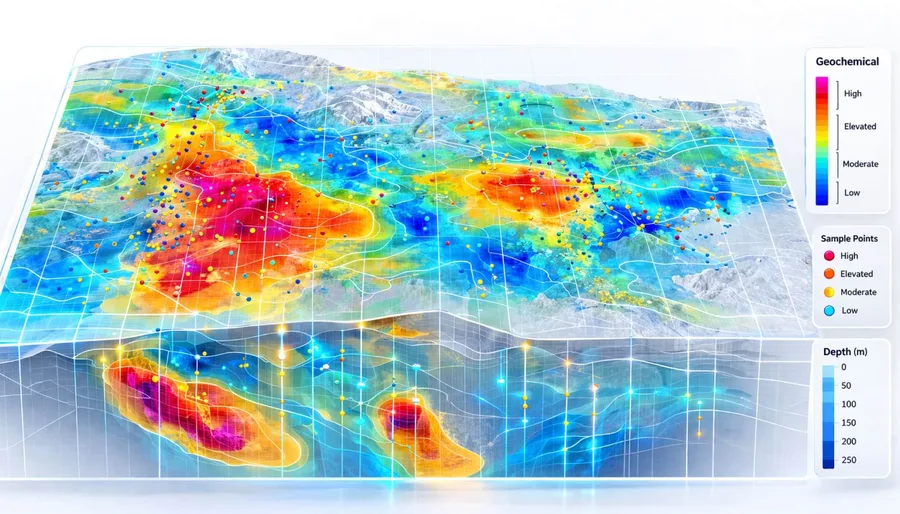
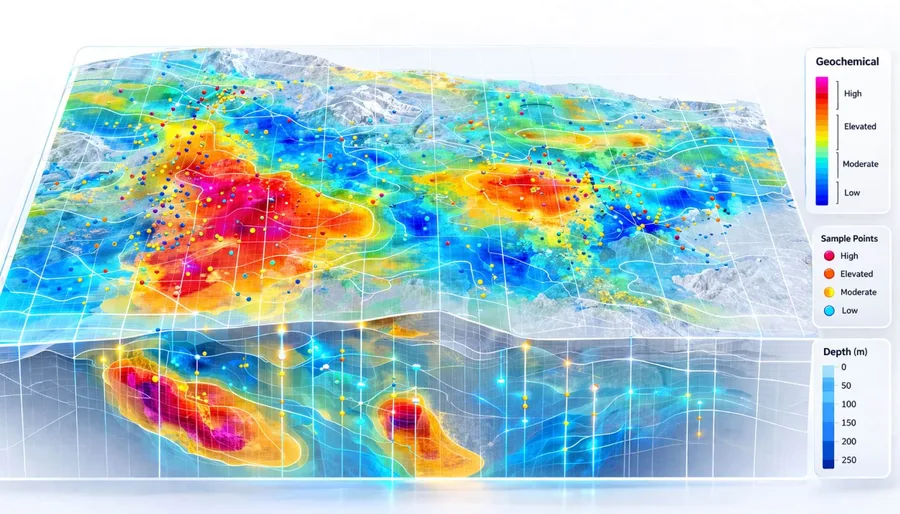
Not every geochemical anomaly leads to a successful discovery. Many anomalies that appear compelling on maps ultimately fail when drilled, not because the geochemistry was wrong, but because the geological processes behind the data were misunderstood. From lithological background and regolith transport to analytical methods, sampling practices and statistical interpretation, numerous factors can …
Machine learning has revolutionized many industries. In mineral exploration, it promises quicker discoveries and improved efficiency. Despite the The post Machine Learning with Geochemistry in Mineral Exploration: The Real Problem Is the Data appeared first on LKI Consulting .
Exploring mineral deposits with confidence starts far before full-scale sampling efforts or large expenditures. For exploration teams, one of The post Orientation Surveys: A Question of Context, Not Convention appeared first on LKI Consulting .
Exploration in covered terrains presents unique challenges for mineral exploration and mining projects. In many regions, thick regolith or The post Beyond the Grid: Exploration in Regolith appeared first on LKI Consulting .
Spatial autocorrelation is often treated as confirmation in geochemistry, but clustered anomalies do not automatically indicate mineralization. This blog explores how Moran’s I, local spatial association, and variography help distinguish meaningful geological signal from patterns created by background spatial structure. The post Spatial Autocorrelation: From Confidence to Quantification in Geoche…
Spatial autocorrelation is often treated as confirmation in geochemistry, but clustered anomalies do not automatically indicate mineralization. This blog explores how Moran’s I, local spatial association, and variography help distinguish meaningful geological signal from patterns created by background spatial structure. The post Spatial Autocorrelation: From Confidence to Quantification in Geoche…
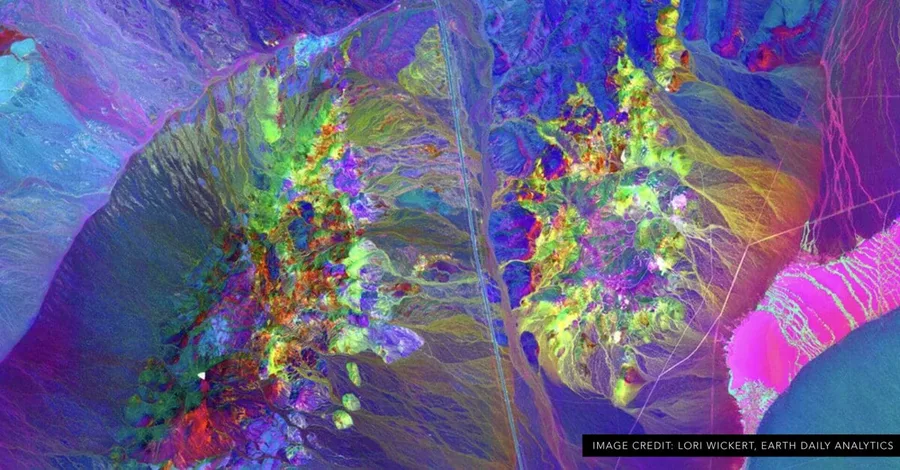
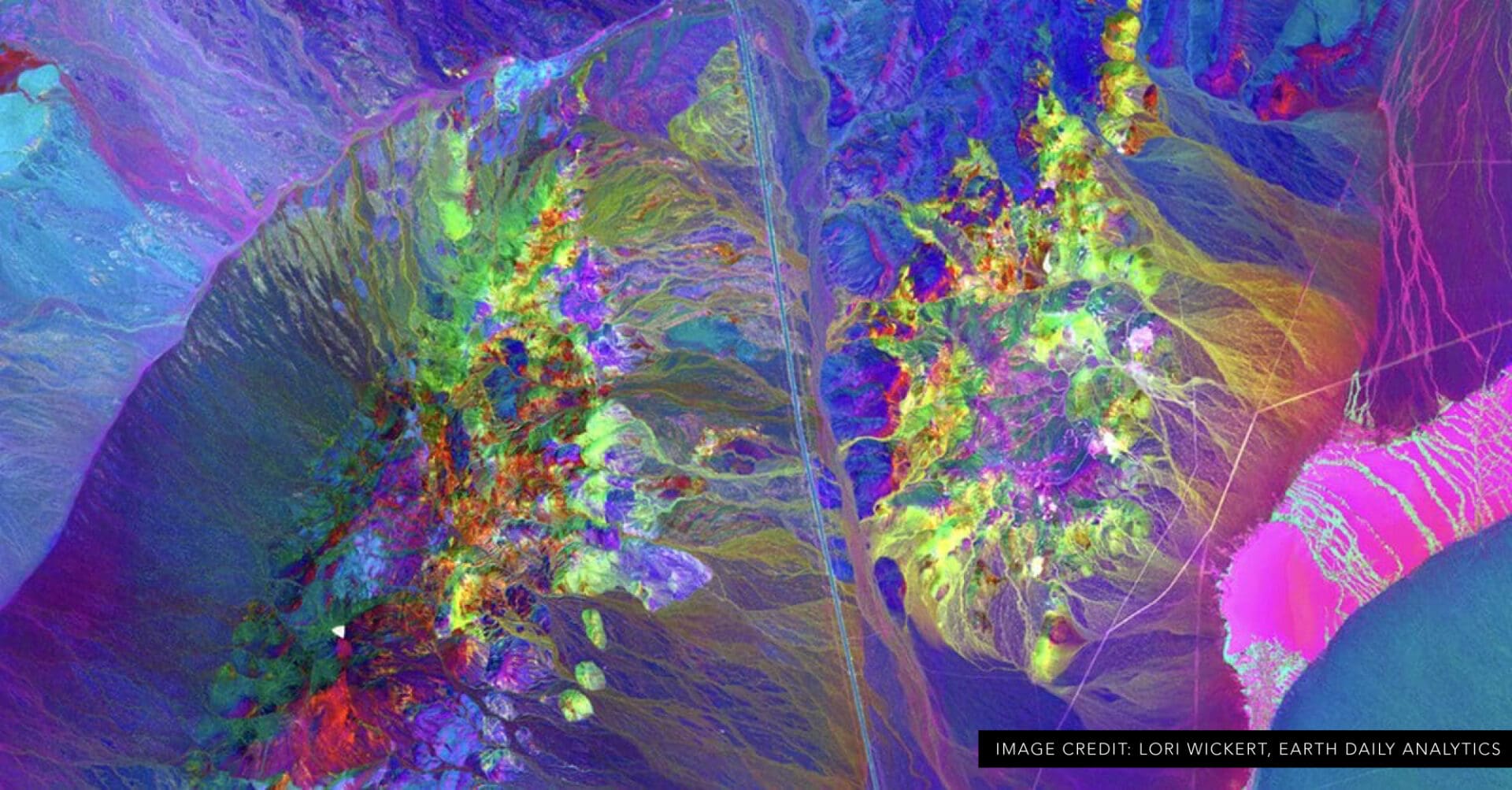
Exploration teams have used satellite imagery for decades to understand regional geology, map alteration systems, and prioritize targets. Until recently, however, satellite remote sensing was limited in its ability to identify specific minerals at the surface. A new generation of hyperspectral satellites is changing that. These systems measure reflected light in hundreds of narrow wavelength… The…
Exploration teams have used satellite imagery for decades to understand regional geology, map alteration systems, and prioritize targets. Until recently, however, satellite remote sensing was limited in its ability to identify specific minerals at the surface. A new generation of hyperspectral satellites is changing that. These systems measure reflected light in hundreds of narrow wavelength… The…
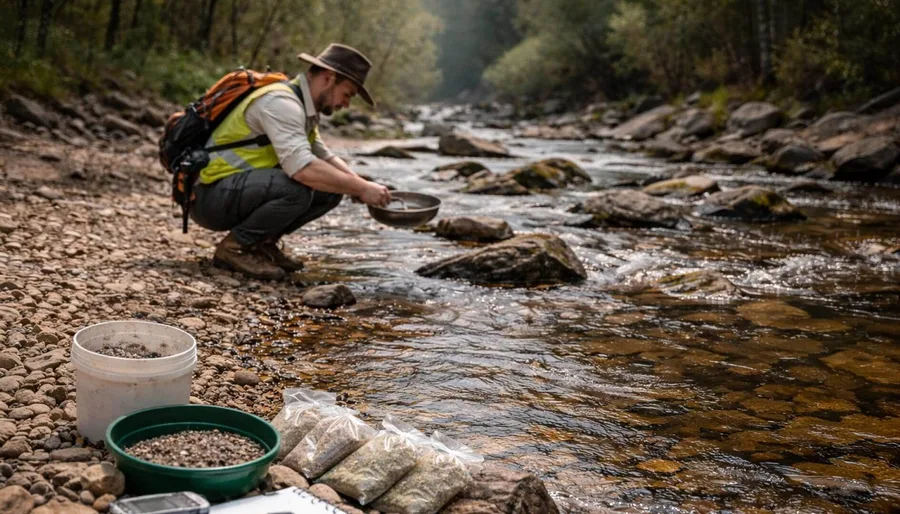
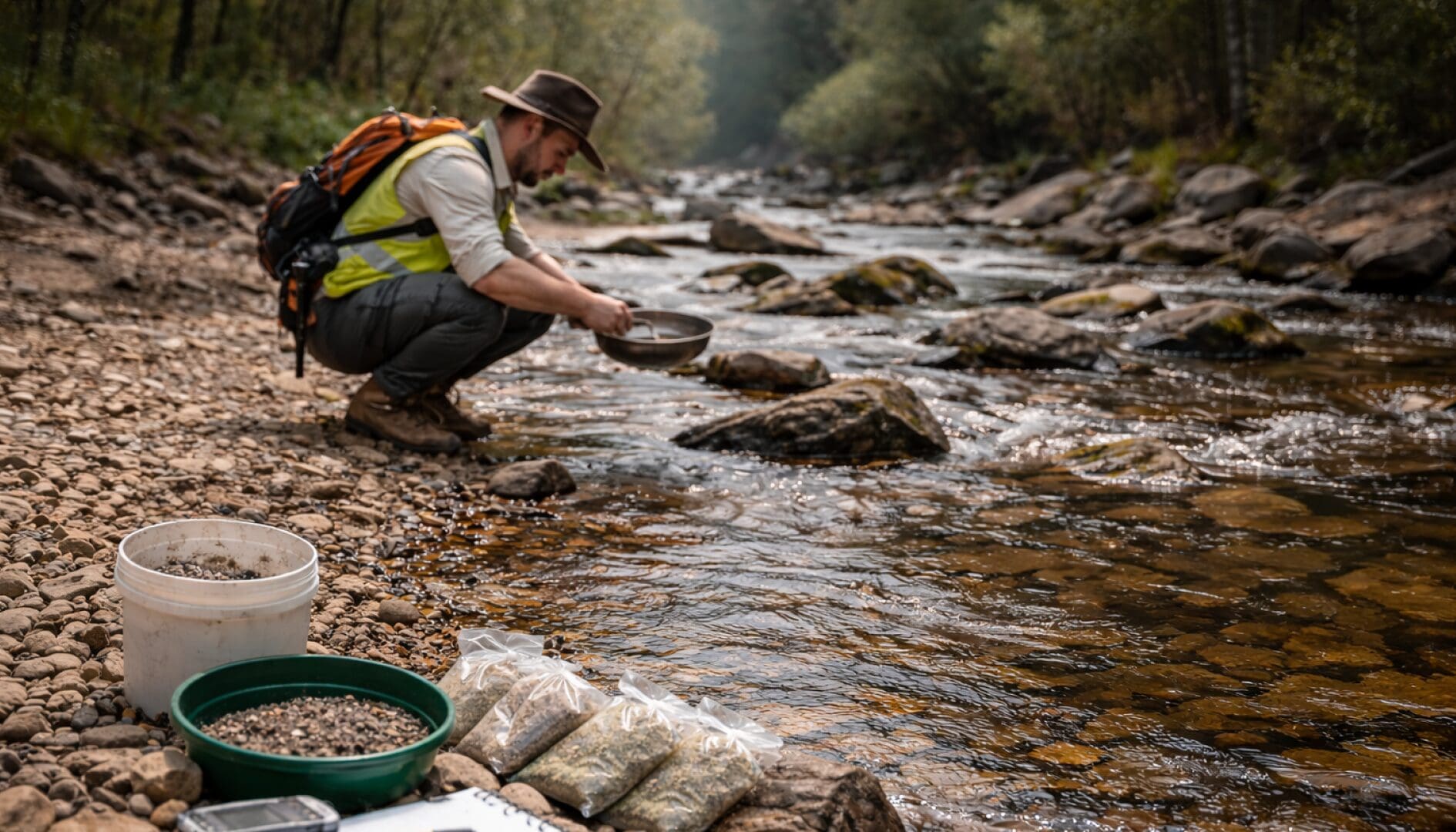
Stream sediment geochemistry is one of the most established tools in mineral exploration, providing a practical and powerful tool for targeting mineral deposits across wide terrains. The method involves the collection and analysis of sediments from streams and rivers to identify trace amounts of target and pathfinder elements. By understanding how these elements distribute themselves… The post St…
Stream sediment geochemistry is one of the most established tools in mineral exploration, providing a practical and powerful tool for targeting mineral deposits across wide terrains. The method involves the collection and analysis of sediments from streams and rivers to identify trace amounts of target and pathfinder elements. By understanding how these elements distribute themselves… The post St…
Legacy geochemical datasets often contain hidden structural inconsistencies caused by mixed analytical methods, detection limits, and missing metadata. This blog explores why understanding data structure must come before interpretation and how a method-family approach can help restore comparability without distorting geological signal. The post Data Before Interpretation: Understanding Structure …
Legacy geochemical datasets often contain hidden structural inconsistencies caused by mixed analytical methods, detection limits, and missing metadata. This blog explores why understanding data structure must come before interpretation and how a method-family approach can help restore comparability without distorting geological signal. The post Data Before Interpretation: Understanding Structure …
Predictive models now drive high stakes decisions throughout the mining industry. The promise is clear: Enhanced targeting, improved resource estimates and more consistent mine profitability. Yet, many sites find that their models fail after real world deployment. Discrepancies appear between predicted grades and actual results, unexpected processing challenges surface and anticipated profits sli…
Predictive models now drive high stakes decisions throughout the mining industry. The promise is clear: Enhanced targeting, improved resource estimates and more consistent mine profitability. Yet, many sites find that their models fail after real world deployment. Discrepancies appear between predicted grades and actual results, unexpected processing challenges surface and anticipated profits sli…
In mineral exploration and mining, precision and speed often define project success. Accurate alteration mapping is foundational to resource The post Core Scanning in Exploration: Choosing the Right Tools for Mineralogical and Geochemical Insight appeared first on LKI Consulting .
In mineral exploration and mining, precision and speed often define project success. Accurate alteration mapping is foundational to resource The post Core Scanning in Exploration: Choosing the Right Tools for Mineralogical and Geochemical Insight appeared first on LKI Consulting .




 research.io