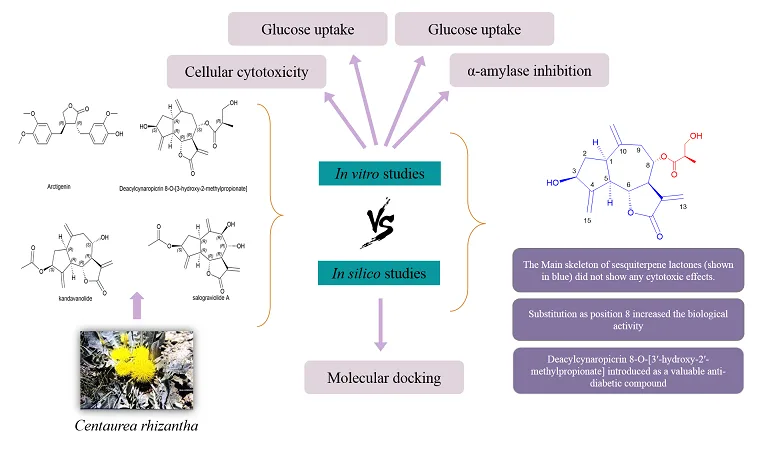
AbstractDiabetes is characterized by insulin deficiency and insulin resistance. The Centaurea genus, has been used in traditional medicine. Between the purified sesquiterpene lactones of C. rhizantha, deacylcynaropicrin 8-O-[3′-hydroxy-2′-methylpropionate] demonstrated the cyctotoxic effect on HepG2 (IC50:25.05 µg/ml). All of the tested compounds could increase glucose consumption by HepG2 cells at a dose of 25 µg/ml, with a similar effect to that of metformin. Only deacylcynaropicrin derivate significantly inhibited these enzymes to a level comparable to the positive control (Acarbose 100µM). These findings were further supported by the results of the molecular docking study. Additionally, the investigation of the combination of sesquiterpene lactones isolated from C. rhizantha revealed that the main skeleton of these compounds did not exhibit significant cytotoxicity or biological activity. Therefore, the deacylcynaropicrin derivate can be introduced as promising anti-diabetic agent. However, further studies are required to fully understand its efficacy and safety before it can be recommended for clinical use.