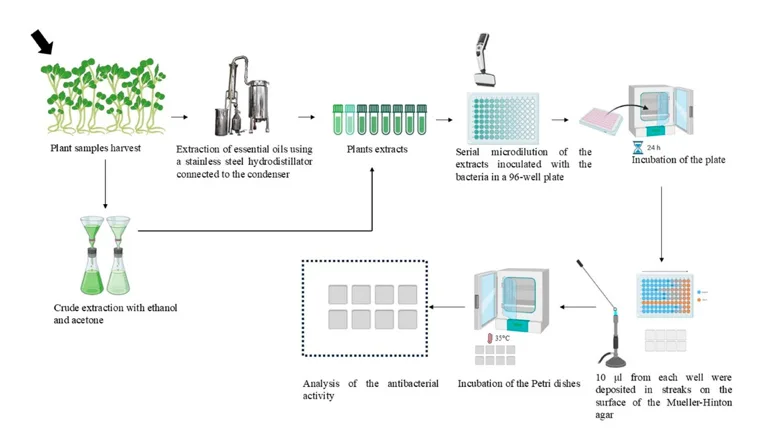
Healthcare-associated infections are caused by pathogens capable of developing resistance to multiple antimicrobials. The objective was to evaluate the phytochemical profile, antibacterial potential on drug-resistant microorganisms, and toxicity in Artemia salina of Sambucus peruviana extracts. This experimental study evaluated strains of Escherichia coli and Klebsiella pneumoniae ESBL, carbapenemase-producing Pseudomonas aeureginosa and Acinetobacter baumannii, as well as methicillin-resistant Staphylococcus aureus (MRSA) were evaluated, subjected to ten concentrations of the extracts (10-10 mg/mL). Antibacterial potential was determined by Kirby-Bauer test, with positive controls of meropenem, polymyxin B and vancomycin. Toxicity was assessed by counting the number of dead Artemia salina nauplii after 24 h of exposure to the extracts. The presence of flavonoids, phenols, and saponins was detected, with higher concentration of polyphenols and total flavonoids in the ethanolic extract. Additionally, there was an upward trend in the diameter of halos, with greater growth inhibition with the ethanolic extract at 100 mg/ml. The aqueous extract showed higher antibacterial potential against MRSA. The extracts did not generate cytotoxicity in Artemia salina. Flavonoids, phenols, and saponins related to the antibacterial activity of the plant were detected. Sambucus peruviana extracts inhibited the growth of drug-resistant bacteria, with greater the activity from the ethanolic extract. Furthermore, they did not cause toxicity after 24 h of exposure to Artemia salina nauplii.