Recording the movement of freely swimming, weakly electric fish during naturalistic behavior and social interactions poses persistent challenges to neuroethologists. Most species are nocturnal; consequently, illumination for video recording often disrupts their natural behavior. Substantial work has addressed this issue using shallow-water tanks, infrared illumination, or indirect movement deriva…
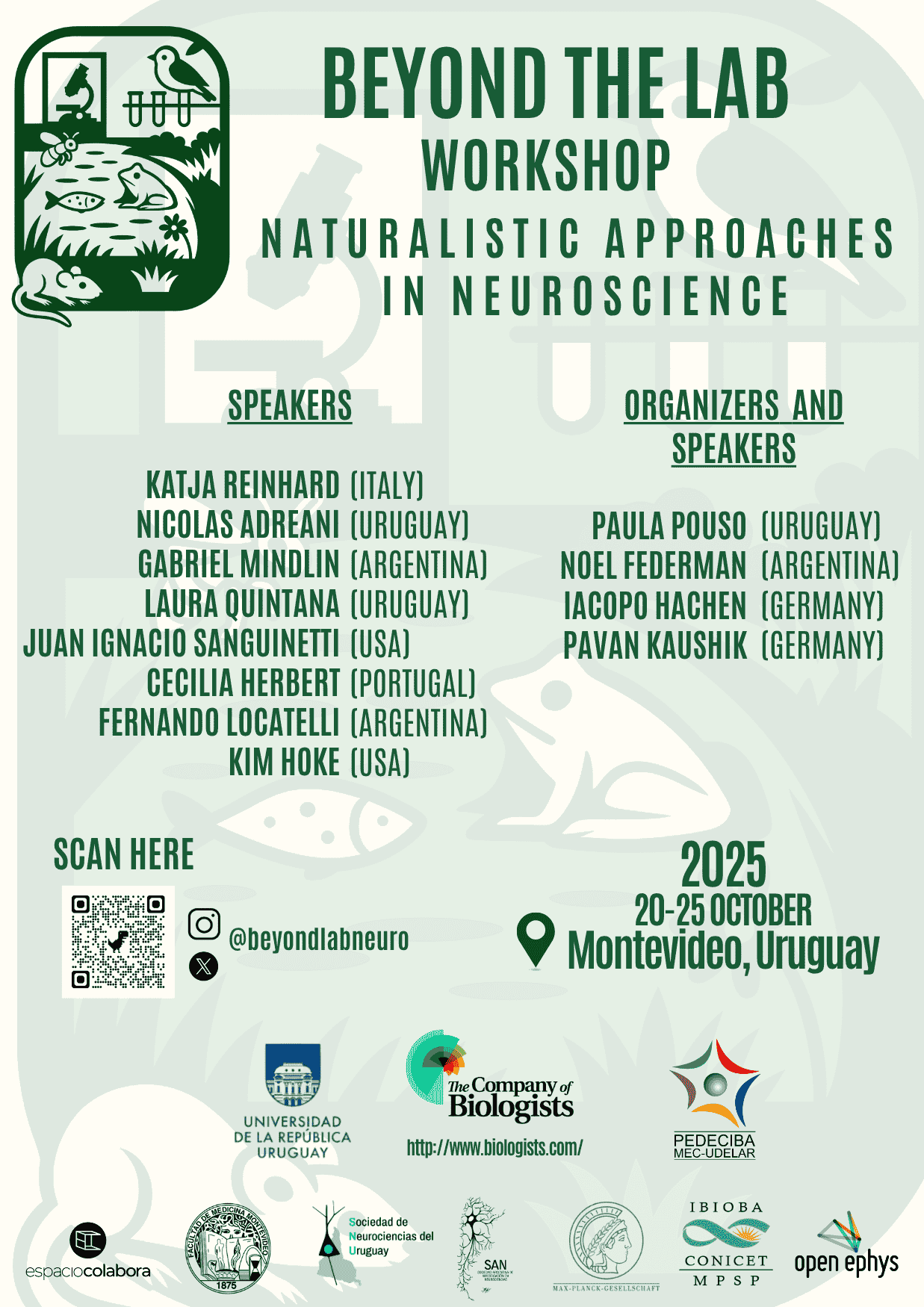
This workshop targets graduate students, postdocs, and early-career researchers interested in systems neuroscience and neuroethology, with a focus on naturalistic approaches to studying behavior and its neural bases. Through talks and discussion seminars, participants will explore alternatives to standard lab paradigms, including investigating neural responses to natural stimuli, working with non…
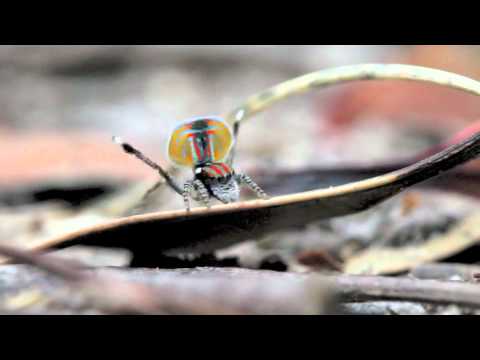
Ron Hoy, a neuroethologist from Cornell, visited UCSD last week and gave a great talk on jumping spiders. These are, apparently, the most speciose variety of spider – that is, they account for ~13% of all species of spiders! More … Continue reading →
This is a guest post in our #NPGsfn11 blog series and posted on behalf of Zen Faulkes. Browsing through the Neuroscience poster session, I was stopped by an unusual title. Almost all the posters around me featured mice, but I spotted “vole” in the title of this poster. I had to find out why these scientists zigged when all the others zagged. The presenter, A.M. Anacker, had a great answer. Prairi…