Action Potential

If you’re attending the Society for Neuroscience meeting this year (#SfN13), join us for our panel discussion: ‘Tackling the terabyte: how should research adapt to the era of big data? When: Monday, November 11, 6:30 – 8:30 p.m. Where: Hilton San Diego Bayfront, 1 Park Blvd, San Diego, CA 92101 Room: Sapphire 400 Moderator: - Noah Gray, Nature Panel: - Susanna-Assunta Sansone, Assoc Dir & PI at U…

I-han Chou
11/29/2012

We’re back! Apologies for the long radio silence – day job, what can I say. Last week Nature published a leader reflecting upon our performance as editors and journalists in the gender balance of our referees, commissioned authors, and journalistic profiles. The verdict? Plenty of room for improvement – in 2011, only 14% of Nature’s 5,514 manuscript referees were women. Those numbers are for all …
I-han Chou
8/10/2012

We published another double header yesterday, this time on the role of particular cell types in visual responses. Both studies describe the effect of optogenetically manipulating various interneuron classes in mouse visual cortex. The papers are Lee et al. from Yang Dan‘s lab and Wilson et al. from Mriganka Sur‘s labs. And in fact, both were preceded by Atallah et al. from Massimo Scanziani’s lab…

biologycell-biology
I-han Chou
7/13/2012

I wanted the title of this post to be “A tale of two one two three papers” but I couldn’t figure out how to get strikethroughs in the title field. And I thought “A tale of two, make that one, no make that two again, oops now three” might be a bit cumbersome. As promised, here’s another installment of the discussion of what happens when we receive conceptually related/overlapping papers. It starts…

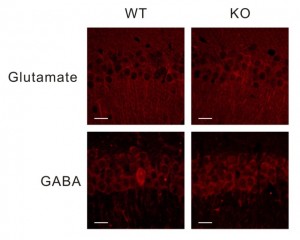
Again, we’re behind on blogging – you guys are keeping us busy with great neuroscience – but here is the story of a pair of papers that appeared back to back in last week’s issue and a continuation of the discussion started here by Noah about the process of joint publication. The two papers by Tobias Boeckers and colleagues and by Eunjoon Kim and colleagues were independently submitted and both d…

neurogeneticsneurosciencesynaptic-biology

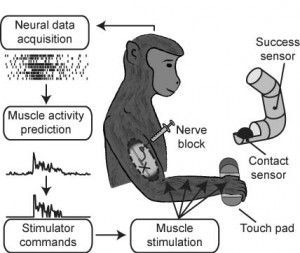
It really is an embarrassment of riches here at Nature these days, what with so many excellent neuroscience-related studies emerging. Just in the last couple of weeks, we’ve had the following studies: - Covert learning by a basal ganglia circuit, despite no participating in the behavioral practice. - Reach and grasp by people with tetraplegia using a neurally-controlled robotic arm. - A non-trans…

clinical-neuroscienceneuroscience
I-han Chou
5/16/2012

The (highly abbreviated) life story of a paper appearing in Nature often goes something like this: ideas are birthed and experiments envisioned. Pilot experiments are run, yielding beautiful preliminary data. Replication and controls are then gathered over the course of months, if not years of hard labor. The paper is written, submitted, and reviewed. A few (two is typical) rounds of review and r…

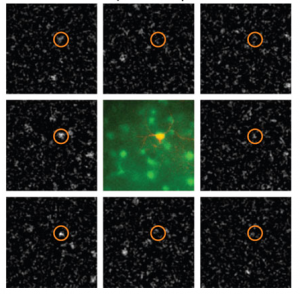
Sometimes an experiment will just reach off the page and slap you in the face, demanding attention. This happens to me every so often and I must admit, our latest paper from the lab of Florien Engert induced such an experience. There have been several cool, technical tours-de-force (is that proper grammar??) over the last few years involving different creatures navigating in a virtual environment…

neuroimagingneuroscience
I-han Chou
4/18/2012

I’m on the road (attending a symposium at MIT: New Insights on Early Life Stress and Mental Health) so this one’s going to be brief. Neural prosthetics are an exciting interface between basic research and technology, an area where the path from fundamental discoveries in the organization and function of the brain to translational advances has been remarkably clear. Cochlear implants have already …

clinical-neuroscienceneuroprostheticsneuroscience
Noah Gray
3/22/2012

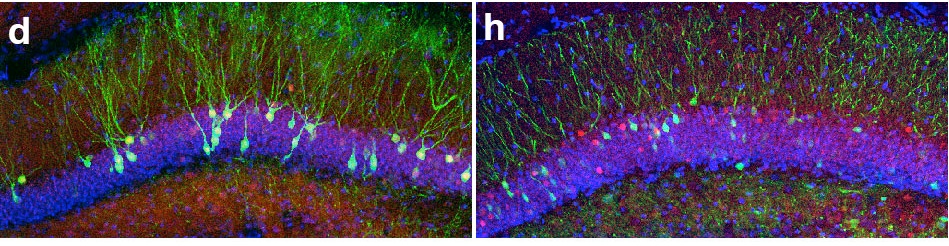
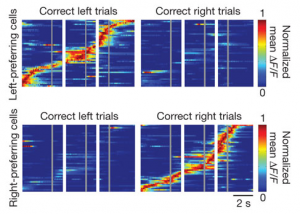
**PLEASE SEE UPDATES BELOW** It is commonly believed that distinct mini-networks of neurons, firing together, may be the means by which memories and other conceptual encoding requirements are handled in the brain. However, it is only recently that we have had the tools available to directly test the sufficiency of such a mechanism. Today, a new study in Nature from the lab of Susumu Tonegawa docu…

cognitive-neuroscienceneuroimagingneuroscience

Back in the 1990’s, one of the most intense battlegrounds in systems neuroscience was in monkey posterior parietal cortex. Labs competed to claim what a little strip of cortex called lateral intraparietal area (LIP) really does – decision, movement planning, attention, reward, or all of the above – mostly using single cell recording in behaving monkey. The experiments were (and still are) tough: …

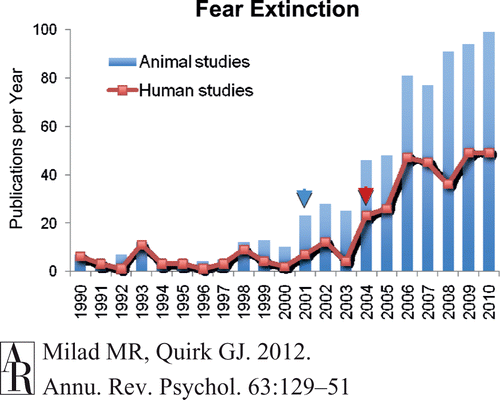
You warily walk into a dark compartment, wondering if there is food inside. Suddenly there is a loud tone and you feel an uncomfortable surge of electricity through your feet. This goes without saying, but it won’t take long before you will learn to be afraid of that tone. However, over time, you hear the tone without the shock, and slowly (foolishly??) accept that the previous connection may no …

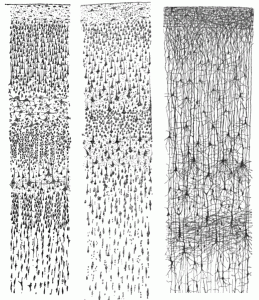
We’ve known for over a century that sensory cortex is arranged in distinct layers, each containing a different make up of neuronal types and projection patterns, but we don’t actually know that much about the actual computations performed in each layer.  Today a paper from Massimo Scanziani’s lab takes a big step towards cracking the function of the bottom layer (layer 6) in mice. Layer 6 neurons…

computational-neuroscienceneuroimagingneuroscience
I-han Chou
2/8/2012

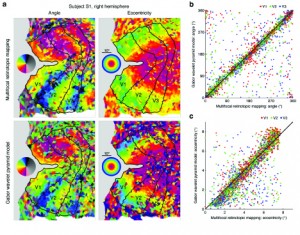
There is just something about neural decoding that captures the imagination. Scientists “reading out brain activity” to infer what someone was seeing or doing sounds like the stuff of science fiction. But in practice, with the right dataset and right computer algorithm, it can be done – providing the question you are trying to query the brain is simple enough. But no matter how simple the questio…

neuroimagingneuroscience

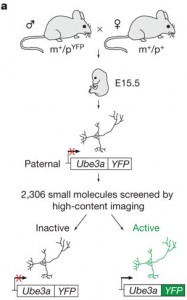
Here’s one that first appeared online at the end of last year by Benjamin Philpot, Bryan Roth and Mark Zylka about a finding that could lead to a therapy for Angelman Syndrome. Angelman syndrome is a rare neurodevelopmental disorder affecting 1 in 15,000 live births and is characterized by developmental delay, lack of speech, seizures, and motor difficulties. There are no therapies available for …

biologygeneticsmedicineoncology

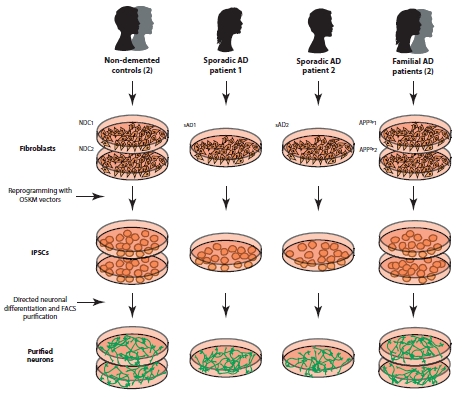
Alzheimer’s disease (AD) is a devastating neurodegenerative disease that could become an even more massive public health problem than it already is, if current projections hold. Some predict that by 2050, 1 in 85 individuals will be affected by the disease. Currently, there is no cure, but there are neurotransmitter-enhancement-based strategies to slow down the cognitive deficits [the loss of cho…

clinical-neurosciencemedicineneurodegenerationneuroscience
I-han Chou
1/25/2012

This week’s paper is by Abigail Person and Indira Raman and is about information transmission between two cell populations in the cerebellum – purkinje cells in the cortex and their targets in the deep nuclei. Purkinje cells are justifiably famous for their spectacular anatomy  which enables integration of thousands of inputs. This paper, however, is about their output and how these exclusively G…

biologycell-biology

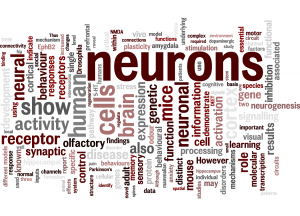
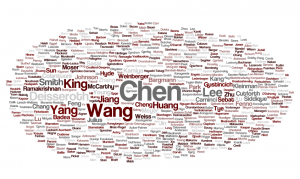
Something light for the weekend: deconstruction of a year of neuroscience in Nature. This text cloud was created from the titles and abstracts of 83 neuroscience papers published in Nature in 2011. Click on the image to see a larger version. Frequency is represented by font size and common words such as “the” and “and” are excluded. Not too surprisingly, “neurons” came out on top (149 occurrences…

clinical-neuroscienceneuroscience
I-han Chou
1/18/2012

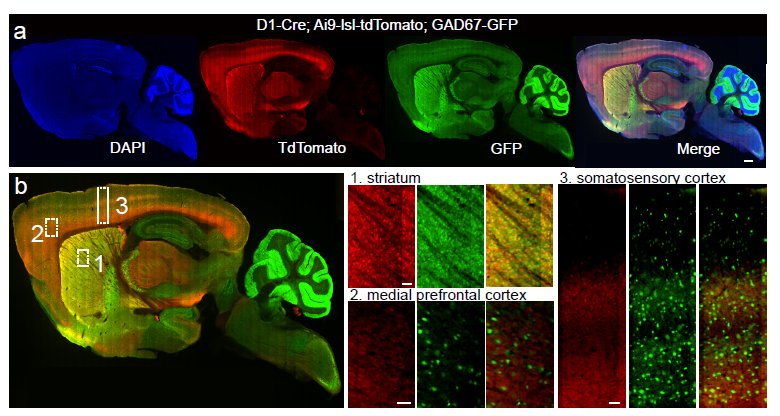
Out online in Nature today: a paper from Naoshige Uchida and colleagues about cell-type specific reward and punishment signals in the ventral tegmental area (VTA) of mice. The VTA is a midbrain region heavily implicated in reward and addiction, and its outputs are thought to provide reward-related signals to other brain areas. One subpopulation of cells with the VTA, the dopaminergic neurons, hav…

neuropharmacologyneurosciencesynaptic-biology
research.ioresearch.io

Sign up to keep scrolling

Create your feed subscriptions, save articles, keep scrolling.

Already have an account?