The 2026 Global Automotive and Technology Expo (GATE 2026) will take place August 26-28 at the Malaysia International Trade and Exhibition Centre (MITEC) in Kuala Lumpur, as Southeast Asia's auto market enters a new phase of slower overall growth but faster EV adoption.
GATE 2026 is set to bring together automakers, suppliers, and technology firms in Kuala Lumpur as Southeast Asia deepens its focus on electric vehicles, smart manufacturing, and industrial upgrading. The event's scale and timing could make it a key indicator of where the region's auto supply chains are heading next.
The powertrain domain serves as the neural command center of new energy vehicles orchestrating the seamless integration of propulsion, energy storage, and thermal management subsystems. This review provides a systematic examination of powertrain domain design, tracing its evolution from distributed electronic control units (ECUs) architectures to highly centralized domain controller paradigms. We…
Outsourced assembly-line manufacturing has become important for major automotive original equipment manufacturers (OEMs) in India because it supports cost reduction, supplier specialization, and global value-chain participation. However, this model also increases exposure to supplier delays, quality variation, weak coordination, ICT risks, financial instability, and external disruptions. Existing…
Accelerate software bring-up, enhance collaboration, reduce prototyping costs, and ensure higher safety and reliability across the vehicle lifecycle. The post Re-Engineering Engineering for Automotive with Electronics Digital Twins for the SDV Era appeared first on Semiconductor Engineering .
Smaller, cheaper cars built for narrow city streets are becoming more stylish – but require careful design decisions The winding backstreets of London, Paris and Rome are a large part of their charm. But they are also a problem for electric carmakers. For a long time, squeezing big batteries into smaller, cheaper cars to fit European streets was too much of a problem, so manufacturers focused on …
A new technical paper, “Modular Drive Architecture for Software-defined Vehicles Enabled by Power-packet-based Sensorless Control,” was published by researchers at Kyoto University. Abstract “The transition toward software-defined vehicles requires standardization and modularization of hardware decoupled from software, along with centralized electrical/electronic architectures. While electrified …
Norris and Piastri call for long-term changes to sport Mercedes’ Wolff suggests battery needs to remain Formula One is under increasing pressure to consider immediate changes and the long-term future of its new engines, with the world champion Lando Norris reiterating after the Miami Grand Prix that the only answer to address sport-wide dissatisfaction was to “get rid of the battery”. At the meet…
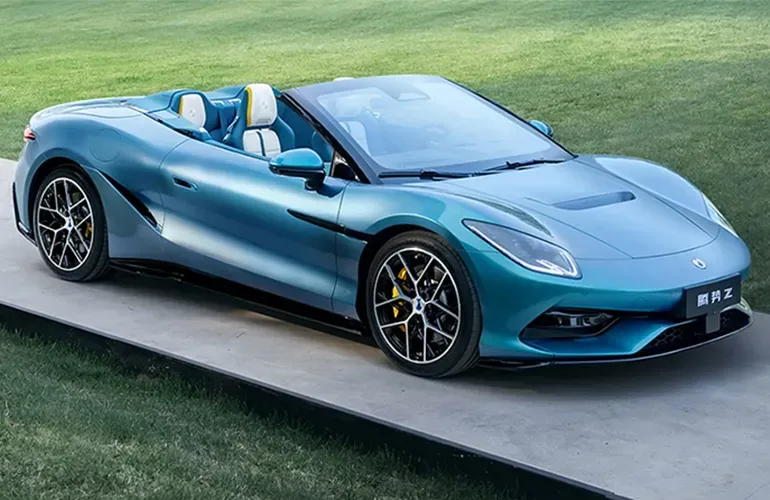
Chinese electric vehicle giant BYD is going high end. The firm just announced a 1,000-plus-horsepower supercar that measures its speed in seconds at both the track and the plug. Unveiled at the Beijing Auto Show under the automaker’s premium Denza brand, the Denza Z is claimed to hit 100 km/h in less than two seconds… The post BYD’s EV megawatt leap is a 1,000-hp supercar with flash charging appe…
A new technical paper titled “Towards Safe Autonomous Driving: A Real-Time Motion Planning Algorithm on Embedded Hardware” was published by researchers at TU Munich. Abstract “Ensuring the functional safety of Autonomous Vehicles (AVs) requires motion planning modules that not only operate within strict real-time constraints but also maintain controllability in case of system faults. Existing... …
proteanTecs and HARMAN Ltd. focused on designing consumer experiences at automotive grade, have collaborated to advance a new approach to predictive and preventive maintenance of vehicle electronics. The post HARMAN and proteanTecs Collaborate to Advance Predictive and Preventive Maintenance for Automotive Electronics appeared first on Semiconductor Digest .
A cross-disciplinary team of faculty members from Clemson’s mechanical engineering and automotive engineering departments have come together for the research.
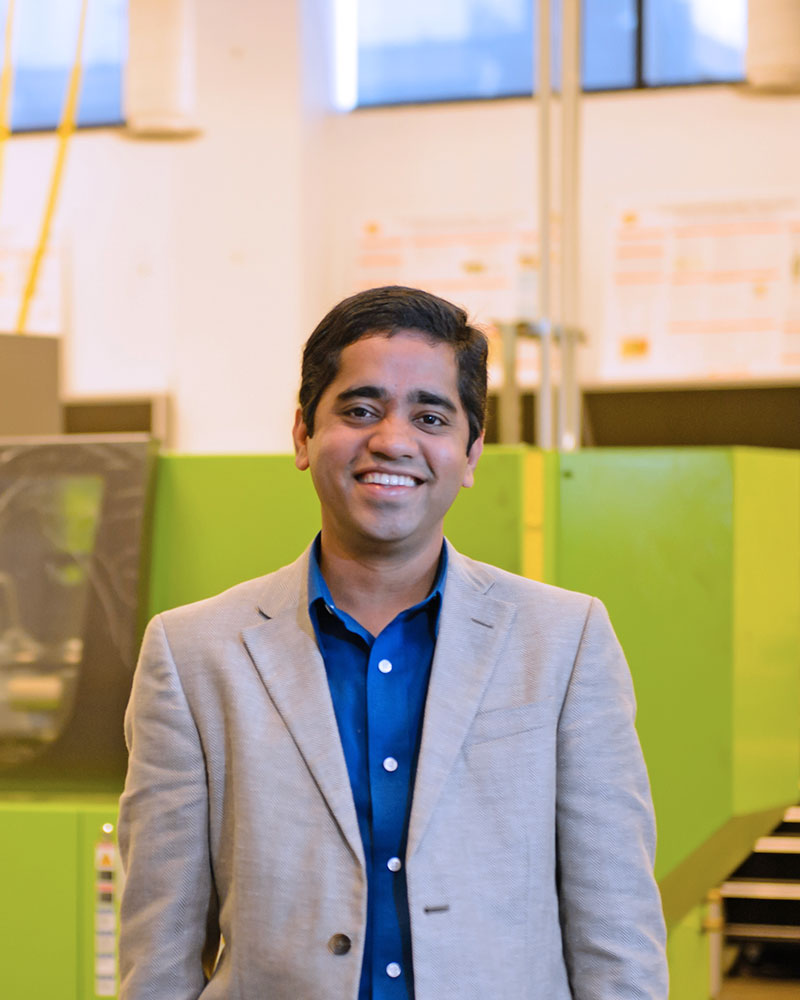
Srikanth Pilla, an assistant professor of automotive engineering, is the principal investigator on the project. The co-principal investigators are Melur “Ram” Ramasubramanian, D. W. Reynolds Distinguished Professor of Mechanical Engineering…
When General Motors looked back on 100 years of motoring, and recognised that just 12 percent of the world has a car, it had a radical rethink. The result is the AUTOnomy: a vehicle designed around a fuel cell propulsion system in a "skateboard chassis" which can have a variety of bodies fitted. AUTOnomy provides a glimpse into GM's vision for the 21st century: a socially responsible, infinitely …