This is a post by Diego M. Papayannis (University of Girona). Most lawyers would agree that private law is not supposed to be distributively fair. It is, after all, the area of law in which we are allowed to act in our own best interests, provided we do not wrong others in the process. So, … Continue reading When Private Law Makes You Poor, Can Public Law Save You?
This is a post by Federico Arena (University of Girona). Imagine a judge delivering a verdict: “The State is obligated to provide healthcare to this patient.” We take this kind of statement for granted. But have you ever stopped to wonder what the judge is actually doing when they say this? Are they describing a … Continue reading When Judges Say “You Must”: What Are They Really Doing?
This is a post by Marcelino Botín (University of Barcelona) and Markel Kortabarria (University of Barcelona) Consciousness is a rare beast. It is the aspect of reality with which we are most intimately acquainted, yet itremains strikingly resistant to scientific characterization. Classic thought experiments such as Mary in the black-and-white room suggest that one can possess complete scientific …
This is a post by Bianca Cepollaro (Vita-Salute San Raffaele University), Marta Jorba (Pompeu Fabra University), Valentina Petrolini (University of Bologna). The word ‘autistic’ has recently been reclaimed, especially within neurodiversity movements. We can observe how it is used with pride in political slogans (e.g., “I am autistic and I am proud”), online communities (e.g., r/AutisticPride on R…
This is a post by Teresa Marques (University of Barcelona). Consider how ordinary speakers argue about words like charnego, gitano, or negrito. In some contexts their use is taken to be straightforwardly degrading; in others it is defended as neutral, affectionate, or at least nonderogatory. These disagreements are familiar and often heated. They pose a natural philosophical question: … Continue …
This is a post by Dario Mortini (University of Barcelona).
Simple ‘outright’ assertions serve a wide range of familiar communicative purposes in our daily lives: from giving directions (‘The Sagrada Familia is up that street to the right’) to sharing novel and interesting facts about the world (‘The new bakery in the neighbourhood sells apple cake’). However, we are not always well-positioned to …
This is a post by Dario Mortini (University of Barcelona).
Simple ‘outright’ assertions serve a wide range of familiar communicative purposes in our daily lives: from giving directions (‘The Sagrada Familia is up that street to the right’) to sharing novel and interesting facts about the world (‘The new bakery in the neighbourhood sells apple cake’). However, we are not always well-positioned to …
This is a post by Gregory C. Keating (USC Gould School of Law).
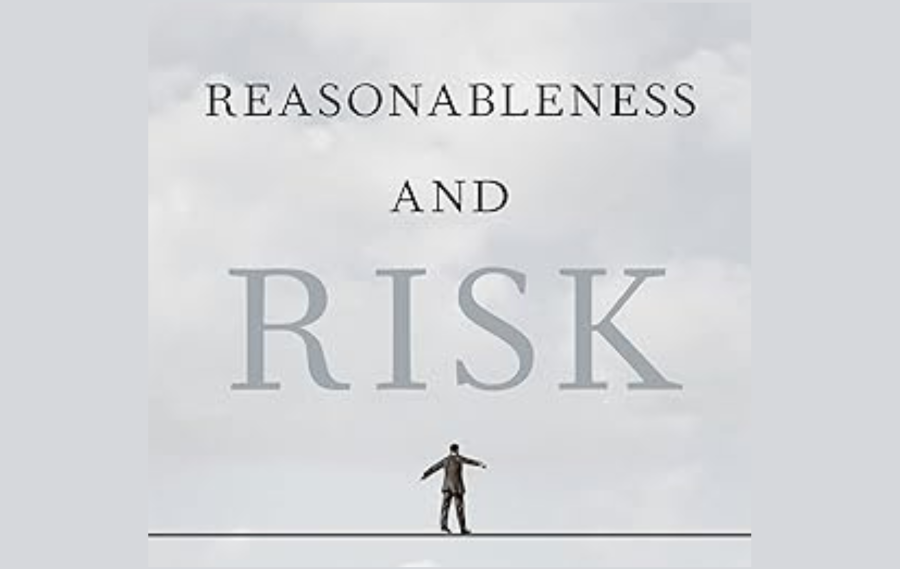
In his excellent blog post Does Tort Law Really Care About You?, Diego Papayannis addresses a fundamental question of tort law and challenges my view of the matter as he understands it from my book Reasonableness and Risk (OUP 2022). The role of the law of torts is to secure us against harm at each other’s hands as we go about our li…
This is a post by Oscar Piedrahita (University of Barcelona).
You’re mowing your lawn when your neighbor strolls over and asks, “Do you know how many blades of grass you’ve just cut?” You’d naturally answer no. But if they then say “So you’re ignorant of that fact?”, this second question would feel stilted, perhaps even misplaced. Is this something you’re supposed to know? Of course you don’t kno…
This is a post by Diego M. Papayannis (University of Girona).
Imagine you live just 50 meters away from a massive cement plant. The plant operates lawfully and takes every reasonable precaution, yet its dust emissions still cause severe damage to your property and health. Because the economic activity carried out by the plant is of utmost importance to your town, the court refuses to issue an inj…
This is a post by Diego M. Papayannis (University of Girona).
Imagine you live just 50 meters away from a massive cement plant. The plant operates lawfully and takes every reasonable precaution, yet its dust emissions still cause severe damage to your property and health. Because the economic activity carried out by the plant is of utmost importance to your town, the court refuses to issue an inj…
This is a post by Riin Kõiv (University of Barcelona).
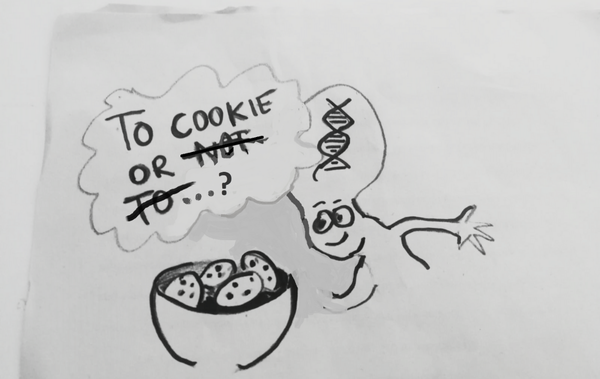
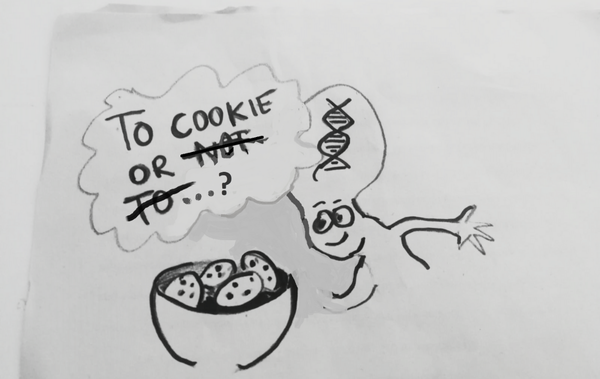
Imagine being told that personality, performance in math, substance addiction, or excess body weight has genetic causes. For many, this information plants a sense of inevitability — as if their personality, their math performance, or their body weight were in some sense “determined,” beyond their own control.
This is a post by Riin Kõiv (University of Barcelona).
Imagine being told that personality, performance in math, substance addiction, or excess body weight has genetic causes. For many, this information plants a sense of inevitability — as if their personality, their math performance, or their body weight were in some sense “determined,” beyond their own control.
For example, in one study, partic…
This is a post by Martina Rosola (University of Barcelona).
Referring to non-binary people in heavily gendered languages like Italian, German or Spanish is difficult because of structural features of the language itself. As a result, non-binary people are systematically misgendered: they are referred to either in the masculine or in the feminine despite non identifying as either men or women. Thi…
This is a post by Martina Rosola (University of Barcelona).
Gender is expressed differently in each language. While in English, personal pronouns an a handful nouns are the only gendered words, in so-called grammatical gender languages, like Italian, German or Spanish, gender is everywhere (cf. Stahlberg et al. 2007). In these languages, several linguistic items are gendered: nouns, articles, adj…
This is a post by Andrés Soria-Ruiz (University of Barcelona).
Think of the following: for all you know, you could be living in a computer simulation. Your friends might be so-called “Non-Player Characters”; your home, your surroundings might all be part of a sophisticated illusion. All of that is possible, and more worryingly, you—we—have no way of telling whether that’s actually the case.
This is a post by Constant Bonard (University of Bern), Filippo Contesi (University of Cagliari) and Teresa Marques (University of Barcelona).
Propaganda is so ubiquitous a phenomenon in contemporary societies of all types that there would seem to be no problem in us understanding what it is. Still, we apparently continue to fall for it so often that perhaps we are not very good at recognizing it…
This is a post by Margherita Grassi (University of Barcelona) and Eleonora Volta (Vita-Salute San Raffaele University).
Article 111 of the Italian Constitution establishes that every trial must be conducted before a third and impartial judge and under conditions of equality between the parties. That means the judge must sentence based on the law, considering the facts and evidence presented durin…
This is a post by Margherita Grassi (University of Barcelona) and Eleonora Volta (Vita-Salute San Raffaele University).
Article 111 of the Italian Constitution establishes that every trial must be conducted before a third and impartial judge and under conditions of equality between the parties. That means the judge must sentence based on the law, considering the facts and evidence presented durin…
This is a post by Markel Kortabarria (University of Barcelona). It is a commonsense belief that reality is built from the ground up. At its base lie the fundamental building blocks that serve as a foundation for everything else. This belief is largely shaped by the dominant scientific view in physics, which suggest that every … Continue reading Must There Be Something Fundamental?











 research.io