Research school for Media Studies (RMeS)

This masterclass introduces a way of thinking more closely about how things are actively contained. Rather than treating storage space as a secondary concern that merely follows questions of content or circulation, the session asks what becomes possible when it is taken as the analytical starting point.
November - December 2026 | University of Amsterdam This course explores the relationship between creativity, generative AI, and the creative industries. With the recent development of generative AI, the assumption that creativity and creative labour were immune to automation is being put into question. This has triggered a series of academic and non-academic debates regarding the concept of creat…
November - December 2026 | Utrecht University This autumn, the Research School for Media Studies offers a Platformisation course where faculty members from three participating universities (UvA, UU, RUG) present the latest research in their fields of interest through a series of lectures and workshops. The course invites RMA students to participate in an international, cutting edge research envir…

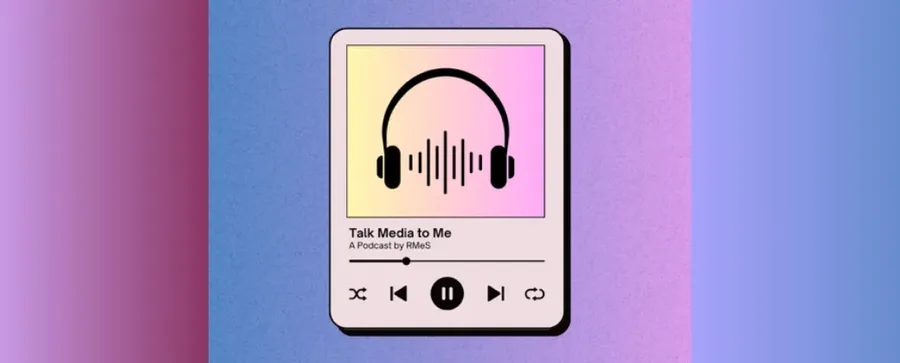
In this episode of Talk Media to Me, PhD Council member Nele Kadastik (RU) talks to PhD candidate Yana van de Sande (RU) about misinformation, disinformation, and fake news — what they are, why they matter, and how they have shaped societies long before the internet.

Media literacy is a mature field that has increasingly become a preferred long-term strategy for addressing the societal challenges posed by digitalization. However, many media literacy initiatives continue to rely on traditional instructional approaches that struggle to resonate with young people’s everyday digital experiences.
27 November 2026 | Utrecht RMeS is inviting submissions to the second Netherlands Media Studies Conference. This one-day event will take place in Utrecht on Thursday 27 November 2026. It provides a space for media studies scholars and students to discuss their work and make connections with peers. This year, we also honor the work of José van Dijck, one of the founders of the field of Media Studi…

We are very proud to announce that Rosa Dijkstra, PhD at University of Groningen, will receive the RMeS Workshop Grant 2025-2026 for her proposal: Using participatory research methods with young people in/about digital media environments The workshop will be scheduled in 2026-27. More information about this workshop, will be published on our website in July.

Please note that the RMeS office is closed from July 9 – August 19, 2026. We are currently finalizing our educational programme for 2026-2027. Full programme will be available by the end of September. Registration for most of our events will open Fall 2026. Please register for our newsletter to stay up-to-date.
25 & 26 June 2026 | Radboud University Nijmegen This year, the RMeS Summer School will be hosted and organised by the Department of Modern Languages and Cultures at Radboud University, Research group Media, Popular Culture and Social Change. This year’s theme for the summer school is Disconnection: Media, Politics and Affect. During the Summer School, there will be 3 public keynotes. Are you int…

Friday 19 June 2026 | 14:00-15:30 | Aula - Oude Lutherse Kerk What does it mean to be a person who is constantly translated into data? In a world shaped by the platform ecosystems of Alphabet, Meta, Amazon, Apple, and Microsoft, everyday life unfolds through infrastructures that do more than monitor behavior: they steer how reality is perceived, how choices take shape, and how people come to know…
Monday, 22 June 2026 | University of Amsterdam Databases were a hot topic in about 1971. Nowadays they sit in the background as the backbone of AI and internet platforms. Databases are often seen, and used, as mechanisms of order and rationalisation, epitomising the splitting of formalism and feeling or intensive and extensive. Can their ordered and ordering qualities, and their foundational role…

5 - 11 july 2026 | De Cinema, Antwerp, Belgium One full week of screenings, Q&A’s and in depth lectures on two themes, one in film history and one in film criticism, organized by Cinea and De Cinema with support from the Royal Belgian Film Archive. A convivial event with a dedicated group of film-loving participants (including students, filmmakers, etc.).
Symposium, 20 May 2026 | 13.00 - 17.00 YouTube has long established itself within the current online ecosystem as one of the biggest platforms through which people consume and produce news, culture and entertainment. But it didn’t spawn in a vacuum, surfing a larger wave of platformization but also tapping into older alternative media ecologies, including conspiratorial and extremist ones. This s…

This project aims to re-centre the voices, experiences and practices of (queer) children and teenagers in relation to the media that represents them. Through a qualitative, multi-sited ethnographic study, this project examines how children and teens consume, interpret and creatively engage with mediated representations of queerness and queer childhoods in their everyday lives.

Scholarship on international broadcasting centres European institutional perspectives, Cold War propaganda, and English-language archives. This research intervenes by examining the Indonesian programme of Radio Netherlands Wereldomroep (1945–1965), foregrounding Indonesian broadcasters as agents rather than invisible figures.
This research argues that stigmatizing stereotypes about intellectual disability that were utilized in late 19th – early 20th century eugenics propaganda still recur in hegemonic (e.g. Hollywood) representations. These stereotypes often assume a poor quality of life and end in literal or social death. If not death, they end in an assimilation into normative expectations through ‘inspiring’ tales …
This project investigates cross-cultural differences in multimodal narratives in online comics, with a particular focus on webcomics as a rapidly growing yet still underexplored form of digital storytelling. While comics have attracted increasing attention in multimodal studies, digital humanities, and cognitive psychology, webcomics remain relatively understudied despite their global popularity …
Send your proposal before May 11, 2026. Are you passionate about sharing original research with new generations of students and scholars you admire? Have you been sitting on an idea for organizing a workshop in your area of expertise, but you don’t have the funds to do so? RMeS has got your back!
In this episode, Dr Barbara Titus (UvA) joins our PhD council member Merit Zimmermann (EUR) to discuss her research on maskanda music in South Africa, with a focus on reflexivity, positionality, and colonial legacies in academic knowledge production.

research.ioSign up to keep scrolling
Create your feed subscriptions, save articles, keep scrolling.