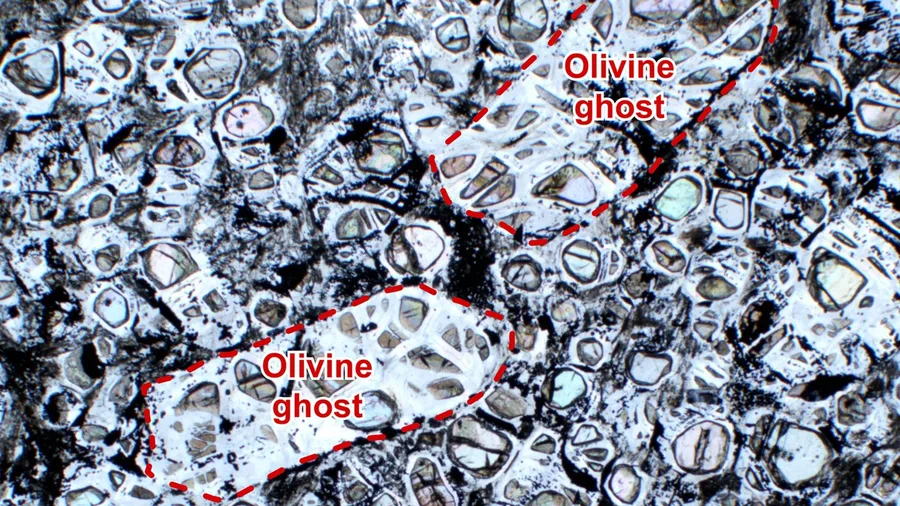
Ancient rocks from Western Australia suggest water was reaching deep inside Earth more than three billion years ago, long before modern plate tectonics may have fully developed. Researchers propose that water-rich pieces of crust periodically sank into the mantle through a process they call “dripduction.” The buried water then helped produce magma and volcanic eruptions.
Deep beneath Mars, scientists have found evidence of enormous magmatic systems once thought to require Earth-like plate tectonics. Seismic measurements suggest molten rock repeatedly evolved and recycled itself through the Martian crust, potentially across hundreds or thousands of kilometers. The discovery challenges long-held ideas about how complex planetary crusts form.
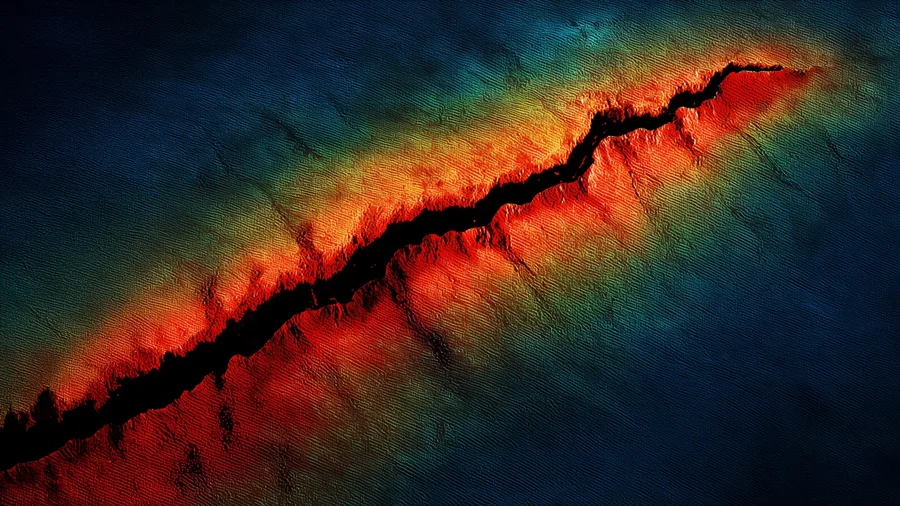
A rare, ultra-long earthquake in Myanmar revealed that mature faults can deliver their full force directly to the surface. The discovery could mean stronger shaking near faults like California’s San Andreas than current models predict.
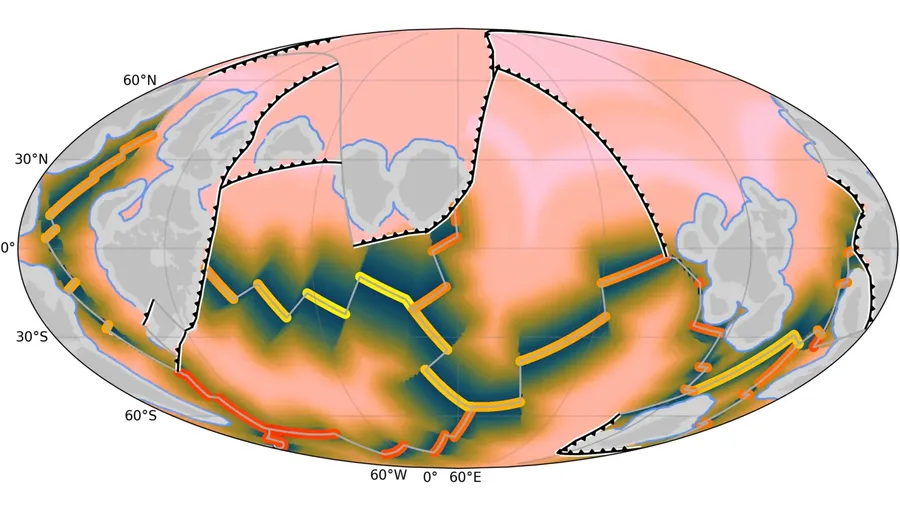
Fresh evidence suggests early Earth wasn’t locked under a rigid stagnant lid but was already experiencing intense subduction. Ancient melt inclusions and advanced simulations point to continents forming far earlier than expected. The findings overturn long-held assumptions about the planet’s infancy and reveal a surprisingly active Hadean world.
An immense pocket of hot rock deep beneath the Appalachians may be a wandering relic of the breakup between Greenland and North America 80 million years ago. Researchers suggest this slow-moving “mantle wave” drifted over 1,800 km to reach its current position, gradually reshaping the continent from below and even helping prop up the Appalachian Mountains long after tectonic activity at the surfa…
Scientists discovered that deep earthquake faults can heal far faster than expected, sometimes within hours. Slow slip events in Cascadia reveal repeated fault movements that only make sense if the fault quickly regains strength. Lab experiments show that mineral grains can weld together under intense heat and pressure, acting like a natural glue. This rapid cohesion may be a missing factor in ea…
Once considered geologically impossible, earthquakes in stable regions like Utah and Groningen can actually occur due to long-inactive faults that slowly “heal” and strengthen over millions of years. When reactivated—often by human activities—these faults release all that built-up stress in one powerful event before stabilizing again. This discovery reshapes how scientists assess earthquake risks…
Scientists have traced the origins of complex life to the breakup of the supercontinent Nuna 1.5 billion years ago. This tectonic shift reduced volcanic carbon emissions, expanded shallow seas, and boosted oxygen availability. Far from a stagnant era, Earth’s “Boring Billion” was a time of crucial transformation that made the planet more habitable. The study links deep-Earth movements directly to…
A massive crater hidden beneath the Atlantic seafloor has been confirmed as the result of an asteroid strike from 66 million years ago. The new 3D seismic data reveals astonishing details about the violent minutes following impact—towering tsunamis, liquefied rock, and shifting seabeds. Researchers call it a once-in-a-lifetime look at how oceanic impacts unfold.