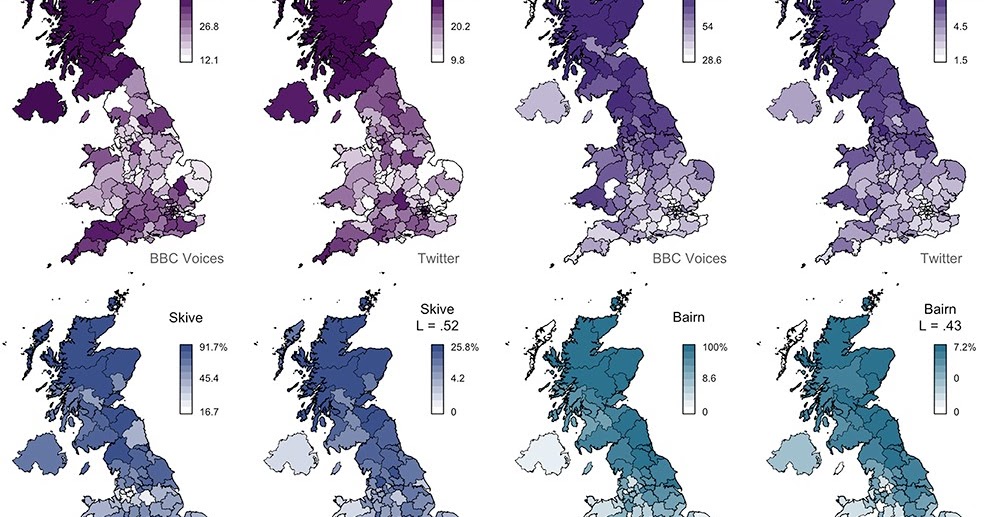
The past year has affected all of us in one way or another but have you ever thought about what effect it may have had on our language? Philipp Wicke and Mariana Bolognesi did just that in their study of thousands of tweets posted during March and April 2020. Due to social distancing measures, people were quick to use social media platforms like Twitter to connect with others and express their f…
To understand what a metaphor is, let’s start
by considering a real world example. For tipping
point , we might imagine an object that should be kept upright, such as a
vase of flowers, at risk of falling when it loses its centre of gravity. As the
tipping point is not the vase’s natural state, we assume something has caused
the unbalance e.g. a curious cat, or an earthquake. We also realise that…
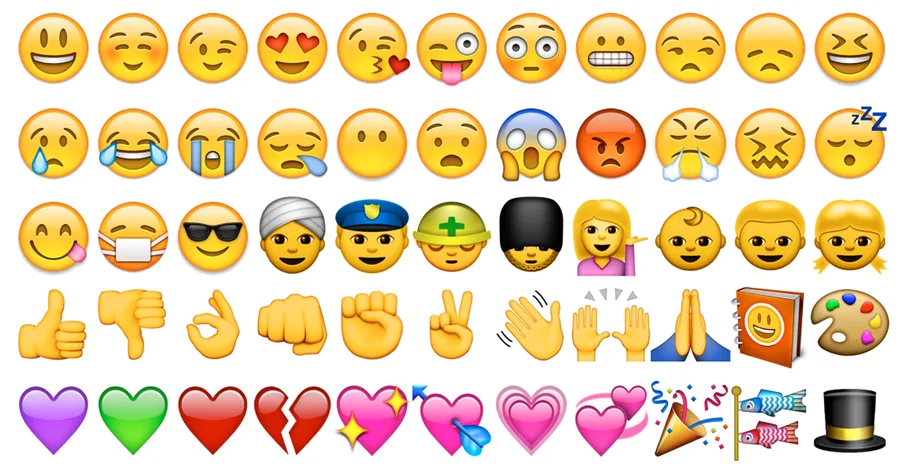
When we talk to each other, we don’t just rely on words. Emotion is embodied, and our expressions, our body language, our tone of
voice are all used to convey our feelings and affect how our words are
interpreted. But for online written communication, we can’t rely on these
details. As discussed in the previous post , punctuation can be helpful to
represent tone of voice, but often there is still…
As a result of technology, many of our casual, everyday
conversations now take place online, in written form. This has in turn changed
how we write informally, which is the topic of Gretchen McCulloch’s 2019 book Because
Internet . This book focuses on how the internet is changing language and is
written for a general audience. Chapter 4 discusses how we convey our emotions
through written langua…
The 2013 trial of George Zimmerman for the murder of unarmed Black teenager Trayvon Martin is well-known as the court case that sparked the #BlackLivesMatter movement in the USA. 17-year-old Martin was shot dead by Zimmerman, who claimed he was acting in self-defence and was eventually acquitted of all charges. The outcome of the trial caused outrage among the Black community over racial profilin…
I once heard
that how someone treats a waiter can say a lot about their character. What
about the way a waiter responds? Researcher Larssyn Rüegg thinks that there may
be differences in how waiters respond to their customers’ thanks, based on the
kind of restaurant they are in. While previous
research has looked into how various languages may differ in this pragmatic
function of the thanks respon…
"Ma-ma, ba-ba, da-da" - you probably associate sounds such as these with babies, in particular the babbling that babies make when they're first acquiring language. But what do these sounds do? And why do babies babble? This is a question that some recent research has addressed. In their recent research report, Elminger, Schwade and Goldstein examined the function of babbling in infants’ language …
Continuing our series of posts related to the ' Accent Bias in Britain ' project, in this blog post we discuss some findings from our research which investigated current attitudes to accents in Britain. In our last blog post, we explored some of the findings of the second part of our study which investigated how the UK public evaluated 5 different accents in mock interviews . The third part of ou…
Continuing our series of posts related to the ' Accent Bias in Britain ' project, in this blog post we discuss some findings from our research which investigated current attitudes to accents in Britain. In the most recent blog post, we explored the findings of the first part of our study which investigated attitudes to accent labels. The second part of our study, detailed here, investigated how p…
Continuing our series of posts related to the ' Accent Bias in Britain ' project, in this blog post we discuss some findings from our research which investigated current attitudes to accents in Britain. In the first part of our study, we replicated Coupland & Bishop's study (2007, summarised in an earlier blog post ) to see whether the accent attitudes that people held 12 years ago still persist …
Did you know that as well as the 'Research Digest', we also maintain the 'Teach Real English!' site? Our site is an archive of spoken English Language Teaching resources that have been developed by Linguists at Queen Mary University of London. Our website includes: A database of spoken English (containing sound clips and transcripts) Language Investigations for exploring the English language in e…
What do you think of when
you hear someone speak with a Brummie accent? How about when somebody speaks
with a West Country accent? Do you think that some accents are more attractive
or prestigious than others? If so, it’s possible that your judgements of these
accents are influenced by accent bias. As part of the Accent Bias project led by academics
at Queen Mary University of London and the Univ…
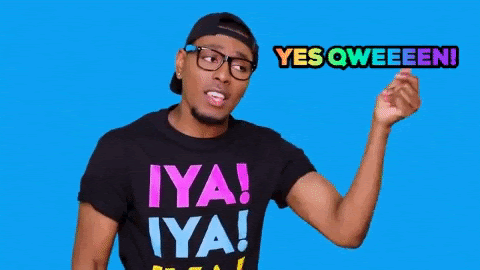
‘Slay’, ‘yaas kween’, ‘squad’ – if you’re a keen social media, you might be familiar with some of these words. Originally from African American Vernacular English (AAVE) – a variety of English spoken by some Black Americans – these terms have quickly become part of the internet grammar. But, how and why have these terms entered our lexicon and what does the use of AAVE in internet communication m…
In the time that it takes you to read this article, millions
of users will have sent a Snapchat, uploaded an Insta Story and updated their
Twitter profile. The age of digital culture is very much upon us. For
Linguists, the contemporary networked society offers a way to explore language
use beyond the traditional method of recording and interviewing speakers. This
includes those studies which exa…
Picture this: it’s Christmas day, you’re overloaded with
turkey, surrounded by the remnants of wrapping paper and you’ve just settled
down to watch the Queen’s annual speech. It’s a tradition for many at
Christmas. But, what if I told you that the Queen’s speech isn’t the same as it
was in more recent decades than, say, in the 1950’s. Of course, here I’m not
talking about the content of her speec…
Content note: this article contains some references to homophobia. No one could argue that LGBT
rights in the UK have not made progress over the last decade or two. With the
introduction of the Gender Recognition Act in 2004 and the successful campaign
for same-sex marriage in 2013, today LGBT people have more and more protection
under UK law. However, there is still some way to go before those w…
As one of the best-selling pop artists of our time, Lady
Gaga is a name few would fail to recognise. From ‘Poker Face’ to ‘Telephone’,
her artistry has earned her a level of notoriety comparable only to a few other
music legends. Along with her success, she’s built a loyal fanbase that she affectionately
refers to as the ‘Little Monsters’. At shows, she often invites her ‘Little Monsters’
on stag…
If you’ve spent even a day
casually browsing the Internet, you’re probably aware of the stereotypes of a 'typical white girl'. She goes to Starbucks, she wears Uggs, she dyes her hair
blonde and straightens it... it’s a similar concept across Anglophone spheres. Not pictured: the Pumpkin Spice Latte. There are, of course, language
features associated with the stereotypical white girl too. And in …
Remember Iggy Azalea? Well, if you were just about anywhere in 2014, you might recall her smash hit song 'Fancy' featuring Charli XCX. In fact, that song was so popular that it earnt Iggy Ig's a Billboard award for the 'biggest ever hit for a female rapper'. But whilst she might be one of the most recognisable Hip-Hop artists of the current period, you might also recall that she's faced quite a l…
Whether it’s in friends, designer
handbags, or website security, one quality people always want is authenticity.
Their fake counterparts are shoddy at best and damaging at worst, whether that
be for your emotional health, your belongings, or the contents of your bank
account. The music is real, even if the wool on the collar is not. In a recent paper, Pia Pichler and Nathanael
Williams look speci…










 research.io