Chase the Devil
I struggled a bit having Jack Audio Connection Kit working in Opensuse Tumbleweed. My error was to install the jack package. The solution is actually extremely simple: use pipewire-jack instead of jack. sudo zypper in pipewire-jack qjackctl
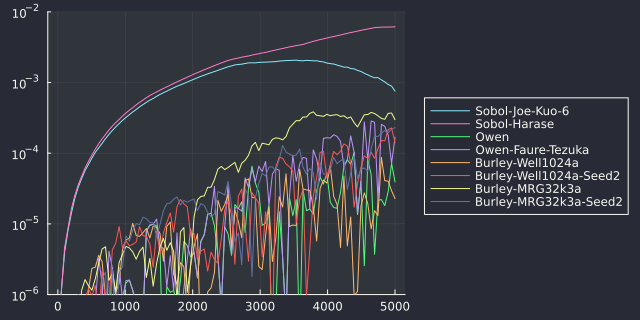
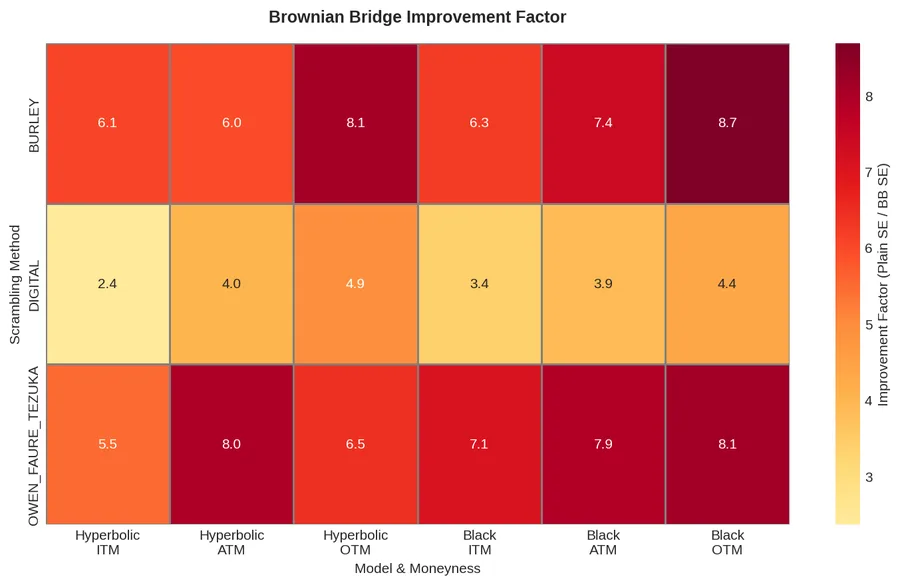
The state of the art of Sobol scrambling has changed slightly recently, thanks to the paper from Brent Burley of Walt Disney Studios Practical Hash-based Owen Scrambling. Before that, ACM Algorithm 823 by Hickernell and Hong was the usual reference. Brent Burley’s algorithm is supposedly both faster and with better properties. In particular, it performs both shuffling and scrambling. Peter …
Recently, I have spent some time on simple neural networks. The idea is to employ them as universal function approximators for some problems appearing in quantitative finance. There are some great papers on it such as the one from Liu et al. (2019) or Horvath et al. (2019) Deep Learning Volatility or Rosenbaum & Zhang (2021). Incidentally, I met Liu back when I was finishing my PhD in TU Delf…
Thomas Roos recently put a preprint on SSRN called Simple, Flexible, Analytic, Arbitrage Free Volatility Interpolation. Being interested in the subject, I had a detailed look at it. It turns out that Thomas stumbled upon spline stochastic collocation without realizing it. There are a few differences in his approach: The optimization is on the x’s instead of the y’s, meaning the strike…
Leif Andersen and Mark Lake recently proposed the use of Non-Uniform Fast Fourier Transform for option pricing via the characteristic function. Fourier techniques are most commonly used for pricing vanilla options under the Heston model, in order to calibrate the model. They can be applied to other models, typically with known characteristic function, but also with numerically solved characterist…
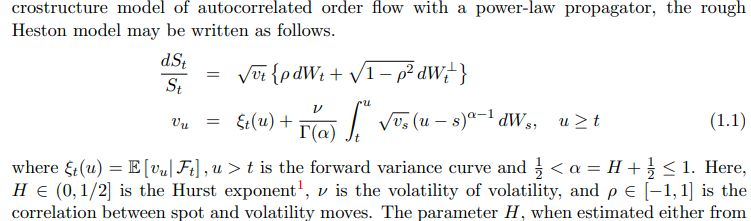
The modern rough volatility models adopt a forward variance curve terminology (see for example this paper on a rational approximation for the rough Heston, or this presentation on affine forward variance models or this paper on affine forward variance models). In this form, the rough Heston model reads: According to the litterature, the initial forward variance curve is typically built from the i…
I recently saw a news about a great new simulation scheme for the Heston model by Abi Jaber. The paper suggests it is better than the popular alternatives such as the QE scheme of Leif Andersen. Reading it quickly, perhaps too quickly, I had the impression it would be more accurate especially when the number of time-steps is small. The scheme is simple to implement so I decided to spend a few min…
Fabrice Rouah wrote two books on the Heston model: one with C# and Matlab code, and one with VBA code. The two books are very similar. They are good in that they tackle most of the important points with the Heston model, from calibration to simulation. The calibration part (chapter 6) is a bit too short, it would have been great if it presented the actual difficulties with calibration in practice…
Around 10 years ago, while reading the excellent paper of Etore and Gobet on stochastic Taylor expansions for the pricing of vanilla options with discrete (cash) dividends, I had the idea of a small improvement, by using a more precise proxy for the Taylor expansion. More recently, I applied the idea to approximate arithmetic Asian options prices by using the geometric Asian option price as a pro…
My 12 years old child recently had a presentation to do with 3 other children for school, the subject was food and health. It was particularly difficult to organize the children and one of the children came with a full presentation with text, generated by an LLM (possibly corrected by the parents). At first, I thought this was just cheating and completly useless. Furthermore, he failed to read pr…
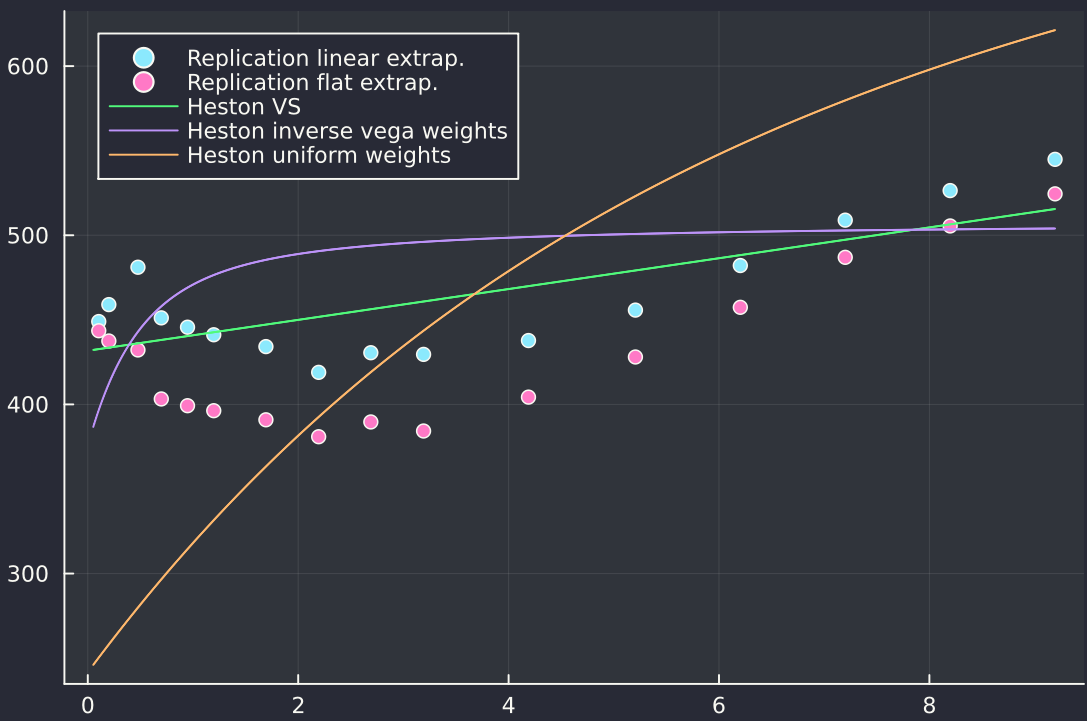
An interesting idea to calibrate the Heston model in a more stable manner and reduce the calibration time is to make use of variance swap prices. Indeed, there is a simple formula for the theoretical price of a variance swap in the Heston model. It is not perfect since it approximates the variance swap price by the expectation of the integrated variance process over time. In particular it does no…
I recently upgraded a desktop computer, and to my surprise, the new motherboard was not fully supported by most Linux distributions. The main culprit was the network adapter, although the secure boot setup gave me lots of troubles as well. I had only a small usb key (2GB) and most (all?) live distributions do not fit on 2GB anymore. With the exception of Ubuntu images, I did not manage to boot fr…
I had the opportunity to receive a free book on climate change, through the company I am working for. I had not heard of that book before, it called Saving Us and is written by an actual climate scientist (Katharine Hayhoe). Unfortunately, written by does not mean that it is a scientific book, and it’s not. The author does not spend much effort explaining the physics or the reports, but foc…
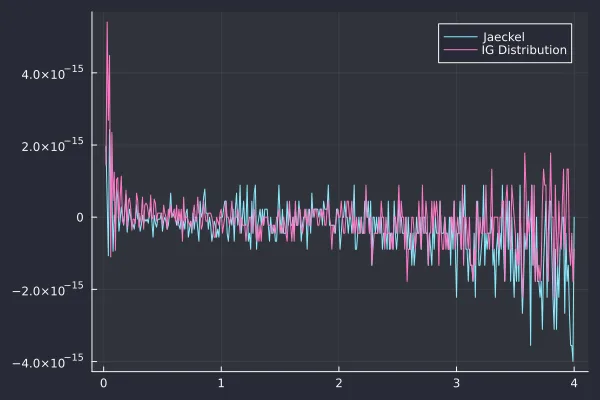
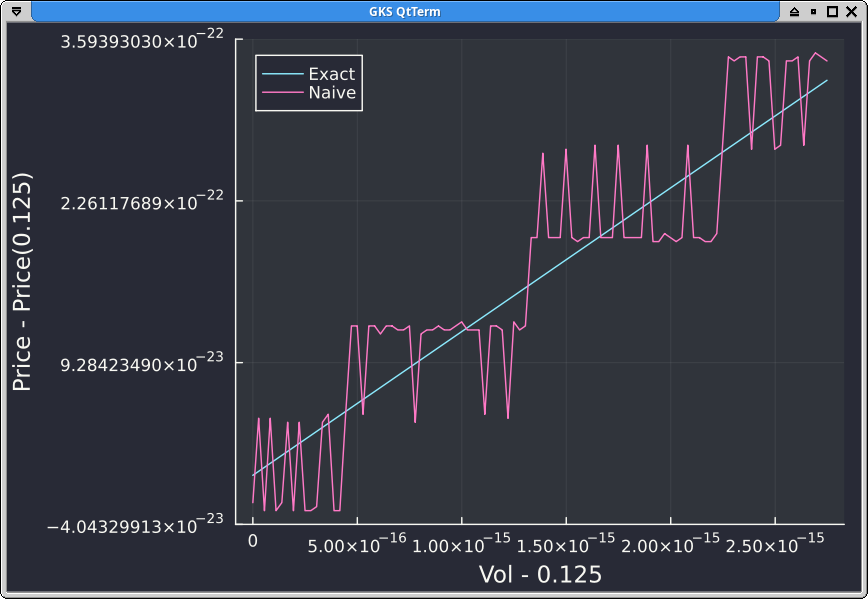
It is well known that vanilla option prices must increase when we increase the implied volatility. Recently, a post on the Wilmott forums wondered about the true accuracy of Peter Jaeckel implied volatility solver, whether it was truely IEEE 754 compliant. In fact, the author noticed some inaccuracy in the option price itself. Unfortunately I can not reply to the forum, its login process does not…
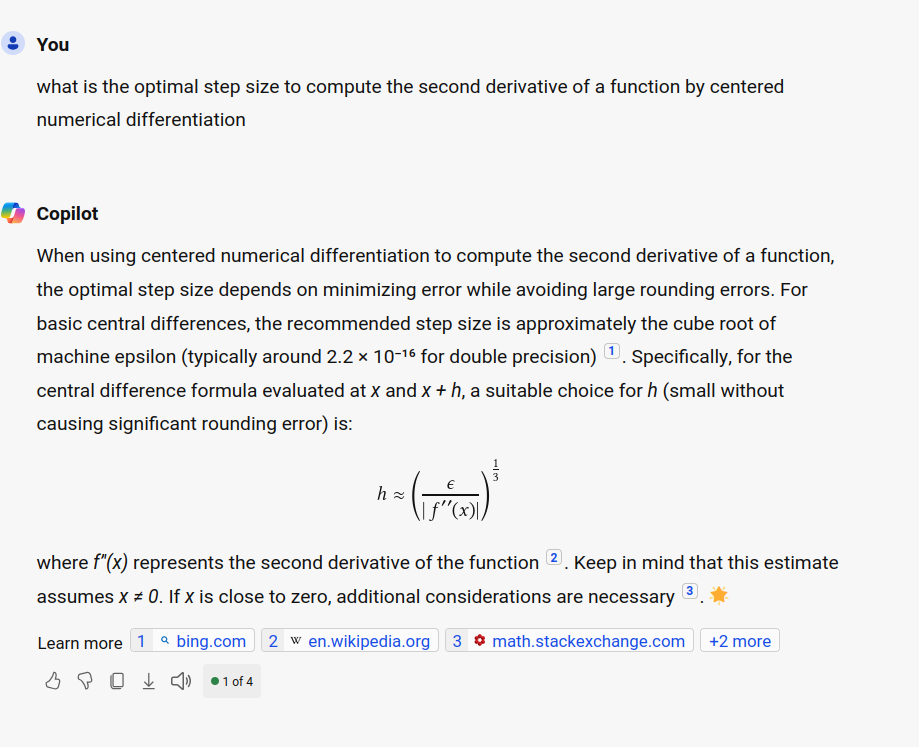
When computing the derivative of a function by finite difference, which step size is optimal? The answer depends on the kind of difference (forward, backward or central), and the degree of the derivative (first or second typically for finance). For the first derivative, the result is very quick to find (it’s on wikipedia). For the second derivative, it’s more challenging. The Lecture …
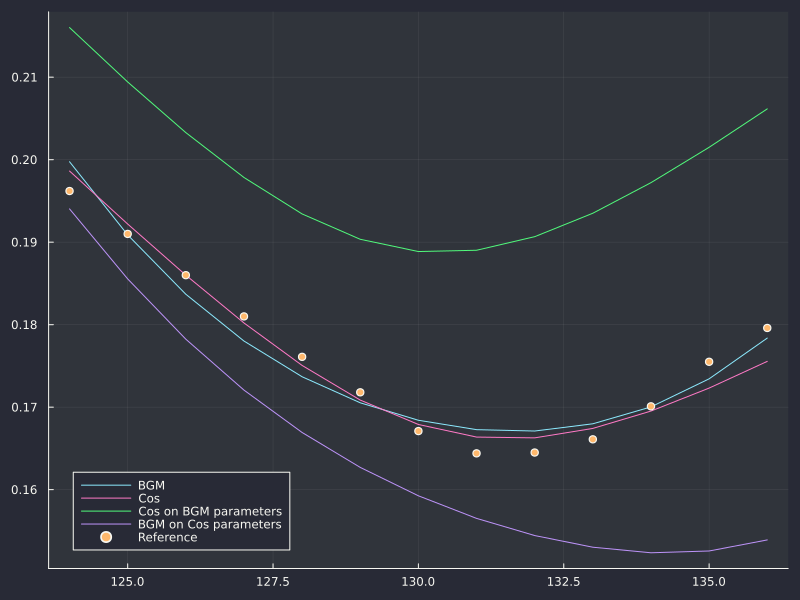
The COS method is a fast way to price vanilla European options under stochastic volatility models with a known characteristic function. There are alternatives, explored in previous blog posts. A main advantage of the COS method is its simplicity. But this comes at the expense of finding the correct values for the truncation level and the (associated) number of terms. A related issue of the COS me…
I never paid too much attention to it, but the term-structure of variance swaps is not always realistic under the Schobel-Zhu stochastic volatility model. This is not fundamentally the case with the Heston model, the Heston model is merely extremely limited to produce either a flat shape or a downward sloping exponential shape. Under the Schobel-Zhu model, the price of a newly issued variance swa…
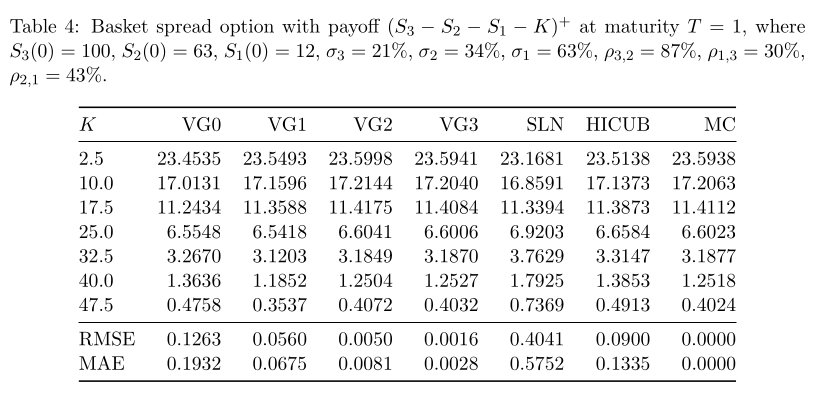
In the previous post, I presented a new stochastic expansion for the prices of Asian options. The stochastic expansion is generalized to basket options in the paper, and can thus be applied on the problem of pricing vanilla options with cash dividends. I have updated the paper with comparisons to more direct stochastic expansions for pricing vanilla options with cash dividends, such as the one of…
Many years ago, I had applied the stochastic expansion technique of Etore and Gobet to a refined proxy, in order to produce more accurate prices for vanilla options with cash dividends under the Black-Scholes model with deterministic jumps at the dividend dates. Any approximation for vanilla basket option prices can also be applied on this problem, and the sophisticated Curran geometric condition…
research.ioSign up to keep scrolling
Create your feed subscriptions, save articles, keep scrolling.