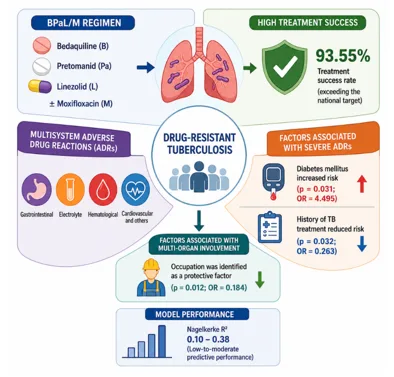
Drug-resistant tuberculosis (DR-TB) continues to be a global problem with poor treatment results and a high rate of adverse drug reactions (ADRs). Increased therapeutic efficacy is linked to short-term oral regimens such as bedaquiline–pretomanid–linezolid with or without moxifloxacin (BPaL/M). The purpose of this study is to evaluate the effectiveness of the BPaL/M regimen and to identify parameters associated with the incidence, severity, and number of organs involved in ADRs among DR-TB patients. Patients with drug-resistant tuberculosis who were on the BPaL/M regimen were the subjects of this retrospective observational study. Medical records included information on patient characteristics, treatment results, and adverse drug reactions. Factors associated with ADR episodes and their severity were identified using bivariate and multivariate logistic regression. The results exceeded the national target with a treatment efficacy rate of 93.55%. Multivariate analysis revealed that gastrointestinal illnesses were linked to gender, while vision impairment was substantially correlated with TB treatment history and therapeutic regimen. Diabetes mellitus raised the risk of severe ADRs (p = 0.031; OR = 4.495), although a history of TB treatment protected against ADRs (p = 0.032; OR = 0.263). One protective factor against multi-organ involvement was occupation (p = 0.012; OR = 0.184). The Nagelkerke R2 score (0.10–0.38) showed that the model's predictive power was low to moderate. Despite the presence of multisystem adverse drug reactions, the BPaL/M regimen proved to be highly successful in treating DR-TB.